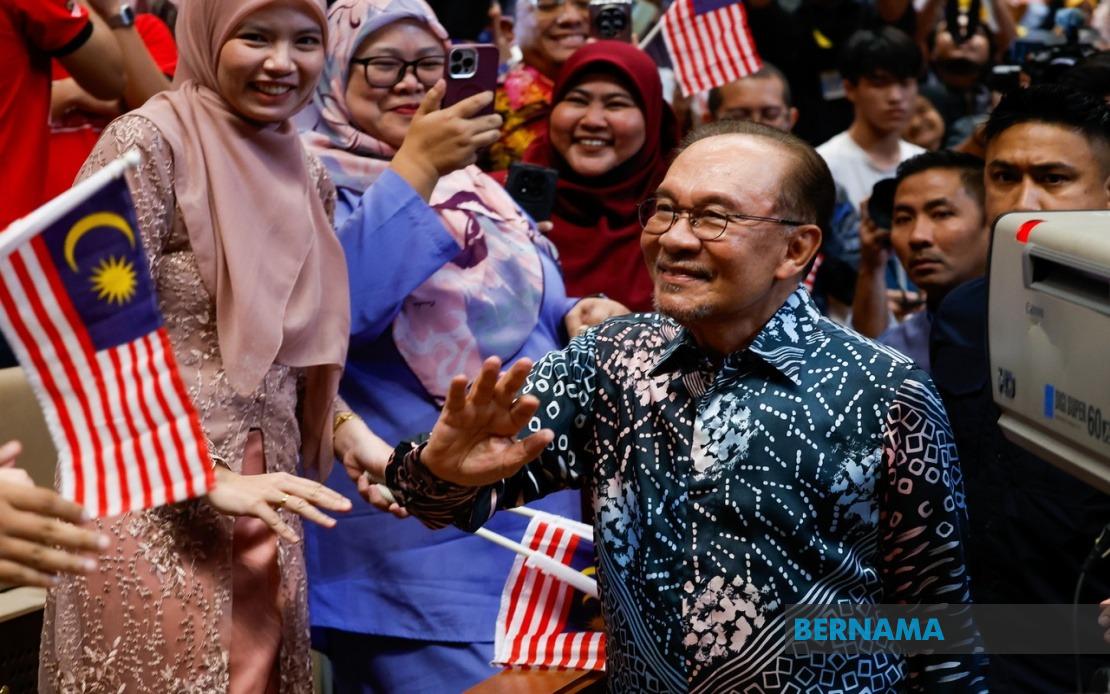
Prime Minister Datuk Seri Anwar Ibrahim has delivered a powerful message on the true meaning of independence, arguing that the nation's greatest strength lies not in its political systems or institutional frameworks, but in the unwavering commitment of every citizen to embrace a genuinely independent mindset. Speaking at the Putrajaya International Convention Centre during the National Day address, Anwar positioned the cultivation of this internal spirit as fundamental to Malaysia's continued progress and resilience in navigating future challenges.
Anwar's remarks represent a reframing of independence beyond the conventional narrative of nation-building and institutional development. He emphasised that while Malaysia achieved political independence decades ago, the work of fostering true independence of thought, conscience, and action among the populace remains an ongoing endeavour. This distinction carries significant implications for how Malaysians should view their role as citizens and participants in the democratic process.
The Prime Minister stressed that this internal spiritual awakening cannot be achieved through divisive means or narrow considerations of geography, ethnicity, or administrative boundaries. Instead, he invoked the wisdom of Malaysia's founding generation, who envisioned a nation built on inclusive participation rather than fractured identity lines. This appeal to historical precedent serves as a reminder that the original architects of the nation conceived of Malaysia as a unified project transcending particularistic interests.
Central to Anwar's message was the concept of generational responsibility. He argued that every generation of Malaysians bears the duty to transmit and reinvigorate the independence spirit to those who follow. This framework positions the current population as custodians of a national legacy that must be actively preserved and adapted to contemporary circumstances. The implication is that complacency or indifference among any generation threatens the continuity of this crucial national asset.
The emphasis on collective unity assumes heightened relevance given Malaysia's multicommunal composition. Anwar specifically identified Malays and Bumiputera communities as the foundational core while simultaneously insisting on the essential participation of all other communities in this shared endeavour. This formulation attempts to balance constitutional recognition of indigenous Malay-Muslim majority interests with an inclusive vision of national purpose that requires active cooperation across all demographic groups.
By framing the strengthening of independence spirit as tied to the defence of rights and the upholding of justice, Anwar connected this philosophical principle to tangible governance outcomes. This suggests that an independent-minded populace would be more vigilant in holding institutions accountable, more assertive in demanding equitable treatment, and more active in resisting corruption or abuse of power. For Malaysian readers, this represents a call for civic engagement beyond voting, encompassing sustained participation in the democratic life of the nation.
The context of this address—Malaysia's National Day celebrations—underscores the significance of these themes. National Day traditionally serves as a moment for reflection on national identity and aspirations. Anwar's decision to centre his remarks on the psychological and spiritual dimensions of independence rather than economic achievement or infrastructure development signals a particular priority: that the nation's moral and civic foundations require attention and reinforcement.
The presence of senior government figures including Deputy Prime Minister Datuk Seri Dr Ahmad Zahid Hamidi, Communications Minister Datuk Seri Fahmi Fadzil, and Chief Secretary to the Government Tan Sri Shamsul Azri Abu Bakar lent formal institutional weight to these pronouncements. Their attendance symbolised executive commitment to these values, though the translation of rhetorical commitment into policy implementation remains a separate consideration.
For Southeast Asian observers, Anwar's framing of independence as an ongoing internal process rather than a fixed historical achievement reflects broader regional conversations about national consolidation and citizens' role in governance. Malaysia, alongside other ASEAN nations, continues to grapple with questions of social cohesion, institutional trust, and the nature of citizenship in diverse societies. Anwar's articulation of these themes contributes to a regional discourse on how postcolonial nations sustain their foundational narratives while adapting to contemporary democratic expectations.
The challenge Anwar identified—instilling independence of spirit amid the ruins of whatever institutional or social failures exist—implicitly acknowledges difficulties in Malaysian society that require spiritual and moral renewal, not merely structural reform. This rhetorical move invites citizens to examine their own relationship to national values and to consider their personal agency in contributing to national regeneration. Whether this appeal translates into measurable changes in civic participation, institutional integrity, or social cohesion will depend on the sustained commitment of both government and citizens to making these principles operational.
Anwar's message ultimately presents independence not as a monument to historical achievement but as a living practice requiring constant renewal. For Malaysians seeking clarity on national priorities and their role within them, this framing suggests that individual moral conviction and collective unity form the bedrock upon which institutional strength and national progress must rest.

