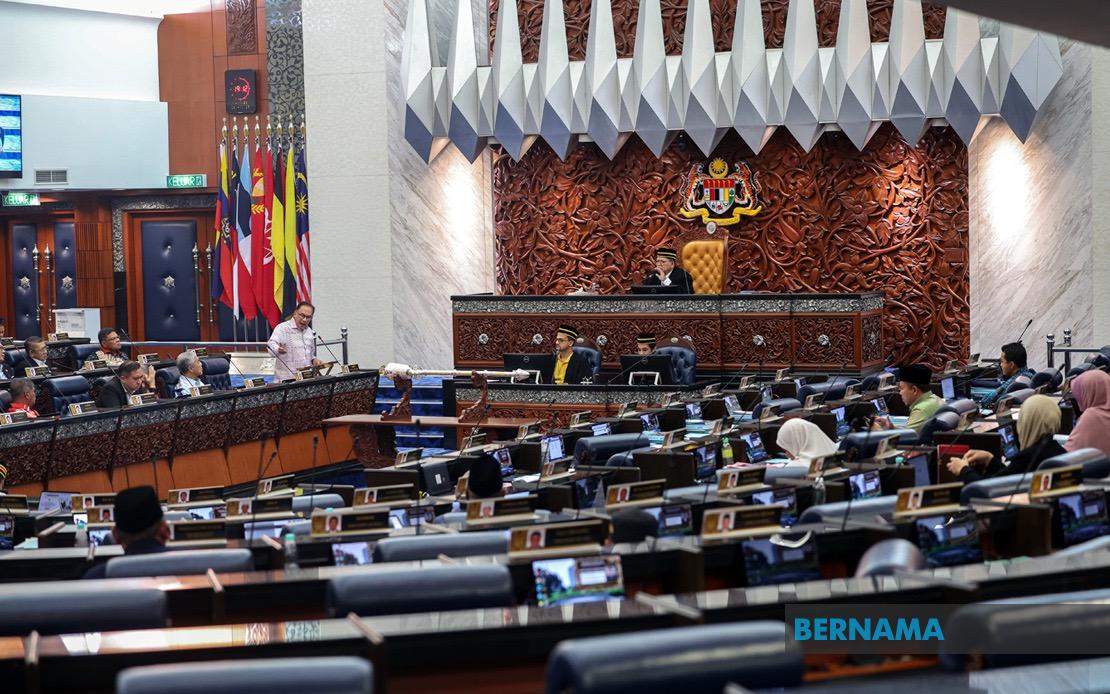
The government's People's Income Initiative (IPR) has provided financial assistance to 7,787 households across Malaysia during its first three years of operation, according to a statement from the Economy Ministry released through parliament on July 1. The programme represents a targeted intervention designed to work alongside established poverty alleviation schemes, addressing interconnected challenges including food security, employment creation, and the mounting financial pressures faced by lower-income Malaysians.
The initiative's underlying approach reflects policymakers' recognition that poverty reduction requires multifaceted solutions beyond traditional welfare transfers. By combining income support with job creation mechanisms, the IPR targets structural barriers that keep families trapped in cycles of economic hardship. The ministry's characterisation of the response as "highly encouraging" and results as "impressive" indicates that programme designers view the outcomes favourably relative to initial expectations, though the absolute numbers remain modest against Malaysia's total population of over 33 million.
Among the programme's most tangible achievements has been enabling certain participants to establish monthly incomes exceeding RM2,000, a threshold that carries significant symbolic and practical importance in Malaysia's economic context. For households previously classified as poor, reaching this income level typically signals transition beyond the official poverty line and represents genuine advancement in household financial stability. The ministry's emphasis on this outcome suggests that the IPR functions not merely as a income top-up but as a pathway toward economic self-sufficiency, though the ministry's statement does not clarify what proportion of beneficiaries have achieved this milestone.
The programme's design acknowledges that poverty manifests through multiple dimensions simultaneously affecting vulnerable households. Food insecurity particularly impacts low-income families, who dedicate disproportionate shares of household budgets to basic nutrition. Simultaneously, high living costs—encompassing housing, utilities, transportation, and healthcare—consume resources that might otherwise support education or skill development. By explicitly targeting these interconnected challenges rather than addressing them separately, the IPR attempts to deliver more comprehensive support than conventional single-purpose welfare schemes.
The question posed by Wan Ahmad Fayhsal Wan Ahmad Kamal (PN-Machang) in parliament suggests growing legislative scrutiny of the IPR's performance, a development reflecting broader interest in government spending effectiveness. Legislators increasingly demand concrete evidence of impact when evaluating social programmes, particularly those consuming public resources over extended periods. The detailed parliamentary response indicates the government views transparent reporting as important for maintaining public confidence in its poverty reduction initiatives.
Integrated to the IPR's implementation is Malaysia's Main Data Base (PADU), a government data-sharing infrastructure designed to coordinate service delivery across multiple agencies. The ministry disclosed that 204 government agencies have now integrated continuous data sharing with PADU, creating a networked system theoretically capable of identifying eligible beneficiaries and reducing administrative fragmentation. As of June 2026, twenty-seven data-sharing applications from government departments received approval, enabling these agencies to coordinate programmes more effectively and tailor interventions to individual household circumstances.
The PADU integration represents a significant modernisation of Malaysia's social safety net infrastructure, shifting away from siloed agency operations toward coordinated national systems. Rather than requiring applicants to navigate multiple separate agencies with inconsistent eligibility criteria, integrated data systems theoretically streamline access to government services. This architectural change has implications extending well beyond the IPR itself, potentially transforming how Malaysians interact with government support systems across numerous policy domains including healthcare, education, and housing assistance.
The thirty-seven approved applications for data sharing across government agencies reflects substantial progress in building interoperable systems, though this figure simultaneously underscores how vast remaining coordination challenges remain. With over two hundred agencies participating in PADU, the approval rate for specific data-sharing applications remains relatively modest, suggesting complex technical, legal, or policy barriers continue impeding comprehensive integration. Overcoming these obstacles will likely require sustained investment and political commitment from the bureaucracy.
From a Malaysian and Southeast Asian perspective, the IPR experience carries relevance for regional policymakers confronting similar poverty and inequality challenges. Malaysia's approach—combining direct income support with employment creation and underpinned by modernised data infrastructure—offers a model that other developing economies might adapt to their contexts. However, the programme's reach of roughly 7,800 households after three years also illustrates the enormous scale of resources required to meaningfully address poverty across national populations, highlighting budgetary and administrative constraints that many Southeast Asian governments face.
The implicit question raised by the IPR's trajectory concerns programme scalability and long-term sustainability. Expanding from 7,787 households to reach Malaysia's estimated poor population—typically numbering in the hundreds of thousands depending on poverty line definitions—would require substantially increased funding and administrative capacity. Policymakers must balance desires for comprehensive coverage against fiscal limitations and competing demands for government spending. The ministry's emphasis on the programme's complementary role alongside existing poverty initiatives suggests recognition that the IPR functions as a supplement rather than replacement for broader social safety nets.
Looking forward, the combination of IPR expansion and PADU development positions Malaysia to potentially enhance targeting precision and administrative efficiency in poverty reduction efforts. Data integration theoretically enables government to identify vulnerable populations more accurately and direct resources toward those with greatest need. However, translating technological capability into genuine service improvements requires sustained institutional reform, adequate funding allocation, and political commitment from leadership. The next phase of Malaysia's poverty reduction trajectory will likely depend less on programme design innovation and more on whether government demonstrates willingness to scale existing mechanisms to meaningful population levels.

