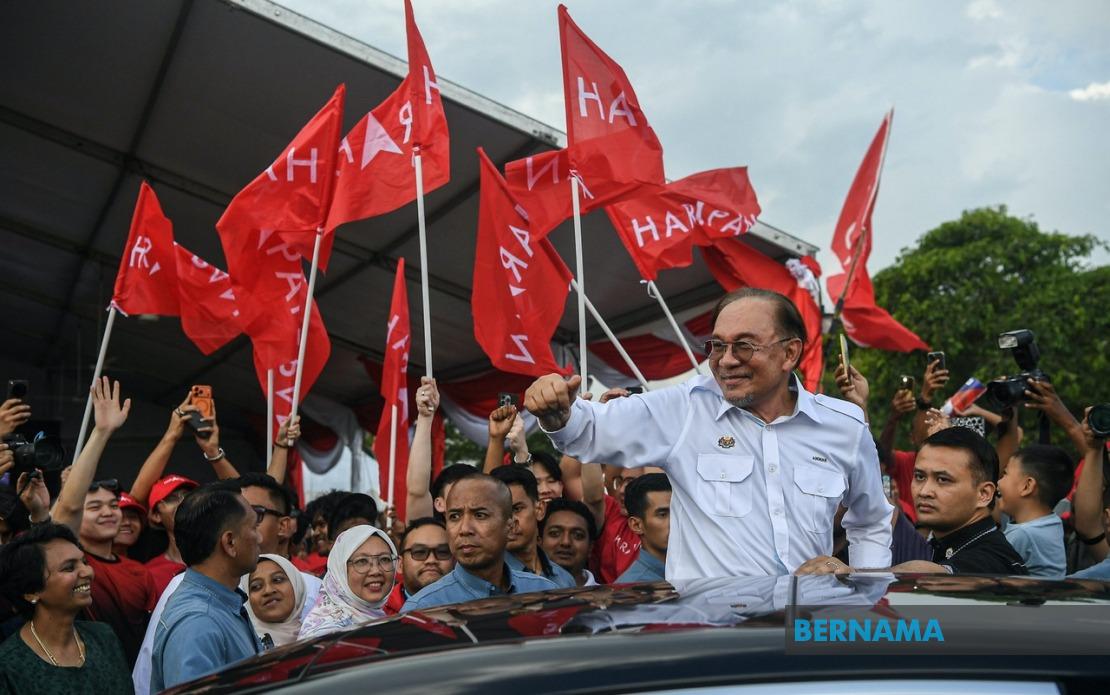
The 16th Johor State Election has witnessed unprecedented digital innovation, with political parties weaponising TikTok algorithms and Facebook analytics to reach voters. Yet beneath this high-tech campaign veneer lies a resilient tradition: older voters across the state still believe that nothing substitutes for meeting a candidate in the flesh. A survey conducted by Bernama revealed that while online platforms have become ubiquitous campaign channels, senior citizens regard physical presence as the ultimate barometer of a candidate's authenticity and commitment.
For many elderly Johoreans, the appeal of ground-level campaigning rests on something quantifiable yet ineffable. A. Chandra, 70, who has voted in Perling across multiple election cycles, articulated this clearly: the energy of a live crowd, the chance to observe a leader's composure under pressure, and the spontaneous dialogue that emerges when candidates address concerns directly cannot be replicated through a smartphone screen. The retired teacher's perspective reflects a broader conviction among his cohort that character emerges through unscripted moments—a handshake, a direct gaze, the way a politician responds to an unexpected question. These interactions furnish what social media cannot: a visceral sense of whether a person truly believes what they are saying.
Housewife Maimunah Ismail, 73, acknowledged the practical appeal of Facebook and mobile messaging groups for staying informed while managing household responsibilities. Yet she too prioritises attending rallies when health and circumstance permit, finding them superior venues for evaluating a candidate's integrity and policy comprehension. This observation exposes a critical nuance in Malaysian electoral behaviour: accessibility and convenience do not automatically displace trust-building mechanisms that older generations have relied upon for decades. Social media serves as a complement, not a replacement, particularly for those juggling caregiving duties or mobility constraints.
Meanwhile, younger seniors like Fairuz Saif, 59, from Kempas, resist the stereotype of digital illiteracy among their age group. He argued instead that campaign effectiveness depends on how skilfully parties craft their messaging. When content employs transparent language and avoids manipulative framing, voters respond across generational lines. However, Fairuz maintained that direct candidate engagement still carries greater persuasive force because face-to-face forums permit immediate clarification and enable voters to assess a politician's authenticity rather than rely on curated online personas.
The mobility factor introduces another layer to this campaign calculus. M. Sivathramani, 73, a retired civil servant with movement limitations, exemplifies how digital platforms have democratised political participation. TikTok videos and Facebook updates allow him to remain politically engaged without navigating crowded venues—a genuine improvement in electoral access. Yet significantly, Sivathramani expressed a preference to attend in-person events if circumstances permitted, suggesting that even voters who have migrated to digital media for practical reasons harbour a lingering attachment to traditional campaigning's experiential quality.
Business owners like Lee Lian Chen, 58, from Bukit Permai, employ what might be termed a sequential filtering strategy. She uses social media to conduct preliminary research into candidates' manifestos and implementation track records, then makes her conclusive assessment through ground interaction. This approach reflects the maturation of electoral sophistication among Malaysian voters: they deploy multiple information channels strategically, depending on the decision stage, rather than relying exclusively on any single source. For voters casting ballots only once every five years, comprehensiveness matters more than speed.
Academic analysis of this phenomenon reveals structural rather than merely generational explanations. Dr Nazreena Mohammed Yasin from Universiti Tun Hussein Onn Malaysia's Department of Social Sciences observed that physical and digital channels have become genuinely symbiotic rather than antagonistic. Contemporary campaigns that neglect either sphere risk alienating significant voter segments. Seniors increasingly inhabit both spaces—scrolling through WhatsApp political groups whilst watching televised debate broadcasts—creating a genuinely hybrid information diet that defies simple categorisation.
The generational diversity within Malaysia's older electorate complicates straightforward narratives about age and technology adoption. While some seniors remain anchored to newspapers and television, others have embraced Facebook and TikTok enthusiastically, appreciating their accessibility and real-time engagement features. Geographic, educational, and socioeconomic backgrounds shape these patterns more dramatically than age alone. A retired bank manager exhibits radically different digital fluency than an agricultural worker of identical age, yet both might share the conviction that a candidate's physical presence conveys trustworthiness more effectively than a polished video advertisement.
For Malaysia's political strategists, the implication is clear: the 2.7 million voters preparing to elect 56 representatives across Johor's constituencies expect comprehensive campaign accessibility. Parties that invest solely in viral content while neglecting grassroots rallies misread the electorate's actual preferences. Conversely, campaigns relying exclusively on ground operations whilst ignoring digital platforms leave time-constrained workers and mobility-limited citizens underserved. The 16th Johor State Election appears to have created conditions where this hybrid approach has matured from experimental innovation into voter expectation.
This electoral landscape also carries implications beyond Johor's borders. As Malaysia's older populations continue expanding, and as digital platforms entrench themselves further in political communication, the tension between traditional and technological campaigning methods will only intensify nationally. Southeast Asian democracies face similar pressures, with ageing populations maintaining cultural preferences for personal interaction whilst younger cohorts demand digital accessibility. The Johor experience suggests that successful future campaigns will not choose between these modalities but master both simultaneously, creating seamless voter experiences that respect diverse preferences and mobility circumstances while delivering consistent messaging across all channels.

