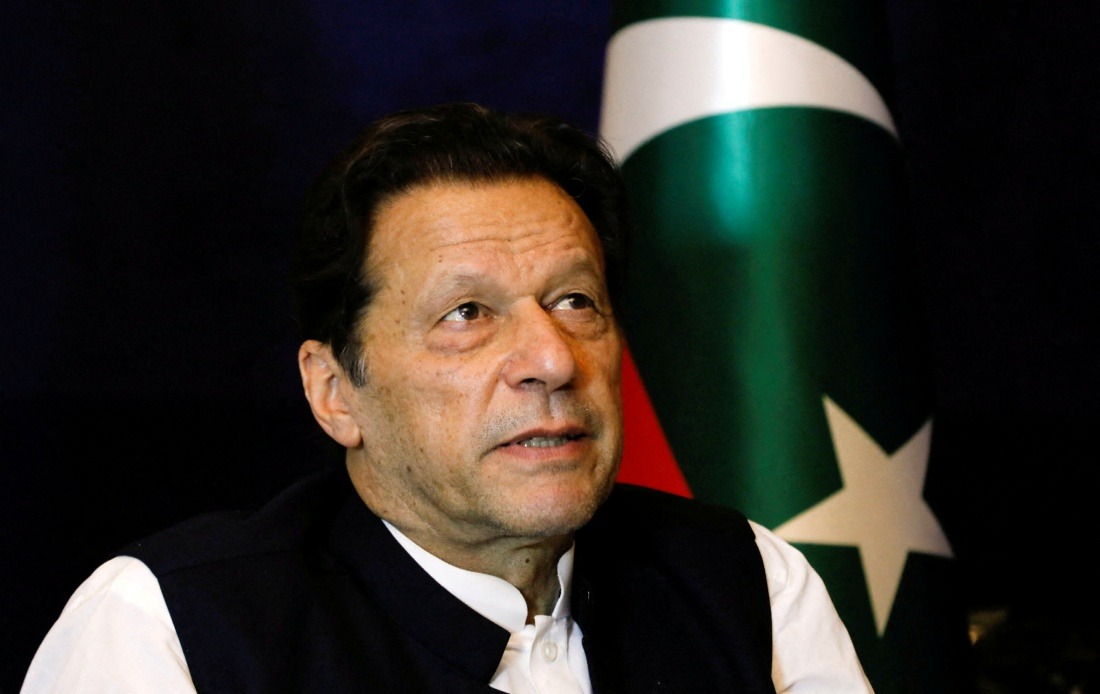
Former Pakistani Prime Minister Imran Khan was remanded to Adiala Jail on Friday morning after completing a comprehensive medical evaluation mandated by the nation's highest court. The 73-year-old cricket legend and founding chairman of Pakistan Tehreek-e-Insaf (PTI) underwent the examination at Pakistan Institute of Medical Sciences (PIMS) in the capital, Islamabad, before being escorted back to detention around 5 am local time. The development marks another chapter in Khan's tumultuous legal saga that has dominated Pakistani politics since his ouster from office in 2022.
Pakistani Information Minister Attaullah Tarar confirmed the medical procedures in a statement on social media platform X on Friday, explaining that the examination took place under secure conditions following a Supreme Court directive issued earlier in the week. A specialised medical team comprising an ophthalmologist, cardiologist, and general physician conducted the thorough health assessment, ultimately reaching the conclusion that Khan remained in adequate medical condition. Khan's sister, Uzma Khan, was permitted to observe the entire examination process, providing family oversight during the procedure at the government facility.
The Supreme Court had originally directed prison authorities to transfer Khan to the privately-operated Shifa International Hospital, a facility known for treating high-profile patients in Pakistan. However, government officials opted to conduct the medical assessment at PIMS instead, citing security concerns arising from demonstrations staged by PTI supporters near Shifa International Hospital and along the designated transit route. Despite this change in venue, medical professionals from Shifa International Hospital were present during the examination at PIMS, ensuring consistency with the court's original intent to secure an independent professional evaluation of Khan's health status.
This medical examination represents a rare concession to Khan's legal team, which has persistently raised health concerns throughout his incarceration. Since his arrest in August 2023, Khan has faced multiple legal proceedings across various charges related to alleged corruption and security violations. The PTI and Khan's supporters have consistently contended that the accusations are politically motivated and designed to eliminate him from Pakistan's competitive electoral landscape. The Supreme Court's decision to mandate medical oversight suggests at least some judicial acknowledgment of these health-related claims, even as the broader legal proceedings continue.
Khan's detention at Adiala Jail represents a significant reversal for the man who once commanded Pakistan's government and a substantial electoral following. His fall from power came after months of political turmoil, mass protests, and tensions with Pakistan's powerful military establishment. The charges against him span multiple jurisdictions and issues, ranging from alleged possession of state secrets to financial irregularities. Throughout his time behind bars, Khan has maintained his innocence and framed his prosecution as part of a coordinated campaign to silence his criticism of Pakistan's governance structures.
The Supreme Court has scheduled the next hearing in Khan's case for September 16, at which point the court indicated Khan could remain hospitalised pending further legal developments. This provision creates a potential pathway for Khan to secure temporary relief from jail conditions, though it remains contingent on the court's assessment at the scheduled hearing. The allowance for continued hospital access, subject to future judicial review, suggests the court is balancing competing concerns about both Khan's welfare and the state's security interests.
For Malaysian and Southeast Asian observers, Khan's case illuminates broader regional patterns concerning the intersection of political power, judicial independence, and detention practices. Pakistan's political history demonstrates how transitions of power can trigger legal mechanisms employed against previous leaders, a phenomenon familiar to several countries in the region grappling with similar governance challenges. The involvement of security apparatus in decisions regarding Khan's medical care and facility placement underscores the complex relationship between civilian institutions and military influence that continues to shape Pakistani politics.
The PTI has leveraged Khan's imprisonment as a rallying point for its political base, organising demonstrations and maintaining that his prosecution represents judicial overreach serving particular political factions. The party's ability to mobilise supporters outside hospitals and detention facilities, as evidenced by the security concerns that prompted the PIMS venue change, demonstrates Khan's continued capacity to galvanise public sentiment despite his incarceration. This dynamic creates ongoing pressure on judicial and security institutions navigating between maintaining order and accommodating legitimate political expression.
Khan's celebrity status as a cricket World Cup winner enhances his political profile in ways that many other detained politicians cannot claim. His iconic achievement in leading Pakistan to victory in the 1992 Cricket World Cup provides him with a reservoir of public goodwill that transcends conventional partisan divisions. This cultural dimension of his political identity means his detention carries implications extending beyond technical legal questions into broader considerations of national identity and historical symbolism within Pakistani society.
The medical examination outcome confirming Khan's fitness carries political significance alongside health implications. A finding that Khan required extensive hospitalisation could have created pressure for his release or transfer to medical custody, potentially weakening the government's position in maintaining his detention. Conversely, the certificate of fitness supports the authorities' contention that imprisonment poses no extraordinary threat to Khan's wellbeing, even as his legal team continues advocating for release on grounds including health concerns.
As Khan returns to Adiala Jail, Pakistan's political scene remains fractured between PTI supporters demanding his exoneration and government authorities defending his prosecution as legally justified. The September 16 Supreme Court hearing will provide another opportunity for legal arguments to be presented, though the trajectory of similar cases in Pakistan suggests protracted proceedings remain likely. For regional observers monitoring Pakistan's democratic institutions and rule of law, Khan's case serves as a significant indicator of whether judicial processes can function independently from political pressures.

