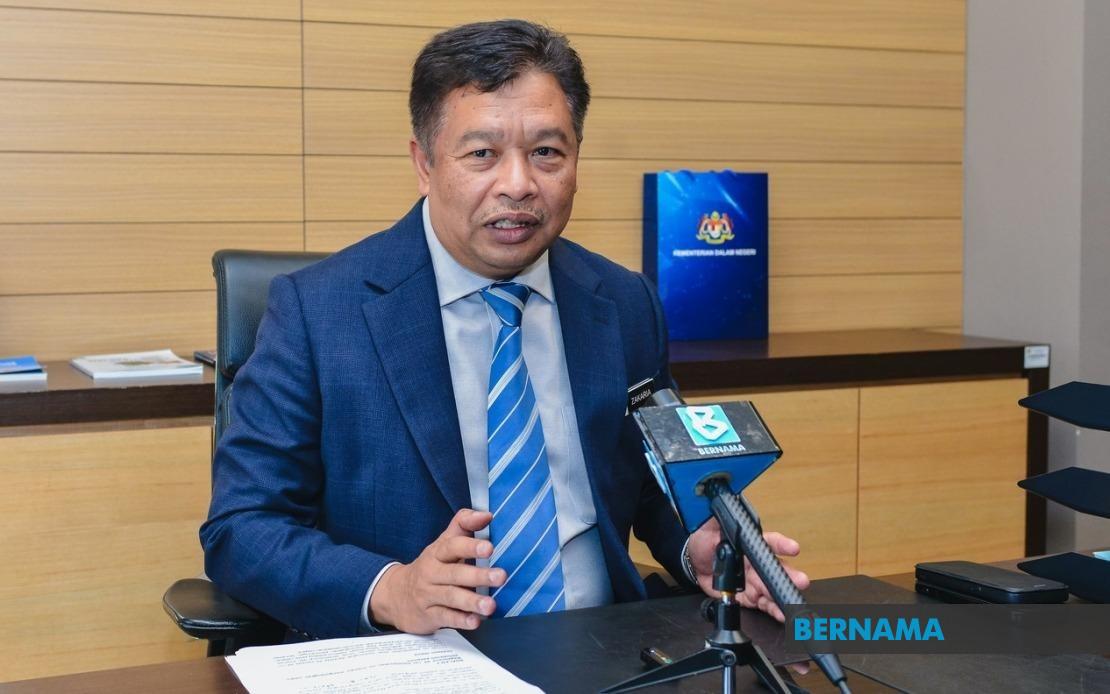
Malaysia's Immigration Department is operating at maximum readiness to handle the expected surge in border crossings as voters employed in Singapore prepare to return for the Johor State Election scheduled for Saturday, July 11. The department's director-general Datuk Zakaria Shaaban confirmed that continuous system monitoring and inspection protocols have been activated across the country's primary entry points to guarantee frictionless voter movement during what is expected to be one of the busiest election-related travel periods in recent years.
The two critical gateways serving the cross-border commuter population are the Sultan Iskandar Building (BSI), which connects JB Sentral directly with Woodlands via the Malaysia-Singapore Second Link, and the Sultan Abu Bakar Complex (KSAB) in Tanjung Kupang, also accessible through the same international bridge. These facilities process up to 300,000 passengers daily under normal circumstances, making them among the world's most heavily trafficked land borders. The sheer volume of movement during election periods presents significant operational challenges that require meticulous coordination and technical robustness.
According to Datuk Zakaria, both inspection complexes are currently functioning optimally, with all existing computer systems performing as expected. The Immigration Department has deliberately chosen to maintain its current technological infrastructure rather than introduce new systems ahead of the election, a decision that reflects confidence in proven procedures while minimising the risk of untested complications. Should any technical irregularities emerge, the director-general assured that a dedicated technical team stands ready to diagnose and resolve issues instantaneously.
The department has also established contingency protocols to ensure that operations continue uninterrupted even in scenarios involving system failures. Manual inspection procedures are primed to activate immediately should the automated systems encounter disruptions, ensuring that processing queues do not accumulate and voter access is maintained. This layered approach—combining technological reliability with human-backed fallback mechanisms—demonstrates the seriousness with which the immigration authorities are treating their responsibilities during the electoral period.
Round-the-clock system monitoring has been scheduled to begin well before polling day, allowing technical personnel to identify and address any performance anomalies during normal traffic conditions rather than during the election rush. The objective is to create a problem-free environment on July 11 itself, enabling voters situated in Singapore to exercise their democratic rights without encountering border-related delays or administrative hurdles. This preventative approach underscores the department's commitment to removing practical barriers to political participation.
The Home Ministry has similarly pledged its institutional backing for smooth cross-border voter movement. Home Minister Datuk Seri Saifuddin Nasution Ismail has activated a comprehensive mitigation strategy that extends beyond immigration procedures to encompass broader travel coordination between Malaysian and Singaporean authorities. This inter-ministerial alignment reflects recognition that election-related border management is not purely an immigration matter but requires coordinated action across multiple government agencies and, informally, with Singapore's relevant departments.
The Johor State Election represents a significant democratic exercise, with 172 candidates competing for 56 seats across the state. Early voting sessions commence on July 7, allowing some electors to cast ballots before the main polling day, which should help distribute electoral traffic across a wider timeframe and potentially ease pressure on border facilities. However, the majority of out-of-state and overseas voters are expected to make their journeys on or immediately before July 11.
For Malaysian citizens working in Singapore, which includes professionals in finance, technology, manufacturing, and services sectors, cross-border commuting is routine—but election days introduce unpredictability into scheduling patterns that border authorities must accommodate. Workers may need to adjust their employment arrangements or seek special leave to participate in voting, creating temporal clustering of border crossings that differs from typical daily patterns. The Immigration Department's preparations appear calibrated to absorb this abnormal but predictable surge.
The emphasis on seamless border operations carries broader significance for Malaysia's regional standing and electoral integrity. Democratic participation should not be impeded by logistical barriers, and the visible commitment to removing such obstacles demonstrates institutional recognition of citizens' political rights. For the substantial Malaysian expatriate workforce in Singapore and beyond, operational efficiency at border points signals that their participation in domestic elections is valued and facilitated by their home country's public administration.
The focus on system reliability and contingency planning also reflects lessons learned from previous elections and international best practices in border management during peak-demand periods. Modern immigration operations increasingly depend on interconnected digital systems, and the recognition that these systems require specialised oversight and rapid troubleshooting capability is mature institutional thinking. By maintaining both technological vigilance and procedural flexibility, the Immigration Department is positioning itself to handle whatever operational challenges the election day surge presents.

