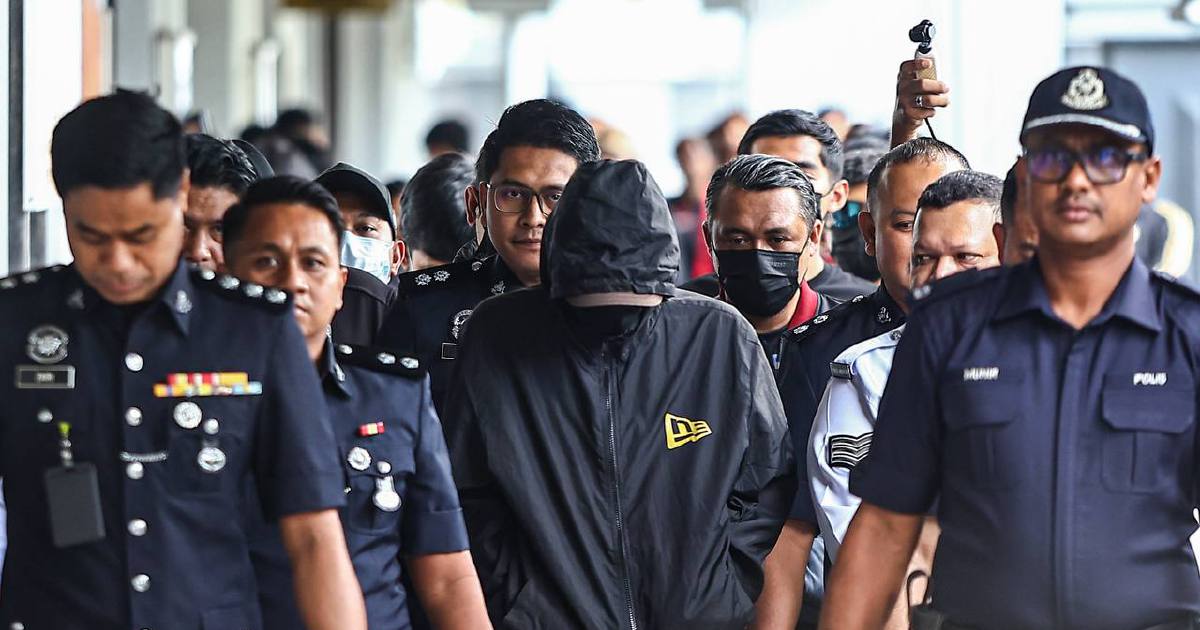
A driver employed by Malaysia's Immigration Department appeared before magistrates in Kuala Lumpur today to contest charges stemming from a catastrophic traffic collision that claimed three lives at a busy city intersection. The accused, who operates one of the government department's heavy vehicles, faced a total of five criminal charges relating to the incident, with three counts specifically alleging death caused through reckless or dangerous driving. The crash occurred at Maju Junction on Jalan Sultan Ismail, one of the capital's major thoroughfares, and shocked the local community whilst drawing attention to ongoing road safety concerns in urban areas across Malaysia.
The gravity of the charges underscores the serious consequences of the collision, which resulted in multiple fatalities within a single family unit. Deaths caused by reckless or dangerous driving represent among the most severe traffic-related offences in Malaysian law, carrying substantial custodial sentences and potential licence disqualifications. The decision to claim trial rather than enter a plea has set the case for an extended court process, suggesting the defence intends to mount a substantive challenge to the allegations. This approach means the prosecution will need to present evidence demonstrating either reckless conduct or a departure from the standard expected of a competent driver operating a commercial vehicle.
The involvement of an Immigration Department vehicle raises additional questions about vehicle maintenance standards, driver training protocols, and whether fatigue or mechanical failure may have contributed to the incident. Government departments operating heavy commercial vehicles face particular scrutiny regarding occupational health and safety practices, and regulatory bodies will likely examine whether proper maintenance schedules and driver rest requirements were observed. The lorry's condition at the moment of impact, the driver's hours of service, and any mechanical anomalies become crucial evidentiary points that may emerge during trial proceedings.
Jalan Sultan Ismail represents a critical arterial route through central Kuala Lumpur, carrying substantial volumes of passenger and commercial traffic throughout the day. The Maju Junction intersection, where this tragedy unfolded, serves as a significant confluence point for multiple traffic flows, and congestion at such locations creates environments where driver concentration lapses and reaction times become compressed. Road safety advocates have long raised concerns about intersection design, traffic signal timing, and vehicle speed management at complex urban junctions, and this incident exemplifies the real-world consequences when such systemic vulnerabilities intersect with individual driver error or negligence.
The prosecution will need to establish specific elements demonstrating either reckless driving or driving deemed dangerous to the public. Under Malaysian traffic law, recklessness requires evidence that the driver consciously disregarded risks or acted with flagrant indifference to danger. Dangerous driving, alternatively, may involve excessive speed, violation of traffic signals, failure to maintain proper lane discipline, or impaired capabilities. The attending traffic police will have compiled detailed scene investigation reports, potentially including vehicle damage analysis, tyre mark patterns, witness statements, and any available closed-circuit television footage from surrounding businesses or infrastructure.
Family members who lost loved ones in such collisions often struggle not only with immediate grief but with protracted court proceedings that revisit the trauma repeatedly across months or years of litigation. The three individuals who perished in this Maju Junction crash represent a household destroyed in seconds, and their loss resonates across broader conversations about road safety responsibility within Malaysian society. Malaysian road fatality statistics have consistently troubled public health authorities, with annual deaths numbering in the thousands despite decades of awareness campaigns and enforcement initiatives.
The claim to trial process requires the accused lorry driver to contest the allegations before magistrates, although the severity of charges involving multiple deaths might eventually necessitate elevation to the High Court system depending on sentencing jurisdiction considerations. The driver's employer, the Immigration Department, faces no charges but may become subject to internal disciplinary proceedings or civil liability claims from bereaved families. Government agencies operating commercial fleets increasingly face scrutiny regarding duty-of-care obligations and whether adequate systems exist to prevent foreseeable harms to road users.
This incident occurs within a broader context of persistent road safety challenges across Southeast Asia, where Malaysia experiences road casualty rates that significantly exceed comparable middle-income countries in other regions. Contributing factors include inconsistent enforcement of traffic regulations, insufficient penalties perceived as inadequate deterrents, and infrastructure design that fails to prioritise vulnerable road users. The clash between rapid urbanisation, increasing vehicle numbers, and road networks not scaled appropriately to accommodate traffic demand creates chronic conditions where preventable tragedies continue to occur.
The magistrate's court proceedings will establish a factual foundation through evidence presented by both prosecution and defence teams. Expert witnesses may include accident reconstruction specialists who can testify regarding vehicle dynamics, sight lines, and whether the driver had reasonable opportunity to prevent collision through appropriate braking or steering interventions. The timeline of events leading to impact becomes critical, as do conclusions about whether ordinary prudent driving standards were breached. Ultimately, the court must determine whether criminal culpability reaches the threshold required for conviction on charges as serious as causing death through dangerous driving.

