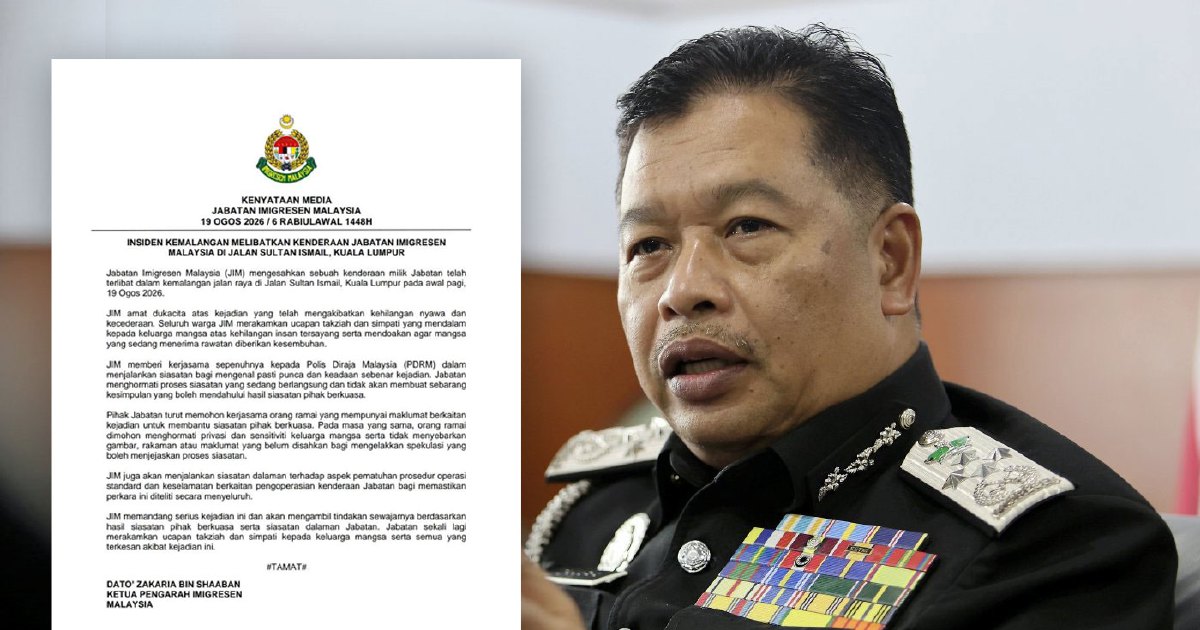
The Immigration Department has announced it will undertake a comprehensive internal investigation into the circumstances surrounding a fatal traffic collision involving one of its vehicles that occurred on Jalan Sultan Ismail in Kuala Lumpur during the early hours of today. The probe will examine whether the department's vehicles complied with all relevant standard operating procedures and whether adequate safety measures were in place at the time of the incident.
The decision to launch an internal review reflects the seriousness with which the Immigration Department regards the accident and its commitment to understanding what went wrong. Such investigations into departmental vehicle incidents are standard practice in Malaysia's civil service, allowing organisations to identify systemic issues, procedural gaps, or equipment failures that may have contributed to the tragedy. The department's willingness to scrutinise its own operations signals recognition that public accountability is essential when government vehicles are involved in fatal accidents.
Jalan Sultan Ismail, a major arterial road running through central Kuala Lumpur connecting business districts with residential areas, sees consistently heavy traffic flow, particularly during peak hours. The accident occurring in the early morning hours raises questions about whether fatigue, visibility, road conditions, or vehicle maintenance played any role in the collision. The location's significance in the city's traffic network means any incident there draws immediate attention from both authorities and the public.
The Immigration Department operates a substantial fleet of vehicles used for official duties including border patrols, administrative travel, and personnel transport. Ensuring that these vehicles meet safety standards and that drivers receive appropriate training are critical responsibilities. The internal investigation will likely examine driver credentials, hours of service compliance, vehicle maintenance records, and whether any modifications or repairs had been performed recently on the vehicle involved in the crash.
Standard operating procedures within government departments typically cover pre-journey vehicle inspections, driver fatigue management, speed limits on public roads, and incident response protocols. The Immigration Department's investigation will assess whether staff adhered to these guidelines and whether the procedures themselves are adequate given modern traffic conditions and road safety requirements. This scrutiny may lead to recommendations for updated protocols.
The timing of the accident in early morning hours is particularly significant, as researchers have documented increased risks of fatigue-related incidents during late-night and early-morning periods. The investigation will examine whether the driver had adequate rest before operating the vehicle and whether departmental policies on shift work and driving hours align with evidence-based safety practices. Such findings could have implications for how the Immigration Department manages its operational schedules.
For Malaysia's broader public service and government transport operations, this incident serves as a reminder of the ongoing importance of vehicle safety management. While fatal accidents involving government vehicles occasionally occur across different departments, each incident provides an opportunity to strengthen protocols and prevent future tragedies. Other government agencies will likely monitor the findings of this investigation with interest, as lessons learned could have sector-wide applications.
The loss of life in this accident affects not only the immediate family members and colleagues of those involved but also raises public concern about safety standards in government operations. Citizens interact with various government vehicles on Malaysian roads daily, and confidence in the safety of government transport operations is an important element of public trust. A transparent investigation and subsequent implementation of any recommended improvements can help restore and maintain that confidence.
The internal investigation's scope will likely extend beyond immediate cause identification to examine whether departmental oversight mechanisms are functioning effectively. This includes reviewing management's monitoring of fleet safety records, analysis of driver performance data, and auditing of compliance with established procedures. Such comprehensive review helps prevent future incidents by addressing not just the immediate circumstances of an accident but systemic factors that may have enabled it.
The Immigration Department's internal findings will presumably be shared with relevant authorities overseeing government safety standards and potentially with law enforcement agencies investigating the accident itself. In Malaysia, fatal traffic accidents also fall under police investigation, and the department's internal probe would be separate from but complementary to any official criminal investigation. Both inquiries together should provide a complete picture of what occurred.
Looking forward, the Immigration Department may face pressure to demonstrate concrete changes arising from this investigation. Whether those changes involve updated driver training, vehicle fleet upgrades, revised shift scheduling, or enhanced pre-journey safety checks will depend on what the investigation reveals. Public disclosure of findings and remedial actions would further reinforce the department's commitment to preventing similar incidents.

