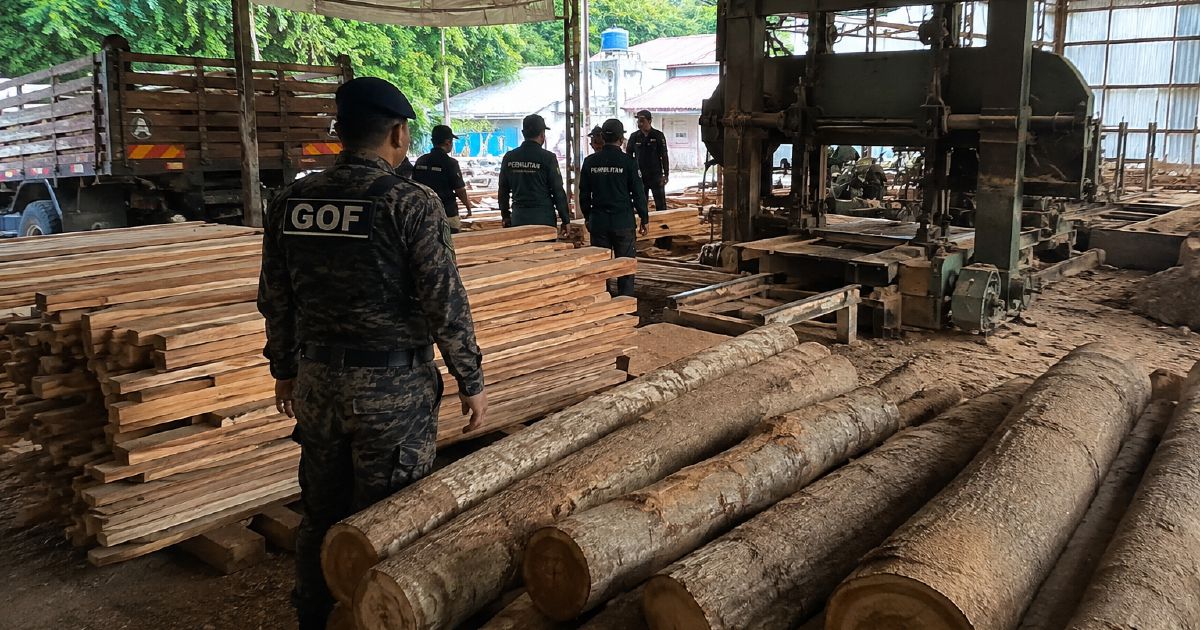
Enforcement authorities have dealt a significant blow to illegal timber operations in Terengganu, with the General Operations Force (GOF) conducting a sweep on a sawmill facility in the Kuala Berang area. During the operation, enforcement officers seized processing equipment and timber stocks collectively worth RM640,510, while also taking a 20-year-old individual into custody. The action underscores the government's continuing commitment to combat illicit logging and timber trafficking, which remain persistent challenges across the country's forested regions.
The Kuala Berang operation represents another chapter in the ongoing battle against uncontrolled timber extraction in Terengganu, a state with substantial forest reserves that have become flashpoints for illegal logging activity. The seizure of both raw timber materials and the specialized machinery used to process them suggests the facility was operating as part of a more integrated supply chain rather than as a simple transshipment point. Processing equipment typically forms the backbone of value-added timber operations, and its removal from circulation disrupts the mechanics of illegal production networks that supply timber to markets, both domestic and regional.
The financial value assigned to the seized materials—exceeding RM640,000—reflects the substantial commercial scope of such operations. Illegal timber trading represents a significant economic leakage for Malaysia, as prohibited harvesting circumvents taxation systems, forestry regulations, and sustainability protocols. These operations frequently target high-value timber species, depleting genetic diversity within forests and undermining long-term forest ecosystem health. The scale of seizure in this case suggests the Kuala Berang facility had been operating at a meaningful production capacity, likely serving broader distribution networks that stretch beyond Terengganu.
The 20-year-old suspect detained during the raid will likely face questioning regarding operational oversight, supply chains, and connections to broader trafficking networks. Law enforcement agencies have increasingly focused on dismantling the organizational structures supporting illegal logging rather than merely addressing individual transactions. This approach targets network coordinators, equipment suppliers, and end-buyers who collectively enable the illicit timber trade. Understanding the suspect's role within this ecosystem will provide valuable intelligence for authorities pursuing complementary investigations.
Terengganu's forests have experienced mounting pressure from illegal extraction in recent years, driven by strong regional demand for timber and the logistical advantage the state provides as a hub connecting to both domestic consumption and export channels. The state's long coastline and proximity to major ports make it an attractive staging ground for international timber trafficking operations. Enforcement challenges intensify during periods when regular monitoring capacity is strained or when coordination between state and federal enforcement agencies experiences gaps. Successful operations like the Kuala Berang raid depend on sustained intelligence gathering and rapid response capabilities that Malaysian enforcement bodies have been progressively strengthening.
The GOF's jurisdiction in this operation indicates the matter was treated as a significant threat to national forest security and public order. The GOF operates under the purview of the Ministry of Defence and typically handles situations requiring paramilitary-style enforcement, suggesting authorities regarded this particular facility as part of a systematic rather than opportunistic operation. The decision to mobilize GOF resources reflects assessment that standard civil forestry enforcement mechanisms required supplementary intervention.
The timber processing sector in Malaysia operates under a complex regulatory framework designed to ensure supply chain legitimacy and prevent laundering of illegally harvested wood. Sawmills are required to maintain detailed records of timber provenance, including forestry permits and harvest authorizations. The Kuala Berang operation likely revealed documentation failures or fraudulent paperwork used to disguise illegally sourced timber as legitimately harvested stock. Such documentation fraud is endemic to illegal timber operations throughout Southeast Asia, where forged permits and falsified harvest records create pathways for contraband materials to enter commercial supply chains.
The broader regional context amplifies significance of targeted enforcement actions targeting individual facilities. Malaysia sits within the Association of Southeast Asian Nations, where forest crime and timber trafficking generate billions in economic losses annually and contribute to transnational organized crime networks. Timber trafficking frequently intersects with other illicit activities including money laundering and corruption, particularly in contexts involving high-value tropical hardwoods. Disrupting operations like the Kuala Berang sawmill generates positive demonstration effects, signaling to other operators that enforcement risk has increased and that equipment and capital assets face genuine seizure risk.
Willingness of authorities to pursue enforcement action against sawmill operations represents an important commitment given the political sensitivity surrounding timber sector interests in Malaysian states. Forest industries generate employment and government revenue, creating constituencies opposed to enforcement stringency. However, maintaining forestry integrity requires sustained pressure on illegal segments that undercut legitimate processors, damage forest ecosystems, and generate state revenue leakage. Operations conducted under GOF authority, which carries substantial institutional authority, help counterbalance pressure from stakeholders seeking lighter enforcement approaches.
Looking forward, the investigation phase will prove critical to understanding whether the Kuala Berang sawmill operated as an isolated facility or as part of a larger organized timber trafficking enterprise. Intelligence gathered from the 20-year-old suspect and seized materials could inform parallel investigations targeting other facilities in Terengganu and neighboring states. Evidence recovered during the raid—equipment registrations, purchasing records, destination paperwork, and financial records—may reveal upstream suppliers of illegally harvested timber and downstream purchasers, enabling enforcement authorities to expand the scope of intervention. Successful prosecution of the detained individual will further signal enforcement seriousness.
The seizure operation also reflects improving coordination between intelligence agencies and field enforcement personnel responsible for forest crime prevention. Effective campaigns against illegal logging require detailed surveillance, informant networks, and tactical coordination that Malaysian authorities have progressively enhanced. The GOF operation's success demonstrates capabilities that, when systematically applied, can significantly disrupt illegal timber production and trafficking networks that otherwise operate with relative impunity in forested regions of peninsular Malaysia and East Malaysia.

