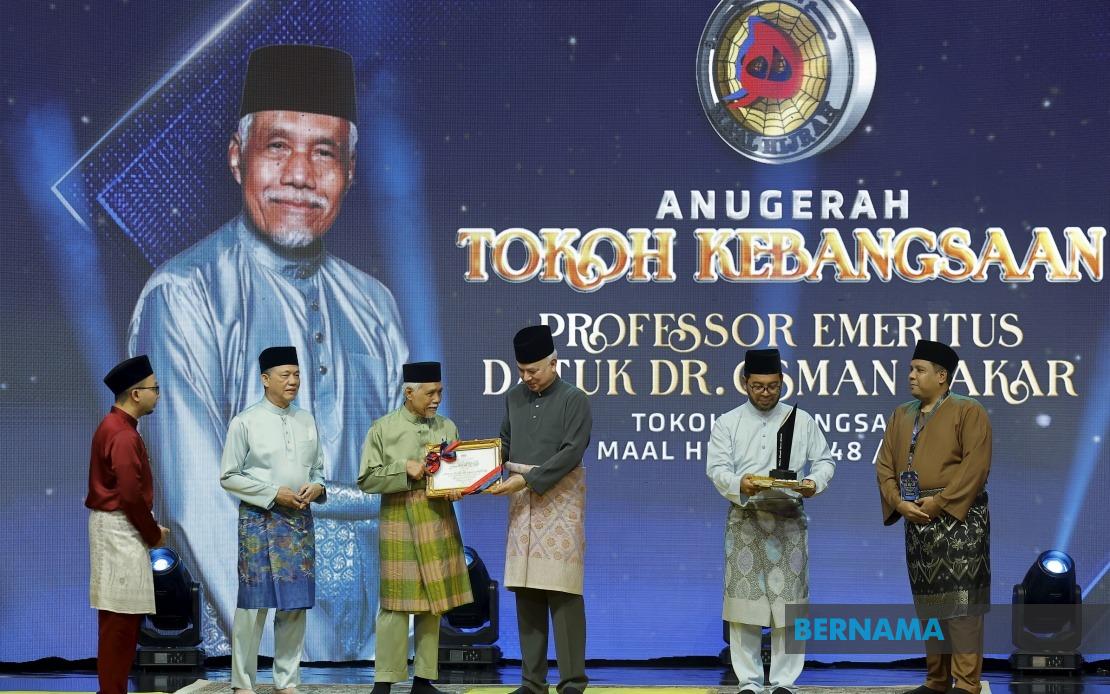
Prof Emeritus Datuk Dr Osman Bakar, Rector of the International Islamic University Malaysia (IIUM), has been honoured as the National Tokoh Maal Hijrah at the national-level Maal Hijrah 1448H/2026 celebration held at Putra Mosque in Putrajaya on June 17. The prestigious accolade recognises distinguished individuals who exemplify Islamic values and contribute meaningfully to society. The awards ceremony was presided over by Sultan Nazrin Shah, the Sultan of Perak, who presented recipients with cash prizes, trophies and certificates of appreciation.
The recognition extended beyond Malaysia's borders, with Dr Ahmad Al-Raysuni, a renowned Islamic scholar based in Morocco, receiving the International Tokoh Maal Hijrah award at the same ceremony. This dual recognition underscores the event's significance in celebrating both national and international contributions to Islamic thought and practice. The inclusion of a prominent international scholar alongside a Malaysian academic reflects the growing interconnectedness of Islamic scholarship across continents and the importance of cross-cultural dialogue in advancing religious understanding.
Osman Bakar's appointment to lead IIUM and his subsequent recognition as a Tokoh Maal Hijrah represent milestones in Malaysian higher education. As Rector of one of Southeast Asia's premier Islamic universities, his tenure has encompassed efforts to position IIUM as a centre of excellence in Islamic and secular disciplines alike. The award acknowledges not only his academic standing but also his demonstrated commitment to values that resonate with Malaysia's broader development agenda, particularly in fostering inclusive and compassionate communities.
The 2026 Maal Hijrah celebration centred on the theme "MADANI Dihayati, Ummah Diberkati", which translates to a vision of realising the MADANI framework whilst blessing the Muslim community. This thematic choice reflects Malaysia's ongoing emphasis on translating religious principles into tangible socioeconomic outcomes. The MADANI concept, a central pillar of the current government's developmental philosophy, emphasises mutual respect, meritocracy, inclusivity and sustainability. By anchoring the Maal Hijrah celebration to this framework, organisers sought to demonstrate how Islamic values align with contemporary aspirations for national progress and community resilience.
The ceremony drew high-profile attendance, including Deputy Prime Minister Datuk Seri Fadillah Yusof and his wife Datin Ruziah Mohd Tahir, as well as Minister in the Prime Minister's Department (Religious Affairs) Dr Zulkifli Hasan. The presence of senior government officials underscores the state's investment in religious affairs and the recognition of Maal Hijrah as an occasion for reaffirming national values. These gatherings serve as platforms through which the government communicates its priorities regarding Islamic education, scholarship and community cohesion to both domestic and international audiences.
For Malaysian readers and policymakers, Osman Bakar's recognition carries implications for the trajectory of Islamic higher education in the region. His background as an academic who bridges Islamic and Western philosophical traditions positions him as an influential voice in ongoing debates about modernisation, secularism and religious authenticity. His leadership at IIUM has sought to maintain rigorous standards in religious education whilst equipping graduates with skills relevant to a globalised economy. The award validates an approach that refuses false binaries between faith and reason, religious scholarship and scientific advancement.
The Tokoh Maal Hijrah award carries historical weight in Malaysia's religious calendar. Maal Hijrah, the Islamic New Year, has been formally celebrated at the national level for decades, with the Tokoh award introduced as a mechanism for honouring individuals whose contributions exemplify the values the Islamic calendar is meant to inspire. These individuals typically demonstrate excellence in scholarship, leadership, charitable work or community service. By selecting Osman Bakar, the selection committee highlighted his scholarly rigour, administrative leadership and commitment to advancing Islamic knowledge in ways accessible to diverse audiences.
The recognition of Dr Ahmad Al-Raysuni as the International Tokoh Maal Hijrah further contextualises Osman Bakar's achievement within a transnational Islamic intellectual ecosystem. Al-Raysuni, known for his work in Islamic jurisprudence and contemporary Islamic thought, represents the calibre of scholars whose work influences global conversations about Islam's relevance to modern challenges. The pairing of these two honourees suggests intentionality in celebrating scholars who combine traditional Islamic learning with engagement with contemporary concerns such as ethics, governance and social justice.
From a Southeast Asian perspective, the award reflects Malaysia's aspiration to position itself as a hub of Islamic learning and research. With IIUM serving as a flagship institution attracting students from across the Muslim world, recognition of its leadership matters symbolically and strategically. The university has increasingly positioned itself within networks of Islamic higher education globally whilst maintaining distinctive Malaysian characteristics. Osman Bakar's tenure has been marked by efforts to strengthen partnerships with international institutions whilst deepening roots in Malaysia's multicultural context.
The emphasis on values such as compassion, unity and community well-being embedded in the 2026 Maal Hijrah theme resonates with contemporary global concerns about polarisation, inequality and social fragmentation. By naming Osman Bakar as a representative of these values, the awards ceremony affirmed the relevance of religiously-grounded approaches to addressing collective challenges. This positioning suggests that Islamic scholarship and institutions are conceived not as separate from broader national development goals but as integral to achieving them.
Looking forward, Osman Bakar's recognition may influence conversations about leadership in Malaysian Islamic institutions. His background demonstrates the value of cultivating academics who can articulate Islamic thought in ways that engage both religious and secular audiences. As Malaysia navigates questions about religious expression in plural societies and the role of Islam in governance and education, individuals who bridge different intellectual traditions become increasingly valuable. The award thus functions as an endorsement of a particular model of Islamic leadership suited to contemporary conditions.
The ceremony also reflected Malaysia's efforts to maintain its role as a respected voice within global Islamic discourse. By honouring both a Malaysian academic and an international scholar, the celebration affirmed that excellence in Islamic learning transcends national boundaries whilst asserting Malaysia's contribution to it. For IIUM specifically, the recognition of its Rector enhances institutional prestige and signals to prospective students and partners that the university's leadership commands respect at the highest national levels. This validation may prove instrumental as the institution continues pursuing its strategic goals in research, teaching and community engagement.