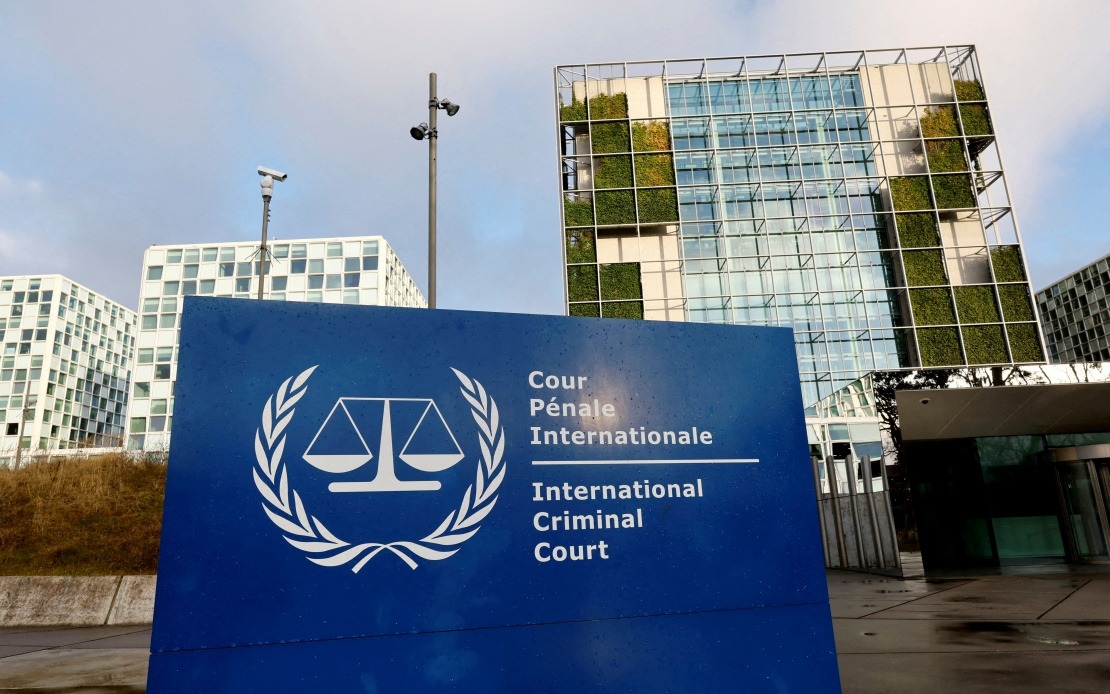
The International Criminal Court has escalated its confrontation with Washington, issuing a forceful rebuke of newly announced American sanctions that now extend to the court's highest leadership. The designations, revealed on Wednesday, target ICC President Tomoko Akane of Japan and Abdoulaye Seye of Senegal, who serves as a senior trial lawyer within the Office of the Prosecutor. This latest round of penalties represents a significant intensification of US pressure against the Hague-based institution, adding to an already substantial roster of sanctioned personnel.
The court's official statement characterised the measures as fundamentally undermining the independence that must underpin any legitimate judicial system. According to the ICC's response, the sanctions constitute a brazen assault on an institution operating strictly within the authority granted by its member states, a coalition spanning multiple continents and legal traditions. The language employed by court officials reflected deep frustration with what they view as external interference designed to compromise the integrity of international criminal justice mechanisms.
The scope of American penalties against the ICC has expanded considerably over recent months. Nine of the court's eighteen judges now face sanctions, alongside both deputy prosecutors, a former prosecutor, and at least one additional staff member. This growing list underscores the systematic nature of the US campaign, suggesting a coordinated pressure strategy rather than isolated punitive actions. The breadth of these designations raises significant questions about American intentions and whether the objective extends beyond specific court decisions to influence the institution's operational direction.
The ICC's statement articulated a core principle that resonates across the international legal community: targeting judicial personnel for performing their mandated duties fundamentally corrodes the rule of law upon which global order depends. The court warned that such coercive measures jeopardise not only its institutional functioning but the broader architecture of international justice. By sanctioning judges and prosecutors simply for executing their roles, critics argue, the US risks delegitimising international legal institutions that Africa, Europe, and numerous other regions depend upon for accountability mechanisms.
Particularly significant is the ICC's assertion that these sanctions compromise victims' pursuit of justice, particularly those who have exhausted domestic avenues and turned to the court as a final recourse. This argument highlights a humanitarian dimension often absent from political discussions about the ICC: the institution serves individuals and communities seeking accountability for atrocities when their own judicial systems have failed them. Sanctioning court officials potentially denies vulnerable populations access to the only mechanism capable of addressing egregious crimes.
The dispute between Washington and the Hague has deep roots in American opposition to several ICC investigations and prosecutions. The court has pursued cases involving conflicts where Western nations maintain significant interests, and this has generated sustained political resistance from the United States, which notably is not party to the Rome Statute establishing the ICC. This outsider status arguably emboldens American policymakers to impose unilateral penalties without the constraining considerations that bind member states.
For Malaysia and other Southeast Asian nations, this confrontation carries particular significance. Several regional countries, including Cambodia and the Philippines, maintain complex relationships with ICC mechanisms and international justice frameworks. The US sanctions campaign may indirectly influence how these nations view the court's viability and independence. Moreover, the dispute demonstrates how great power competition can destabilise international institutions, a pattern with obvious implications for regional stability and multilateral cooperation.
The ICC maintained its resolve to continue operating according to its mandate and founding statute, the Rome Statute, with full commitment to impartiality and independence. This declaration of intent, though firm, reflects a constrained position: the court cannot easily circumvent American financial pressure or diplomatic isolation, even while asserting its institutional autonomy. The statement functioned simultaneously as reassurance to member states and a defiant assertion that external pressure would not dictate judicial outcomes.
The court took note of backing from member states, civil society organisations, and international justice advocates, framing this support as validation of its institutional role. However, this coalition of supporters, while meaningful, faces constraints in countering American pressure, particularly given Washington's economic and geopolitical influence. The disparity between the court's moral authority and its material capacity to resist sanctions highlights fundamental vulnerabilities in international institutions lacking enforcement power independent of major states.
This episode illuminates broader tensions within the international legal order. The ICC represents an aspiration toward universal accountability, yet operates within a system where state power remains paramount. American sanctions effectively challenge the court's foundational premise that all individuals, regardless of nationality or political position, may face accountability for crimes against humanity. The ongoing confrontation suggests that building consensus around genuinely independent international justice institutions remains profoundly difficult when powerful states perceive such bodies as contrary to their interests.

