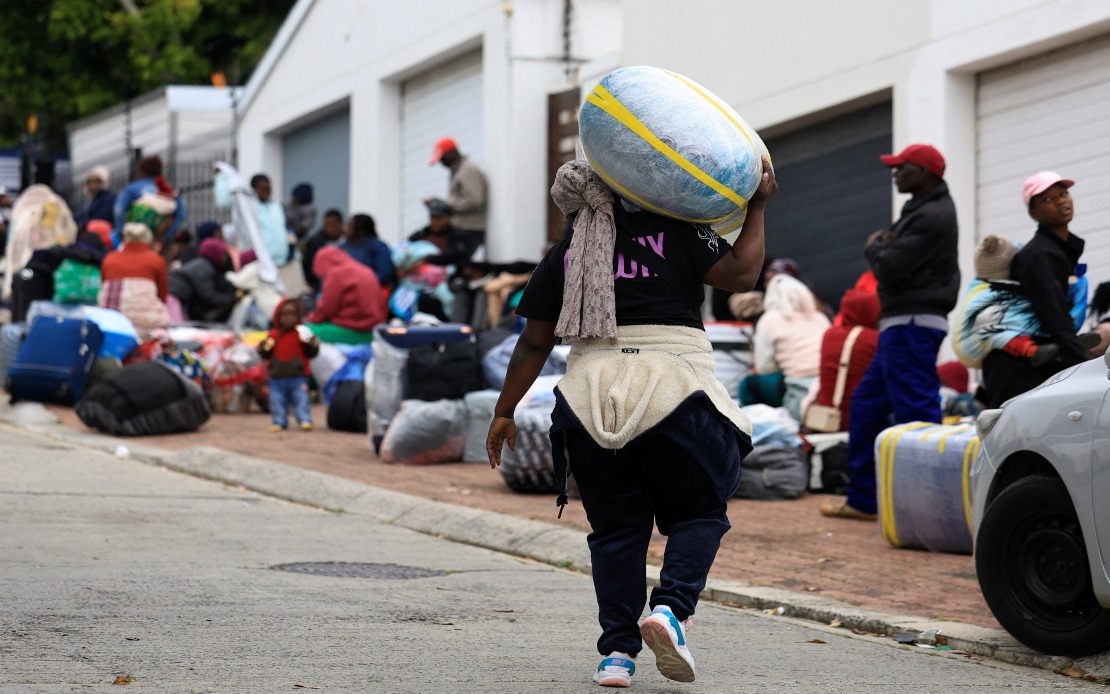
Amid rising anti-immigrant hostility in South Africa, authorities commenced the relocation of several hundred foreign nationals from Cape Town on Saturday, marking an attempt to de-escalate tensions that had driven thousands to seek emergency government assistance. The Southern African nation has become the focal point of regional migration pressures, with the movement of Zimbabwean and Malawian citizens through the Epping processing centre in Cape Town reflecting the broader humanitarian and political challenges facing the continent's most industrialised economy.
The evacuation operation transferred migrants from the overcrowded Epping facility toward Musina in Limpopo Province, a border region that serves as a concentration point for foreign nationals awaiting processing and eventual repatriation. South African Home Affairs officials simultaneously encouraged remaining applicants to bypass Cape Town altogether and proceed directly to the Musina site, effectively shuttering the Western Cape facility. This reorganisation represents a significant shift in how authorities manage the movement of undocumented foreigners, attempting to relocate the visible humanitarian crisis away from urban centres where anti-immigrant sentiment has intensified dramatically.
The conditions at the temporary processing centre deteriorated significantly as humanitarian organisations struggled to maintain adequate provisions. Aid workers documented cases of infectious disease emerging among the detained population, with reports of diarrhoea and flu-like symptoms spreading through the crowded facility. Sanitation infrastructure and food supplies, though provided by international organisations, proved insufficient for the scale of human need. When buses began their Saturday afternoon journey northward, approximately four hundred additional arrivals were turned away and forced to wait outside the facility, unable to access even the basic services that humanitarian groups had established.
The backdrop to this crisis stems from a coordinated anti-immigrant campaign that escalated dramatically in late June, when activist groups established an unofficial deadline of June 30 for undocumented foreign nationals to leave South Africa. The threat of coordinated violence prompted approximately three thousand people to abandon informal encampments outside the Zimbabwean consulate in Cape Town, where they had sheltered for roughly two weeks seeking assistance. These desperate individuals, fearing attack from xenophobic groups, overwhelmed the Department of Home Affairs facility at Epping, creating an untenable situation that forced the government's hand in initiating this mass relocation.
For individuals caught in the bureaucratic and security vacuum, the experience represents profound hardship compounded by systemic dysfunction. Yekuai Mokoena, a Zimbabwean national who had spent multiple nights outside the consulate before relocating to Epping with her two children, could only characterise the situation with stark simplicity: "The situation is bad." Her testimony encapsulates the despair of thousands whose aspirations for employment and livelihood in South Africa had been shattered by xenophobic hostility and administrative chaos. The plight of families like Mokoena's underscores how anti-immigrant movements disproportionately harm the most vulnerable, particularly women and children separated from support networks and facing uncertain futures.
The crisis reflects deeper structural challenges within South African immigration policy and social cohesion. South Africa, as the continent's primary economic engine and destination for regional migrants, has struggled to balance humanitarian obligations with domestic political pressures rooted in unemployment and resource scarcity. Anti-immigrant movements exploit legitimate economic anxieties among unemployed South Africans, attributing job losses and service deficiencies to foreign nationals rather than addressing systemic failures in education, infrastructure investment, and economic diversification. This scapegoating has created cyclical violence and has prompted government responses that prioritise rapid processing and repatriation over comprehensive immigration reform.
The concentration of foreign nationals in Musina presents its own challenges and opportunities. The Limpopo border town has become an unofficial transit hub where thousands of undocumented migrants await processing at any given time. Transferring hundreds from Cape Town to Musina may reduce visible pressure on urban infrastructure but risks concentrating humanitarian needs in a comparatively under-resourced region. The strategy tacitly acknowledges that South Africa cannot or will not absorb these populations permanently, instead facilitating expedited return to Zimbabwe and Malawi despite the economic desperation that compelled their northward migration initially.
For Zimbabwe and Malawi, the repatriation surge represents both humanitarian and economic implications. Zimbabwe, in particular, continues confronting severe macroeconomic instability, currency depreciation, and limited employment opportunities—the very conditions that drove emigration. The return of thousands of failed migrants carries social costs, as individuals arrive home having exhausted savings and lacking the productive assets necessary to rebuild livelihoods. Malawi similarly faces pressure to reintegrate returnees amid constrained fiscal space and limited economic growth. The South African crisis thus transmits ripple effects throughout the Southern African region, complicating recovery efforts and amplifying pre-existing vulnerabilities.
The relocation operation also carries implications for broader South African governance and the government's capacity to manage humanitarian crises ethically. The decision to transfer migrants rather than address anti-immigrant violence suggests prioritising expulsion over protection. International observers and human rights organisations scrutinise South Africa's handling of forced relocations, particularly regarding asylum seekers who may have legitimate protection claims. The hasty evacuation from Epping, while reducing immediate security risks, potentially bypasses due process protections that vulnerable migrants require.
Southeast Asian readers should recognise that Southern Africa's anti-immigrant crisis mirrors tensions playing out across developing regions where economic stagnation intersects with regional migration. Malaysia, Thailand, and Indonesia all harbour significant migrant populations whose presence generates periodic backlash. The Cape Town crisis demonstrates how rapid, unmanaged migration combined with weak institutional capacity and economic stress can trigger xenophobic mobilisation. It underscores the necessity for regional cooperation frameworks, bilateral agreements governing migration, and domestic policies addressing both migrant integration and citizen employment concerns.
The Saturday transfer operation represents a tactical response to an immediate security crisis rather than a comprehensive solution to underlying drivers of regional migration. As buses depart Cape Town for Musina, the fundamental question persists: whether South Africa and its neighbours can develop migration governance frameworks that protect vulnerable migrants, address legitimate labour market concerns, and foster regional stability. Until those systemic issues receive adequate political and financial investment, crisis-driven evacuations will likely recur whenever anti-immigrant sentiment reaches critical intensity.

