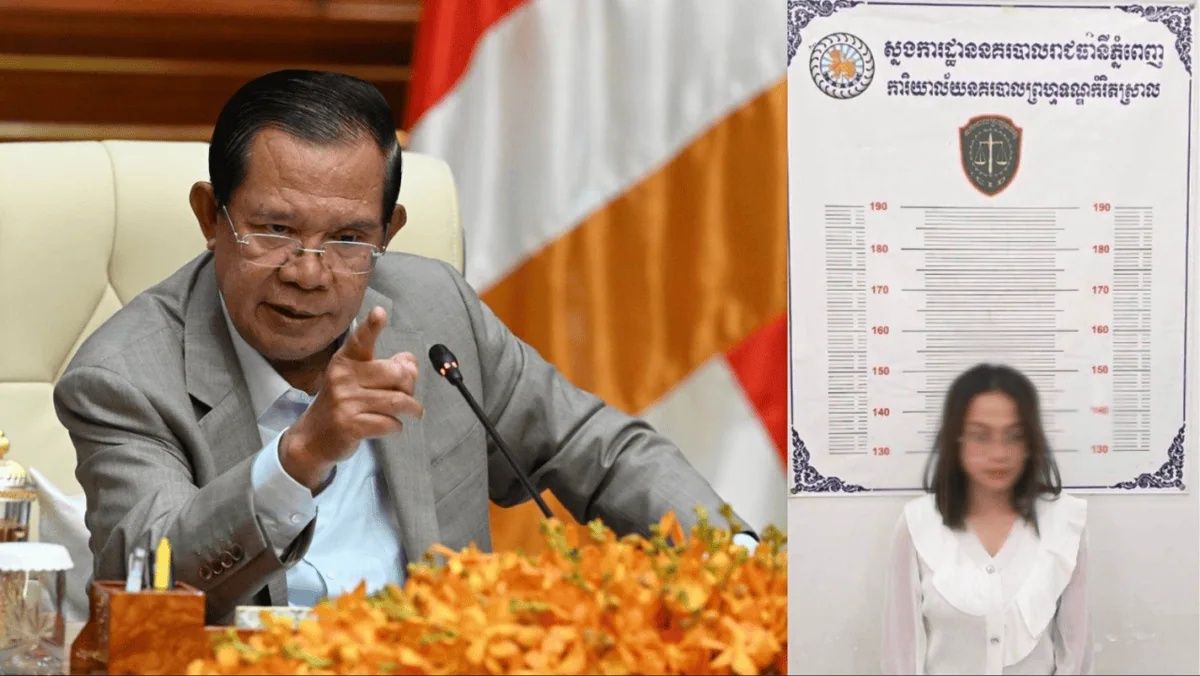
Cambodia's Senate president Hun Sen has ordered the National Council for Women to take the lead in pursuing legal cases against individuals who employ abusive language to demean women and undermine traditional Khmer social values. During a high-level meeting with council representatives on Friday, Hun Sen framed the initiative as a necessary measure to protect national dignity and communal standards, drawing comparisons to content moderation policies enforced by global social media platforms.
The announcement reflects growing tension in Cambodia over speech standards and public conduct. Hun Sen referenced an unnamed woman who recently made inflammatory remarks targeting government institutions and civil servants, revealing that authorities had already compelled the individual and her spouse to submit formal apologies. This approach signals an expanding interpretation of offences against state dignity and institutional respect, concepts that carry particular weight in Cambodia's legal and political framework.
Another case cited by Hun Sen involved a woman named Chenda Sovannary, who allegedly engaged in a heated altercation with a soldier over a disputed mobile phone transaction. Hun Sen's comments on the incident—questioning why anyone would resort to insults in such a minor commercial dispute—highlighted his view that verbal abuse toward uniformed personnel or any citizen represents a broader social transgression worthy of court intervention. His rhetoric suggested frustration with what he perceives as declining standards of public civility and respect for authority figures.
The initiative represents a significant expansion of state involvement in regulating speech and personal conduct beyond traditional defamation or slander frameworks. By empowering the National Council for Women as an institutional plaintiff rather than requiring individual victims to bring complaints, the directive potentially lowers evidentiary barriers and expands the scope of cases proceeding through Cambodia's courts. This structural change fundamentally alters how disputes between citizens and state-affiliated institutions might be adjudicated.
Hun Sen rejected suggestions that such legal mechanisms constitute authoritarian overreach, instead positioning them as defensive measures necessary for protecting community standards. He explicitly noted that private technology companies routinely establish and enforce ethical guidelines and community standards, suggesting that state involvement in similar efforts should be viewed as analogous rather than exceptional. This comparison, however, conflates voluntary corporate policies with state-mandated legal consequences, a distinction that carries implications for freedom of expression in Cambodia.
The directive calls for inter-ministerial coordination among multiple government agencies, including the Ministry of Interior, the Ministry of Information, the Ministry of Culture and Fine Arts, and the Ministry of Post and Telecommunications. This coordination mechanism suggests a comprehensive monitoring and enforcement apparatus designed to track offensive content across digital platforms, particularly Facebook, where much of Cambodia's public discourse now occurs. Hun Sen specifically instructed the National Council for Women to establish dedicated teams tasked with identifying and documenting cases involving what he termed cursing and insults on social media.
The policy implications extend beyond Cambodia's borders, offering insights into how Southeast Asian governments are increasingly asserting authority over digital speech and social media content. As regional economies digitalize and younger populations expand their engagement with online platforms, governments face mounting pressure to manage narratives and social cohesion. Cambodia's approach demonstrates how state institutions can leverage regulatory frameworks ostensibly designed to protect vulnerable groups—in this case, women—to broaden control over public discourse more generally.
For Malaysian and broader Southeast Asian observers, Cambodia's initiative raises important questions about the appropriate boundaries between protecting social values and safeguarding individual expression rights. The tension between community standards and personal liberty remains contested across the region, with different nations striking varying balances through constitutional protections, criminal codes, and digital governance frameworks. Cambodia's model suggests a trajectory toward increased state mediation of everyday speech and citizen conduct.
The practical enforcement challenges should not be underestimated. Scaling such initiatives requires substantial bureaucratic resources, training, and coordination across multiple agencies. Social media monitoring alone presents technical and manpower obstacles, particularly in determining context, intent, and proportionality across thousands of daily posts. How Cambodia's courts and enforcement bodies navigate these complexities will likely establish precedents affecting future cases and shaping the country's digital governance environment.
Hun Sen's emphasis on protecting women's dignity and Khmer social values carries particular resonance in a country where traditional norms remain culturally significant, yet the framing also reflects evolving political strategies. By linking speech regulation to gender protection and national cultural preservation, the initiative may build political legitimacy among constituencies concerned with rapid social change and foreign cultural influence. Whether such measures ultimately enhance women's status or primarily serve other policy objectives remains an open question warranting sustained observation from civil society and international advocates.
The announcement also underscores how traditional power structures, institutional hierarchies, and respect for authority remain central organizing principles in Cambodian governance, even as the country navigates modernization and digital integration. The case against Chenda Sovannary, for instance, appears to treat disrespect toward a soldier as inherently more serious than ordinary commercial disputes might warrant, reflecting deeply embedded assumptions about social hierarchy and deference to state representatives.

