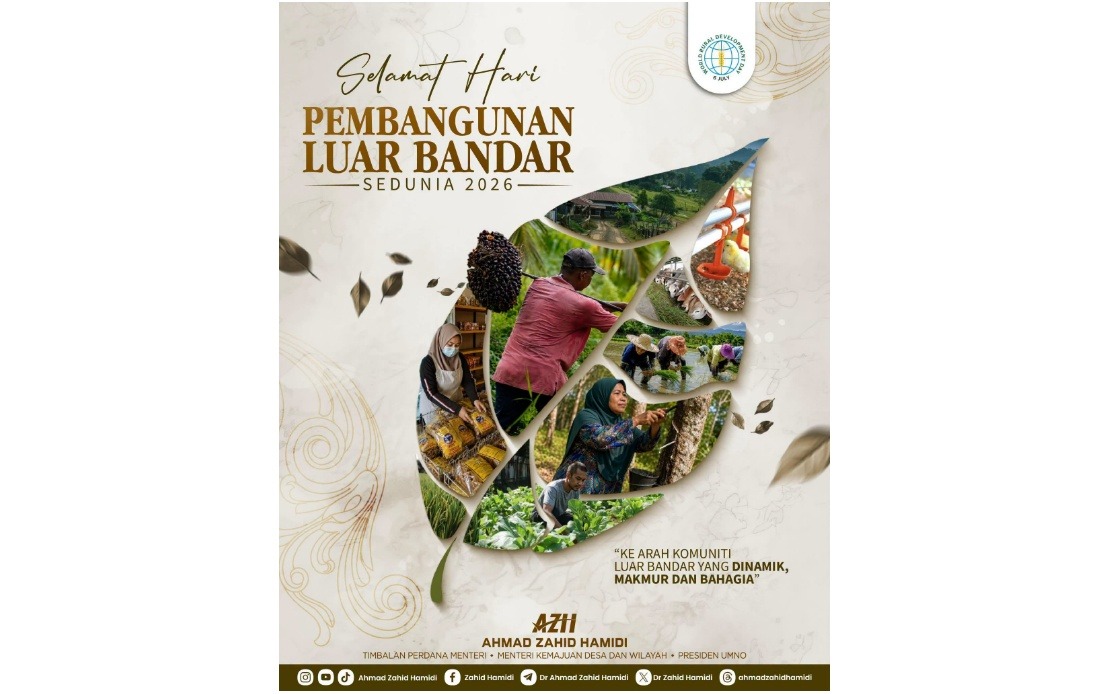
Malaysia marked a milestone by celebrating World Rural Development Day (HPLBS) for the first time on July 6, with Deputy Prime Minister Datuk Seri Dr Ahmad Zahid Hamidi underscoring the Ministry of Rural and Regional Development's (KKDW) central role in advancing the nation's rural agenda. The inaugural celebration, held at Tun Abdul Razak Stadium in Jengka near Maran, Pahang, represents a formal commitment to recognising the significance of rural communities in Malaysia's broader economic and social development trajectory.
Ahmad Zahid, who holds the concurrent portfolio of Rural and Regional Development Minister, articulated that the designation of July 6 as an annual observance will serve as a strategic platform for amplifying the voices and contributions of rural Malaysians. Rather than treating rural development as a peripheral concern, the government seeks to position it at the centre of national progress conversations, ensuring that agricultural and non-agricultural communities receive sustained attention and resources. This elevation reflects a recognition that rural prosperity directly correlates with national stability and inclusive growth.
The thematic direction chosen for the inaugural celebration—"Toward Vibrant, Prosperous and Happy Rural Communities"—frames rural development not merely as an economic imperative but as a holistic endeavour encompassing social wellbeing and cultural preservation. The three pillars guiding Malaysia's approach—community innovation, rural digitalisation, and rural entrepreneurship development—collectively address the multifaceted challenges confronting villages and small towns across the country. These pillars suggest a modernisation strategy that refuses to abandon traditional rural ways while integrating contemporary technological solutions.
Community innovation represents the first strategic pillar, acknowledging that rural populations possess intrinsic knowledge and adaptive capacity that should be harnessed rather than dismissed. By fostering local problem-solving initiatives and encouraging residents to develop context-specific solutions to agricultural, infrastructural, and social challenges, the government positions rural communities as agents of their own development rather than passive recipients of top-down interventions. This approach has gained traction across Southeast Asia, where successful rural programmes increasingly emphasise community leadership and ownership.
Rural digitalisation constitutes the second pillar, addressing a critical gap that has historically marginalised agricultural regions from technological advancement and digital economy participation. High-speed internet access, digital literacy programmes, and e-commerce platforms can fundamentally transform how rural entrepreneurs market products, access information, and connect with broader markets. For Malaysia, where broadband penetration remains uneven across peninsular and East Malaysian territories, this pillar represents both an opportunity and a significant implementation challenge requiring sustained infrastructure investment and training initiatives.
The third pillar of rural entrepreneurship development directly supports livelihood diversification and income generation beyond traditional agriculture. This recognises that farming alone cannot sustain growing rural populations, and that value-added agricultural processing, tourism-related ventures, and service industries offer pathways to prosperity. Coupled with adequate financing mechanisms and business mentorship, entrepreneurship development can unlock economic potential while maintaining population retention in rural areas, thereby reducing urban migration pressures.
The historical timing of July 6 carries particular significance for the regional context. This date marks the establishment of the Centre on Integrated Rural Development for Asia and the Pacific (CIRDAP), an intergovernmental organisation that has facilitated knowledge-sharing and collaborative rural development initiatives across Asia for decades. By aligning Malaysia's national observance with CIRDAP's founding, the government positions itself within a broader regional framework of rural development commitment, potentially opening avenues for international collaboration, best practice exchange, and technical cooperation with neighbouring countries facing similar rural challenges.
For Malaysian readers, particularly those in rural constituencies and agricultural regions, this formal recognition carries practical implications. The establishment of an annual commemoration typically precedes enhanced budget allocations, policy reviews, and targeted programme launches. Previous government initiatives honouring specific sectors have frequently catalysed infrastructure improvements, skills training expansions, and institutional reforms. The question now centres on whether this symbolic elevation translates into tangible resource commitments and measurable improvements in rural living standards, income levels, and service accessibility.
The timing also reflects broader Southeast Asian trends wherein rural development has become increasingly politicised and prioritised. Countries across the region—Thailand, Vietnam, Indonesia—have elevated rural development to cabinet-level portfolios and international platforms, recognising that sustainable national development cannot proceed without addressing rural-urban disparities. Malaysia's move aligns with this regional momentum while acknowledging that rural communities constitute a substantial demographic constituency whose aspirations and grievances directly influence electoral outcomes and social cohesion.
Ahmad Zahid's public commitment through social media amplification of the observance suggests that rural development will remain a focus throughout this government's tenure. The comprehensive framework articulated—encompassing innovation, digitalisation, and entrepreneurship—avoids simplistic approaches focused exclusively on agricultural subsidies or infrastructure, instead proposing a multidimensional strategy. However, successful execution requires coordination across multiple ministries, adequate financing, and sustained political will beyond symbolic recognition.
Looking forward, the sustainability of this initiative depends on moving beyond ceremonial celebration toward embedded institutional change. Rural development agencies require strengthened capacity, expanded personnel, and increased budget allocations. Extension services need modernisation to deliver technology-enabled advisory support. Financial institutions must develop products tailored to rural borrowers' needs and repayment patterns. Educational institutions should align curricula with rural entrepreneurship requirements, preparing youth with relevant skills for staying or returning to villages.
For Malaysia's regional standing, positioning rural development as a priority signal commitment to inclusive prosperity and sustainable territorial development. As Southeast Asian nations compete for investment and talent, those demonstrating balanced attention to rural communities often achieve better social stability and broader-based economic growth. The World Rural Development Day celebration thus represents more than domestic symbolic politics; it communicates to international audiences and regional peers Malaysia's strategic vision for equitable national development and social cohesion.

