A peculiar philosophy underpins the work of Ice-Pick Lodge, a Russian video game studio that has spent years creating experiences designed to make players deeply uncomfortable. Set in richly textured fictional worlds, their games present moral dilemmas, impossible choices, and systems where failure carries real weight. This contrarian approach to game design offers a sharp counterpoint to mainstream entertainment, particularly in an era when smartphones and social media platforms engineer experiences around instant gratification and rapid dopamine hits.
The studio's creative director Alexandra Golubeva explains that this intentional discomfort serves a therapeutic purpose. Rather than chasing seamless realism or allowing players to escape into fantasy wish-fulfilment, Ice-Pick Lodge designs games to be what they themselves describe as "almost unbearable." This aesthetic choice stems from a belief that video games occupy a unique position among entertainment media—they possess direct access to emotional and psychological states that other art forms struggle to reach. When a player fails in a game, they experience that failure firsthand, making ownership of the mistake visceral and unavoidable.
The philosophy reflects broader thinking within game design circles about what interactive media can accomplish. Gabriel Winslow-Yost, a contributing editor at a major publication covering games and culture, observes that video games have a distinctive capacity to generate discomfort in ways cinema, literature, or theatre struggle to replicate. The medium's interactivity means players cannot remain passive observers—they must make choices, live with consequences, and reconcile their actions with narrative outcomes. This direct agency transforms failure from something that happens to a character into something that happens to the player themselves.
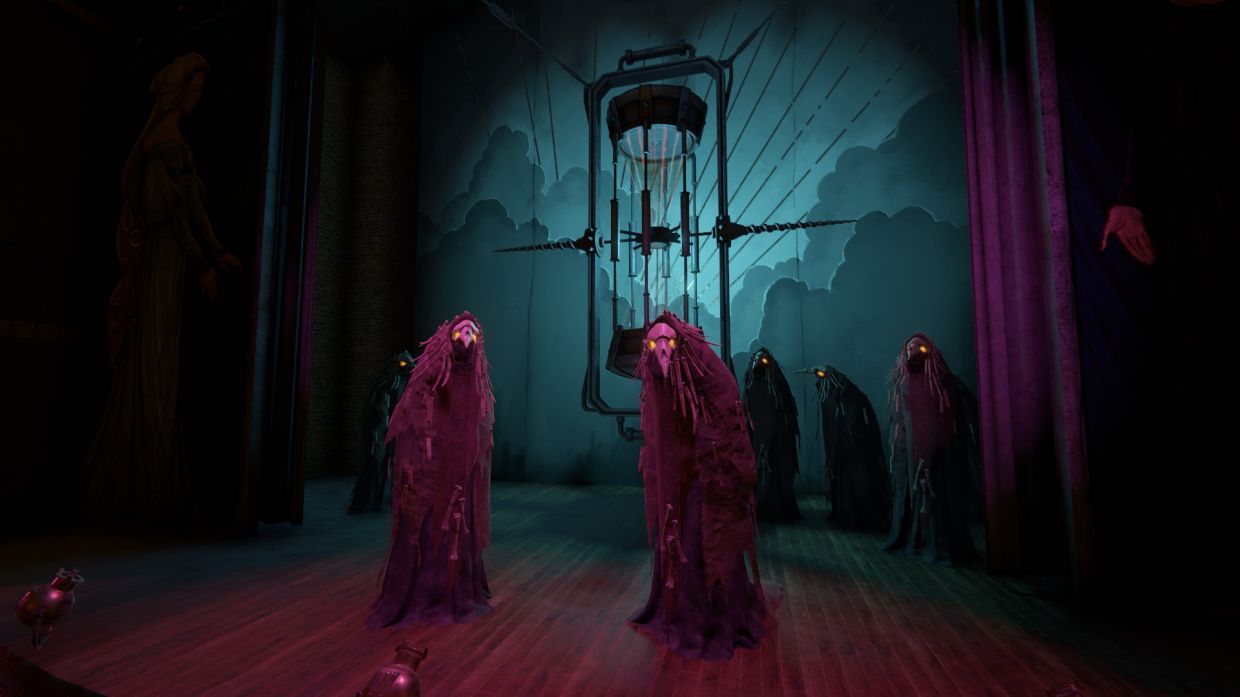
One of Ice-Pick Lodge's most acclaimed titles exemplifies this philosophy through its mechanics and narrative design. The game takes place in a plague-ravaged town and tasks players with saving as many lives as possible while unravelling mysteries about the plague's origins and purpose. Early in the experience, players encounter a severe-looking judge who intones, "The bolder the dream, the more surely it becomes dust when the moment is lost." Later, a theatre director declares, "A stage production is only good if it leaves you needing a doctor, a spa trip, a shot of morphine, a priest or a coffin." These theatrical pronouncements set the tone for an experience where grand aspirations crash against harsh reality.
The game's design deliberately limits player agency while creating the illusion of boundless choice. Characters pursue their own agendas, lie to the protagonist, and behave unpredictably. Townsfolk recycle character models throughout the game, creating an artificial aesthetic that some might dismiss as a technical limitation. Yet this minimalism serves a narrative purpose—it heightens the sense of a town where individuals matter less than systemic forces, where personal ambitions dissolve into collective suffering. The theatrical sparseness, reminiscent of Lars von Trier's stripped-down film aesthetics, paradoxically deepens emotional impact.
What truly distinguishes Ice-Pick Lodge's approach is how the game's difficulty settings function as moral statements. Players tempted to reduce the challenge to make progress encounter a message declaring the experience is meant to be "almost unbearable." This is not a taunt but a warning about the game's philosophical orientation. One player's protagonist character, Burakh, spiralled into poverty and hunger by Day 5, forcing a reconsideration of earlier decisions. Yet even acknowledging failure and adjusting difficulty settings does not erase the preceding experience—the player has already internalized the consequences of poor judgment.
The game also incorporates time travel mechanics that initially seem to offer redemption. Players can manipulate the timeline and load old save files to correct mistakes. However, this mechanic comes with a devastating catch: the ability to rewind is tied to a finite in-game resource that depletes with each use. Exhaust this resource and the option to revise decisions vanishes entirely. Additionally, certain quests can permanently wipe the save file, creating genuine stakes where no safety net exists. This design forces players to confront whether they truly want to undo their choices or whether accepting failure and moving forward might be preferable.
Alexander Souslov, executive producer and lead designer on the project, articulates the psychological foundation underlying these systems. In reality, humans tend to reframe negative events positively, rationalizing away failures and moving forward. Video games, by contrast, create spaces where failure becomes explicit and undeniable. The player cannot simply construct a narrative that minimizes their mistakes—the game's systems force acknowledgment. This creates what Souslov calls an opportunity to "reflect on failure," transforming a defeat into a learning moment where the avatar's failure becomes the player's own failure.
This philosophy inverts the concept of power fantasy, which typically motivates video game design. Rather than allowing players to imagine themselves as invincible heroes, Ice-Pick Lodge creates scenarios where catastrophic failure is probable, even inevitable. Yet Golubeva argues that rising from absolute defeat represents its own form of power fantasy—not the fantasy of dominance, but the fantasy of resilience. There exists a peculiar satisfaction in accepting complete collapse and then painstakingly reconstructing something functional from rubble. The emotional catharsis comes not from effortless victory but from surviving despite overwhelming odds.
For Southeast Asian audiences, Ice-Pick Lodge's approach offers particular resonance. The region's gaming culture, like much of the world, is increasingly shaped by mobile gaming and social media algorithms designed to capture attention through incremental rewards. These platforms encourage rapid consumption and shallow engagement, training users to seek instant validation. Ice-Pick Lodge's games operate as deliberate counterweights, demanding sustained attention, emotional vulnerability, and willingness to sit with discomfort. They suggest that meaningful entertainment need not cater to shrinking attention spans or provide constant reinforcement.
Moreover, the studio's willingness to embrace failure as central to player experience reflects cultural values increasingly visible across Asia, where education systems and business culture frequently emphasize learning through struggle and perseverance. The games translate these values into interactive form, making abstract concepts about resilience and self-reflection into lived experiences. Players emerge from these games having processed genuine failure, developed emotional maturity, and gained perspective on their own decision-making processes.
The broader implications for game design are significant. As the industry grows increasingly profitable and consolidated, the temptation to design games around proven engagement mechanics intensifies. Yet Ice-Pick Lodge demonstrates that audiences still crave experiences that challenge rather than comfort, that provoke rather than soothe. Their success suggests a hunger for games that treat players as capable of handling difficulty, ambiguity, and genuine emotional stakes. In an entertainment landscape increasingly oriented toward algorithmic simplification, their unapologetic commitment to complexity and discomfort reads as genuinely radical.

