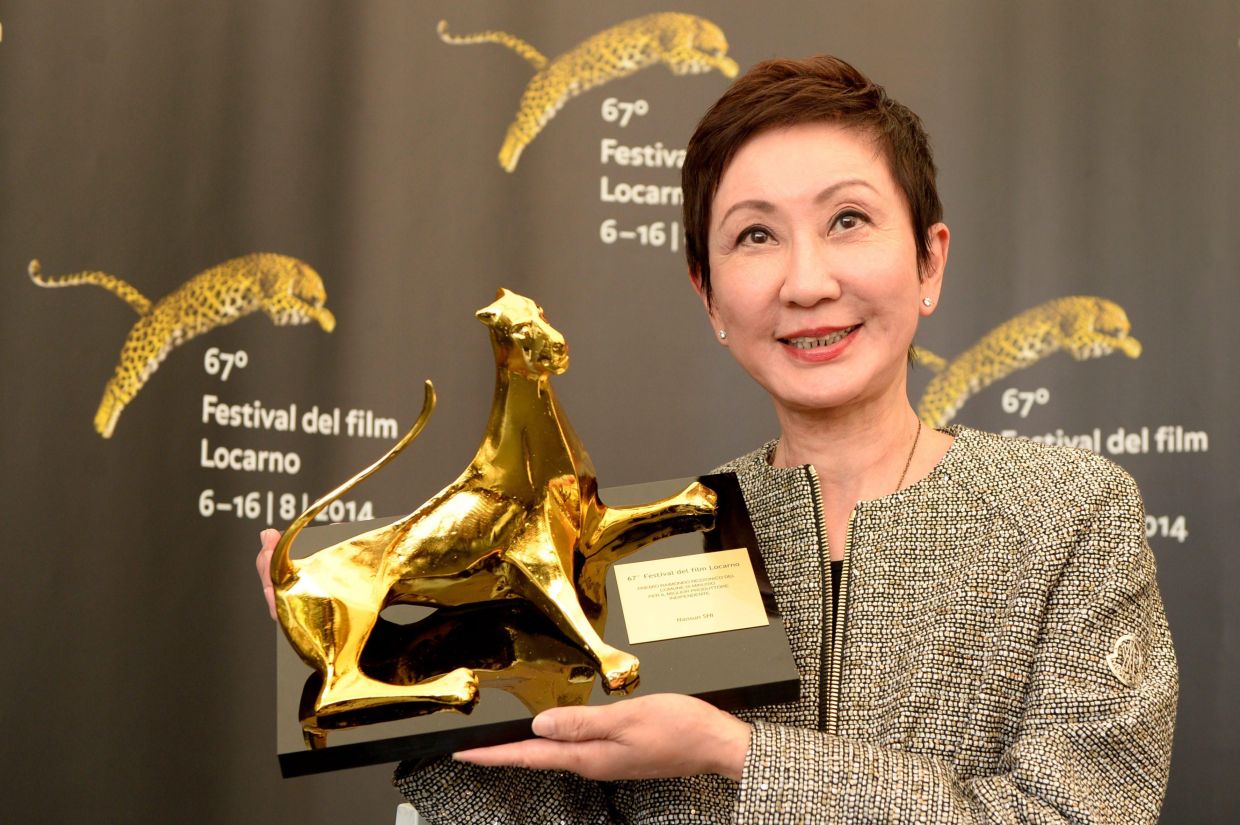
Shi Nan-sun, a towering figure in Hong Kong cinema who transformed how the territory's films reached international markets, has died at the age of 75. The veteran producer passed away peacefully on Monday evening at Hong Kong Sanatorium & Hospital, succumbing to multiple organ failure triggered by a bacterial infection. Her death marks the end of an era for Hong Kong's film industry, which she helped professionalize and elevate onto the world stage during its most creatively fertile decades.
Film Workshop, the production company Shi co-established with celebrated director Tsui Hark, confirmed her passing occurred at 8.51pm surrounded by family members. The statement revealed that her health had deteriorated progressively since 2022, when complications related to her immune system emerged. In her final months, recurring infections compounded into severe organ dysfunction, ultimately overwhelming her body's capacity to recover. Despite these mounting health challenges, those close to her emphasized that she confronted her illness with characteristic determination until the very end.
Tsui Hark, Shi's former spouse and long-time creative partner, released a statement describing her final struggle with both dignity and gratitude. He portrayed a woman who maintained her composure and resilience throughout her decline, clinging to consciousness and care from loved ones until the moment of her death. His words painted a picture not of sudden tragedy but of a controlled passage, one in which she faced mortality with the same methodical approach she had applied to building the Hong Kong film business from its chaotic foundations into something resembling a genuine industry.
The outpouring of tributes from Hong Kong's entertainment establishment underscored Shi's centrality to multiple generations of filmmakers and performers. Jackie Chan, one of Asia's most recognizable movie stars, posted on Weibo that the film world had lost another irreplaceable figure, emphasizing how audiences would forever remember her character and the strength embodied in the classic films she shepherded into existence. Actress Carina Lau expressed profound personal gratitude, describing lessons learned from Shi about integrity and professional conduct, noting that both she and her husband Tony Leung Chiu-wai held Shi in deep respect as a woman and industry veteran. Others including Brigitte Lin Ching-hsia, Donnie Yen Chi-tan, and Shu Qi similarly shared public remembrances, indicating the breadth of her influence across Hong Kong's acting community.
Hong Kong's government also acknowledged her legacy through Culture, Sports and Tourism Secretary Rosanna Law Shuk-pui, who credited Shi with making substantial contributions to the long-term health and development of the local film sector. Law specifically highlighted how Shi devoted herself to the film and television industries, leaving behind a reservoir of cherished cinematic memories for Hong Kong audiences. Her remarks positioned Shi's work not merely as commercial success but as cultural patrimony, a body of achievement that belonged to the city and its people rather than to her alone.
Shi's career trajectory illuminates the professionalization of Hong Kong cinema during its transformation from cottage industry to global cultural export. After studying statistics and computing at the Polytechnic of North London, she initially worked in television before joining Cinema City in 1981 as an executive director. Her responsibilities encompassed the unglamorous but essential functions of administration, financing, contract management, and international distribution—the operational backbone that enabled creative ambition to flourish. In 1984, she co-founded Film Workshop alongside Tsui Hark, establishing Distribution Workshop to ensure Hong Kong productions could reach audiences far beyond the Asian region. These twin ventures represented a conscious decision to build institutional capacity rather than merely make individual films.
The partnership between Shi and Tsui, though it ended in divorce in 2014 after eighteen years of marriage, remained unusually cordial and professionally productive. Their ability to maintain friendship and continued mutual support after separation was itself notable in an industry often fractured by personal acrimony. Brigitte Lin, who had maintained a friendship with Shi spanning more than fifty decades, once wrote movingly about the producer's devotion to Tsui, drawing on a quote from legendary novelist Louis Cha to describe Shi as completely infatuated with her husband and entirely dedicated to supporting him as an artist. This characterization, offered by someone who knew both parties intimately, suggested a relationship defined by intellectual and artistic alignment rather than conventional romance.
Shi's influence extended well beyond her native Hong Kong into the international festival circuit and the global recognition apparatus of serious cinema. She received the Ordre des Arts et des Lettres from France, one of that nation's most prestigious cultural honors, and won the best independent producer award at the Locarno International Film Festival. She was repeatedly invited to serve as juror or president at major international film festivals, positions that reflected the respect her peers held for her judgment and global vision. These accolades were not ceremonial but substantive recognition of someone who understood how to position films within international cultural hierarchies and market them effectively across linguistic and cultural boundaries—skills that remain vital in Southeast Asia's increasingly interconnected media landscape.
The significance of Shi's career for Malaysian and Southeast Asian readers lies partly in her pioneering work establishing professional infrastructure for regional filmmaking. During the 1980s and 1990s, when Hong Kong cinema enjoyed unprecedented global prestige, Shi helped create the business systems and distribution networks that allowed films to move between territories. Her model of combining production, distribution, and international marketing—professionalized and systematic rather than ad-hoc—influenced how the entire region thought about film as an industry rather than a collection of artistic endeavors. As Southeast Asian countries seek to develop their own film sectors, Shi's legacy offers instructive lessons about the importance of building institutional capacity, securing international distribution channels, and training professionals in the administrative and financial dimensions of filmmaking.
Shi's last public appearance occurred in May when she attended the funeral of fellow veteran producer Linda Kuk Mei-lai, at which her use of a walking stick prompted concerns about her deteriorating condition. Just months later, her rapid decline underscored how suddenly serious illness can overtake even the most formidable personalities. At the Hong Kong Film Awards in 2025, she and Tsui jointly received a lifetime achievement award, recognition that arrived just weeks before her death. This belated but comprehensive acknowledgment of their joint contributions seemed to mark a formal passing of the torch to younger generations, even as neither creator showed signs of slowing their involvement in cinema. The convergence of official recognition and imminent mortality lent poignancy to what was meant to be a celebration of enduring achievement.

