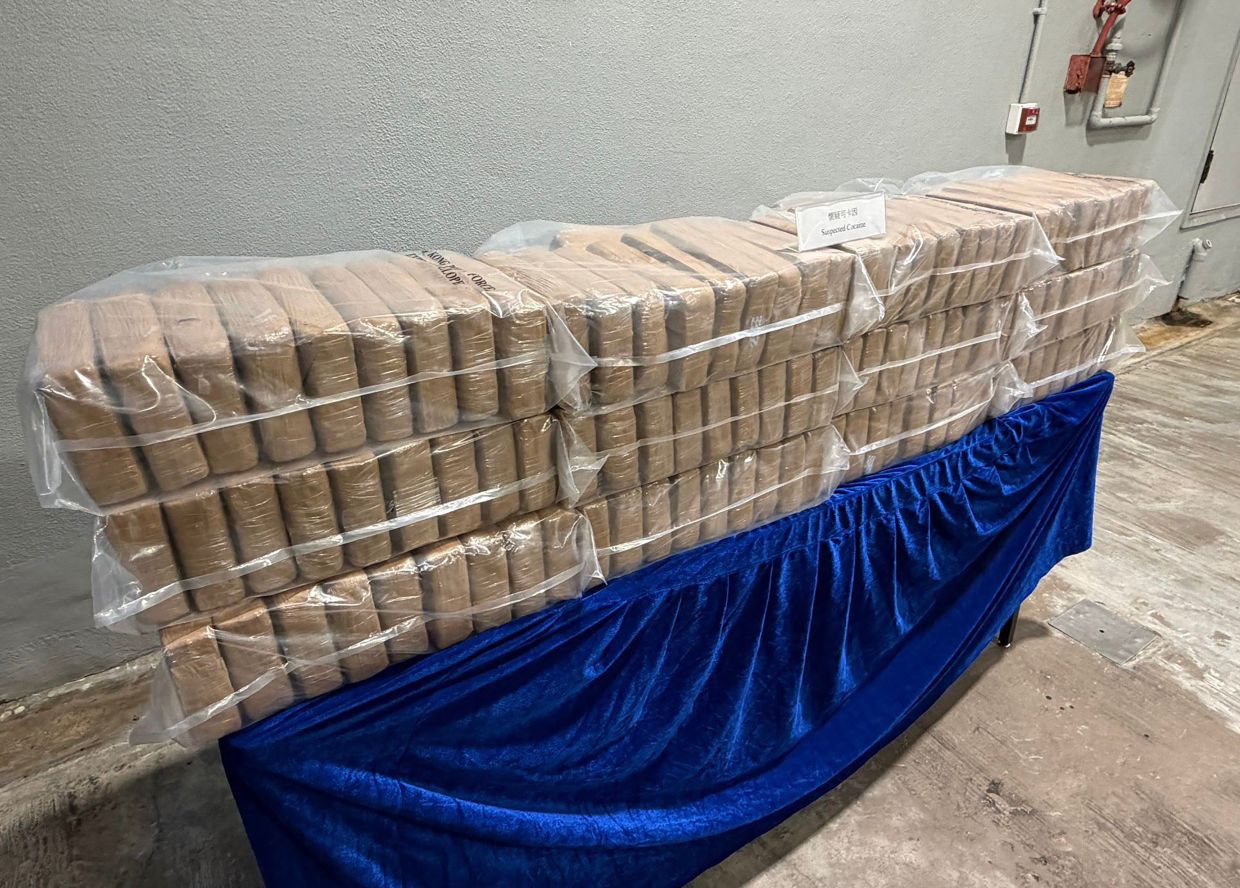
Hong Kong's narcotics enforcement authorities have delivered a major blow to international drug trafficking networks operating across the region, uncovering what police describe as the largest cocaine smuggling operation recorded in the city over the past twelve months. The breakthrough came through coordinated raids targeting vessels moored in Aberdeen Typhoon Shelter, one of Asia's busiest maritime hubs, where investigators discovered multiple cache points used by an organized criminal syndicate to store and distribute narcotics destined for markets throughout Southeast Asia and beyond.
The operation unfolded over several days, with police narcotics officers conducting a second raid on Sunday targeting a six-metre yacht positioned deliberately near other vessels that had been under surveillance. Officers boarding the small craft discovered approximately 120 kilograms of cocaine carefully packaged in brick form, a discovery that immediately prompted investigators to compare it with evidence from an earlier seizure conducted just days beforehand. The consistency in both packaging materials and weight distribution suggested to detectives that the two separate stashes represented components of a unified smuggling consignment rather than independent trafficking operations.
The earlier raid, conducted on Friday at the same general location within Aberdeen Typhoon Shelter, had already yielded a substantial 241-kilogram haul of cocaine similarly packaged in uniform bricks. When combined, the two seizures total approximately 361 kilograms of pure cocaine, translating to a combined street value estimated at HK$270 million. This quantum of seizure reflects the scale and sophistication of trafficking networks that continue to exploit Hong Kong's maritime infrastructure, using the territory's numerous protected anchorages and the constant movement of vessels as cover for major drug movements.
For Southeast Asian law enforcement and policymakers, the discovery carries significant implications. Hong Kong remains a crucial transshipment point for narcotics moving from production zones in Latin America toward markets throughout Asia, particularly China and Southeast Asia. The use of private yachts and small vessels represents an evolution in smuggling tactics, bypassing the scrutiny applied to commercial shipping containers and containerized cargo. The deliberate deployment of multiple storage vessels suggests syndicates now fragment large shipments into smaller distributed caches, a strategy designed to limit losses if individual vessels are interdicted.
Police investigators examining the evidence noted striking similarities between the two seizures that pointed toward an organized trafficking group managing the operation with considerable logistical complexity. The uniform brick configuration, identical weight measurements, and strategic placement of the second yacht in proximity to the first indicated this was no opportunistic drug smuggling but rather a well-planned operation with established routines and supply-chain discipline. The decision to use additional yachts as supplementary storage facilities reflects criminal sophistication and access to capital sufficient to maintain multiple vessels solely for narcotics caching.
The initial raid last Friday had already resulted in the apprehension of a suspected syndicate kingpin and two individuals described as core operational members. During interrogation, these detainees claimed unemployment or fishing as their purported livelihoods, a standard cover story employed by trafficking operatives seeking to explain their association with maritime activities. Their continued detention pending formal charges has yielded investigative leads that subsequently enabled police to identify and target the second yacht location.
Following the Sunday discovery, Hong Kong police expanded their dragnet to apprehend additional suspected conspirators. Officers arrested a 45-year-old local woman on Monday, identifying her as the registered owner of the yacht where the 120-kilogram cache was located. Police indicated she was unemployed and remained in custody for extended questioning, suggesting investigators suspected her involvement extended beyond nominal ownership into active operational participation. The apparent pattern of recruiting unemployed individuals as front persons for vessel registration points to the syndicate's deliberate compartmentalization of responsibility, a tactic that complicates prosecution by obscuring leadership structures.
The timing and coordination of these raids demonstrates the capacity of Hong Kong's narcotics enforcement apparatus to conduct sophisticated maritime surveillance and interdiction operations. The identification of the second yacht's location based on investigative momentum from the initial raid showcases the intelligence value generated when trafficking networks are penetrated at critical junctures. For regional drug enforcement agencies, the case provides insights into evolving smuggling methodologies and the specific vulnerabilities that organized traffickers continue to exploit within Hong Kong's maritime environment.
The 361-kilogram seizure represents a substantial disruption to trafficking operations, but it also underscores the persistent challenge confronting law enforcement across Southeast Asia and beyond. The sheer volume trafficked suggests that despite interdiction efforts, significant quantities of cocaine continue reaching Asian markets where demand from affluent urban consumers and organized crime elements continues driving international supply chains. The use of multiple yachts indicates that even with this major seizure, trafficking syndicates maintain redundancy and resilience in their operations, suggesting that disruption of one consignment does not necessarily collapse their broader networks or deter future attempts.
The investigation has revealed the permeable nature of Hong Kong's maritime domain and the continuing need for enhanced coordination between law enforcement agencies operating within the territory and across regional borders. As traffickers adapt their methods to avoid detection, authorities must develop correspondingly sophisticated surveillance and interception capabilities. The case also highlights how seemingly routine commercial maritime activity can mask significant criminal operations, requiring vigilant monitoring of vessel movements and registered ownership patterns. For Malaysia and other Southeast Asian nations that serve as both transshipment points and final markets for international narcotics, the Hong Kong operation provides critical intelligence about trafficking patterns and methodologies that warrant heightened border awareness and enhanced port security measures.

