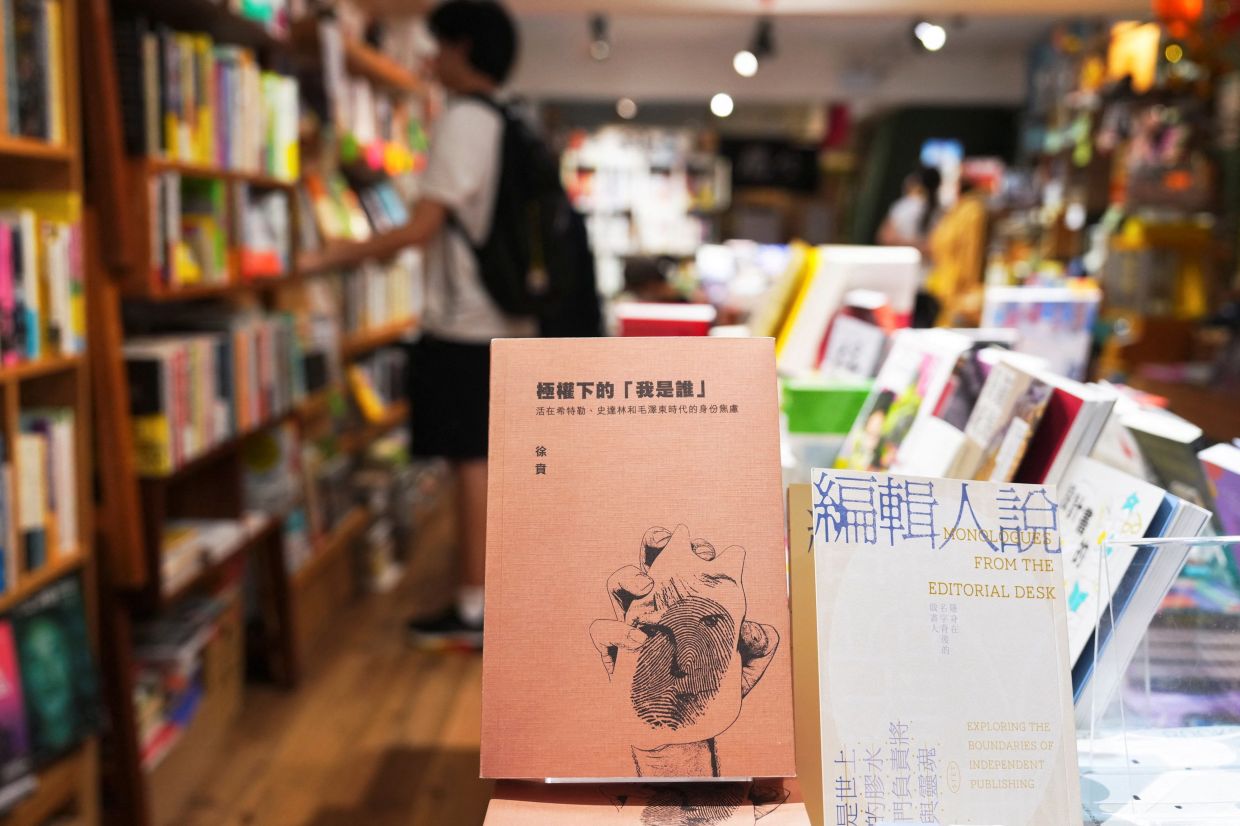
Hong Kong's Security Secretary Chris Tang has called on booksellers across the territory to take personal responsibility for ensuring their stock does not jeopardise national security, marking an escalation in what critics increasingly view as a chilling effect on freedom of expression. Tang's remarks came the day after police arrested five individuals linked to two independent bookstores in a Wednesday operation, the latest phase of enforcement action that authorities frame as protecting the region's stability but observers describe as creating an opaque regulatory environment that discourages the sale of politically sensitive publications.
The coordinated police raids targeted Have A Nice Stay, a bookshop established by veteran journalists who have since fled Hong Kong's deteriorating media freedoms, alongside the long-established Greenfield Book Store. Authorities accused the five detainees of displaying and selling seditious materials designed to generate antipathy towards Hong Kong's government, legal system and police force. The operation represents the third round of arrests directed at independent booksellers within four months, suggesting a systematic intensification of scrutiny over what Hong Kong residents can read and authors can publish in the global financial hub.
Tang's analogy comparing bookselling to food safety during a legislative session on Thursday attempted to frame the requirement as a straightforward professional obligation. He suggested that just as vendors must guarantee their food products will not poison consumers, booksellers bear an equivalent duty to confirm their publications do not threaten state security. This framing obscures the fundamental asymmetry between the two scenarios: food safety standards are codified in publicly accessible regulations with measurable scientific parameters, whereas the boundaries of what constitutes seditious content or material harmful to national security remain deliberately vague and subject to official interpretation that shifts contextually.
When questioned whether Hong Kong authorities might publish an official banned books list to provide clarity, Tang rejected the proposal, arguing that predetermined censorship registers would actually undermine law enforcement capacity to pursue titles specifically crafted with intent to harm the nation. His reasoning inverted the conventional purpose of such lists—which typically exist to inform the public and regulated industries about prohibited material—transforming it instead into something authorities claim would obstruct their prosecutorial flexibility. This position effectively places Hong Kong booksellers in an impossible position: they cannot reference official guidance to determine legality, yet remain personally culpable for stocking prohibited material judged by standards they cannot anticipate.
Have A Nice Stay had already announced its closure scheduled for August 30, citing financial pressures alongside what management described as an impossible ambiguity surrounding which books authorities might deem problematic. The bookstore's closing statement revealed the practical paralysis afflicting independent publishers and retailers: management acknowledged it lacks both the resources and interpretive authority to evaluate every title in its inventory against unstated security criteria. This admission captures the chilling effect operating across Hong Kong's cultural industries, where business operators must now assume personal criminal liability for content decisions made under regulatory uncertainty.
The pattern of arrests targeting independent bookstores reflects a broader consolidation of information control in Hong Kong since 2020. March brought the detention of Book Punch's owner and employees on charges of peddling seditious publications, including the biography of Jimmy Lai, the pro-democracy media magnate subsequently sentenced to two decades imprisonment under national security legislation. June saw the arrest of two additional booksellers suspected of selling seditious content and accepting funding from overseas political organisations, conflating commerce in sensitive publications with foreign interference. Each enforcement action narrows the functional space in which Hong Kong's publishing ecosystem can operate.
The implications for Hong Kong's standing as a global publishing and media centre are becoming impossible to overlook. Taiwan's President Lai Ching-te issued a public statement acknowledging that freedom of expression and publication in Hong Kong face mounting institutional pressure, characterising independent bookstores as indispensable guardians of open intellectual discourse. Taiwan's Deputy Minister of Mainland Affairs Liang Wen-chieh disclosed that certain Taiwanese publishers have already begun self-censoring their catalogues when participating in Hong Kong book fairs, anticipating official objections to titles that might be legally publishable and sold in Taiwan but vulnerable to prosecution in Hong Kong.
This self-censorship dynamic represents perhaps the most insidious dimension of Hong Kong's regulatory trajectory. Publishers and retailers do not require explicit government directives to suppress content; the uncertainty surrounding enforcement criteria and the demonstrated willingness of authorities to mount operations against bookstores creates sufficient deterrent effect. Taiwanese cultural industry representatives now make commercial decisions based on defensive interpretations of unstated Hong Kong security requirements, effectively extending Hong Kong's regulatory logic into the supply chains of neighbouring democracies.
For regional observers including those in Malaysia—a nation itself grappling with balancing security concerns and media freedom—Hong Kong's experience offers cautionary instruction regarding the recursive consequences of vague security legislation. When regulatory standards remain undefined and enforcement retroactive, even good-faith industry compliance becomes impossible, and rational actors respond through over-compliance and withdrawal from regulated sectors. The visible consequences are measurable: bookstores closing, publishers self-censoring, and a deliberate narrowing of the informational environment accessible to Hong Kong residents, presented consistently as necessary security protection but perceived increasingly as state control over thought and expression.

