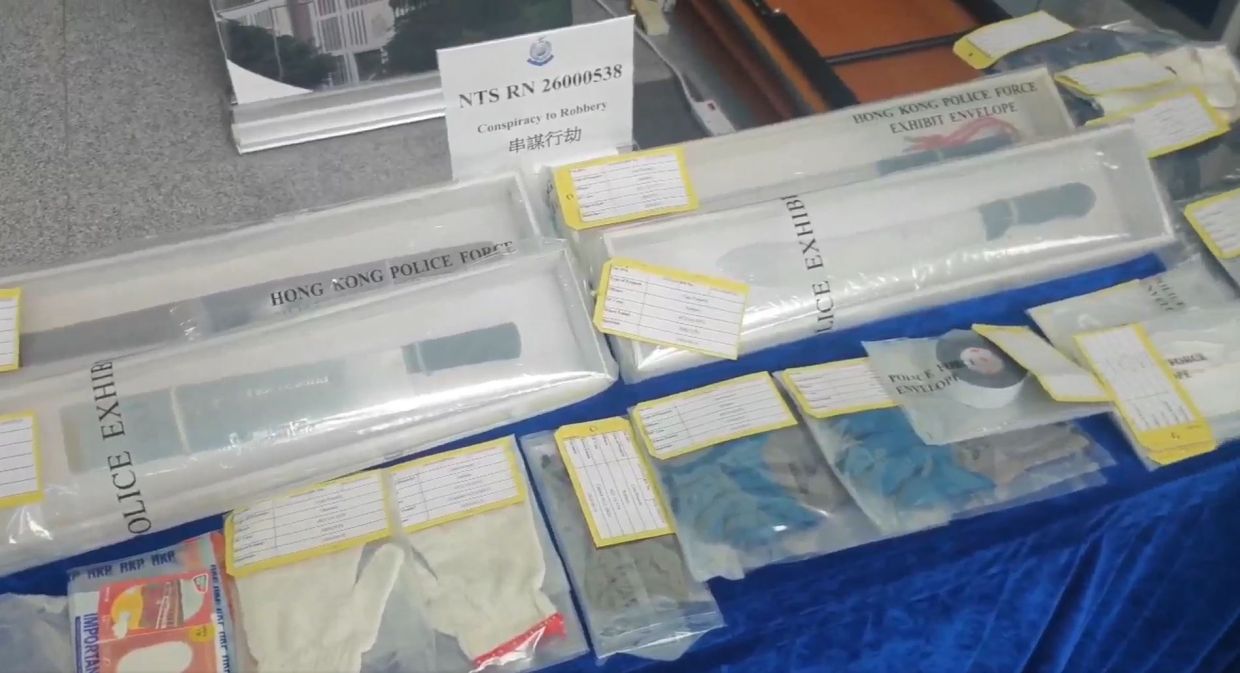
A coordinated robbery at Hong Kong International Airport's car park has led to the swift arrest of seven suspects, with investigators suggesting the sophisticated nature of the crime points to potential inside involvement. The incident unfolded on Thursday, June 18, when a courier transporting valuable gold bars fell victim to an armed assault, triggering a rapid police response that saw all seven accused apprehended within 12 hours of the crime being reported.
The arrested individuals—comprising four men and three women aged between 20 and 39—face charges relating to conspiracy to commit robbery and abetting criminal activity. According to local authorities, the speed of these arrests reflects both the intensity of the police investigation and the availability of surveillance footage and witness accounts from the busy airport precinct. The suspect pool itself presents an intriguing profile: some of those detained have documented associations with organised crime syndicates, a detail that underscores the apparent professional nature of the operation.
The incident began when the victim, a courier hired to transport merchandise for a mainland-based businessman, arrived at Hong Kong International Airport early Thursday morning following a flight from Bali, Indonesia. He carried six solid gold bars secured in his backpack—a consignment worth HK$7 million. As he made his way through the car park level 3 towards his parked vehicle, three assailants wearing masks emerged and launched a violent attack. Armed with knives, the attackers inflicted stab wounds to the victim's left hand and foot before seizing his backpack and escaping in a seven-seater vehicle.
The brutality of the assault distinguishes this robbery from opportunistic street crime. The fact that the attackers targeted this specific individual at a predetermined location suggests they possessed advance intelligence about his arrival, flight schedule, and vehicle location. Police have indicated that this intelligence leakage points towards possible collusion from someone within the travel or logistics chain—potentially an employee at the airport or within the transportation service itself. Such insider involvement would explain how the criminals synchronised their operation to intercept the courier at precisely the right moment.
Investigators made significant progress in recovering evidence associated with the crime. The seven-seater getaway vehicle used by the robbers was located and retrieved by police in Tsuen Wan, a district on Hong Kong Island's western side. Alongside the vehicle, officers recovered the knives used during the assault, critical physical evidence that will aid in establishing forensic connections and corroborating witness testimony against the accused.
The victim's condition remained stable following treatment at Princess Margaret Hospital, where he received medical attention for his injuries. His recovery removes one source of concern for investigators, as he is now able to provide detailed statements about the attackers, their appearance, and any identifying features that might assist in the investigation's progression through the court system.
A complicating factor for local authorities is the apparent flight of additional suspected accomplices to mainland China. Police have confirmed that certain individuals believed to have participated in the robbery have likely crossed the border into Guangdong or other mainland provinces. In response, Hong Kong law enforcement has formally requested assistance from mainland Chinese law enforcement agencies, invoking cooperative frameworks that exist between the two jurisdictions. Such cross-border coordination remains essential in cases where suspects attempt to evade the Hong Kong justice system by seeking refuge in the mainland.
The gold heist represents a notable incident in Hong Kong's crime landscape, combining elements of organised crime methodology, transnational logistics, and airport security vulnerabilities. That six gold bars valued at HK$7 million constituted the cargo highlights both the scale of precious metal trading within Asia's financial hub and the potential vulnerability of such high-value shipments to criminal enterprise. For courier services, logistics companies, and businesses engaged in precious metal transportation, the incident serves as a pointed reminder of security risks inherent in their operations.
For Malaysia and the broader Southeast Asian region, the case offers instructive insights into criminal networks operating across the region's air hubs and the cooperation required to combat such sophisticated operations. Given Malaysia's own role as a regional transportation and logistics centre, with Kuala Lumpur International Airport handling millions of passengers annually, similar vulnerabilities may exist locally. The Hong Kong case underscores the importance of security protocols at airport car parks, vetting procedures for insider threats, and real-time communication between airport authorities and law enforcement during suspicious activities.

