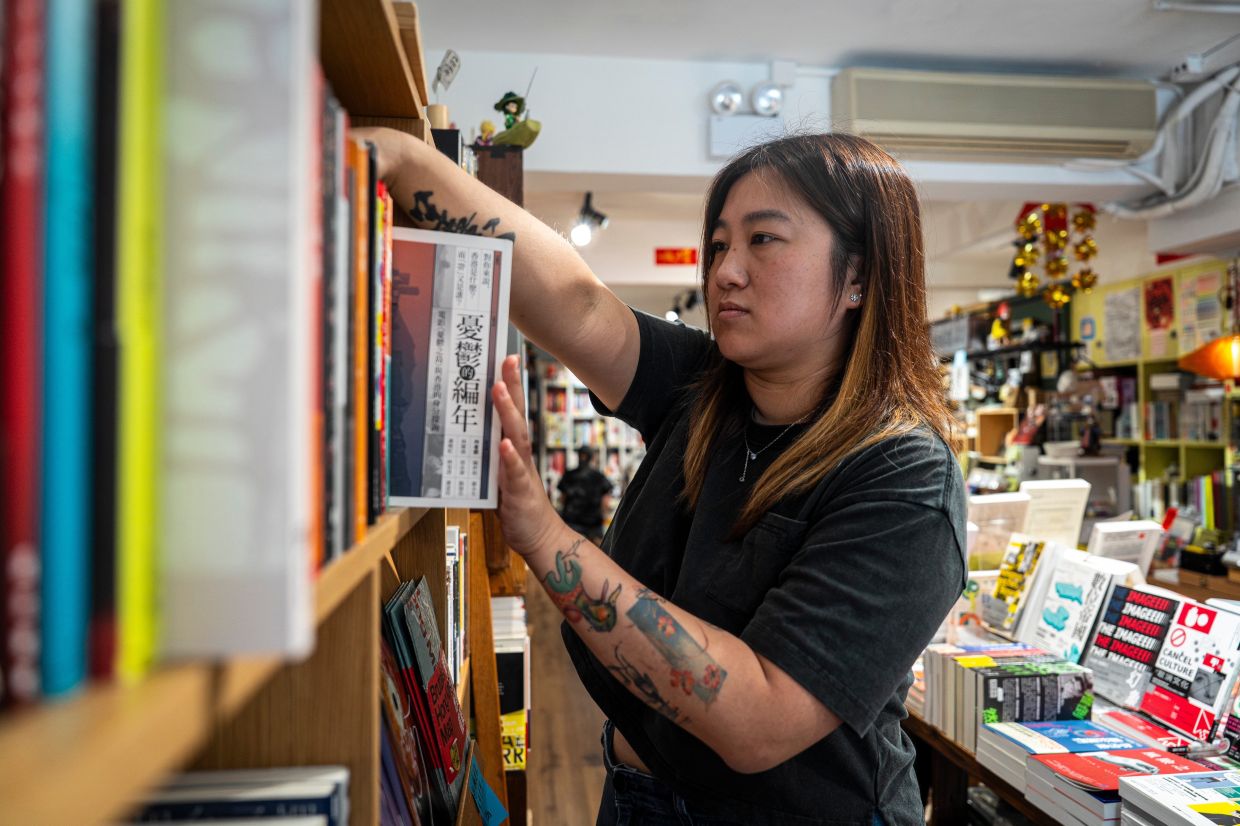
Hong Kong authorities on Wednesday arrested two individuals on suspicion of selling seditious publications and accepting financial support from overseas political entities, according to the government's statement released early Thursday. The police action reflects the expanding application of the national security legislation that took effect in 2024, a framework that Beijing introduced to address what it characterised as threats to the territory's stability. While the government did not release the names of those detained, local media reports, including those from the Chinese-language Ming Pao newspaper, cited unnamed sources identifying one suspect as Leticia Wong, the proprietor of Hunter Bookstore in the Sham Shui Po district.
Wong's profile as a former pro-democracy district councillor who has continued to speak out despite the widespread jailing of activist figures gives her arrest particular symbolic weight within Hong Kong's shrinking space for political dissent. The bookstore owner has remained vocally opposed to the government even as many prominent activists have been incarcerated following the upheaval triggered by the 2019 mass protests. Her detention, if the media identification proves accurate, would represent a further tightening of restrictions on those who challenge the current political order. The timing of the arrests—occurring just a week before Hong Kong marks the 29th anniversary of its 1997 handover from British to Chinese sovereignty—underscores the intensifying pace of enforcement actions against perceived sources of opposition.
The government's brief statement alleged that the two arrested persons, both connected to the Sham Shui Po bookstore, displayed and distributed publications containing seditious material designed to incite antipathy toward Hong Kong's government institutions, courts, and law enforcement bodies. Investigators also contend the pair received transfers of money that originated from foreign political organisations, though authorities have not publicly specified which publications, countries, or groups were involved in these alleged transactions. This vagueness leaves room for considerable uncertainty about the precise nature of the charges and raises questions about the evidence underlying the detention.
The political environment surrounding bookstores and independent publishers in Hong Kong has deteriorated markedly since the enactment of the national security legislation. In 2024, a pro-Beijing newspaper published a critical report about an independent book fair held at Wong's store, characterising it as embodying "soft resistance" against the government. The same report flagged the bookstore's intention to stock a biography of imprisoned pro-democracy figure Jimmy Lai, whose incarceration on national security offences has become emblematic of the larger crackdown. This earlier scrutiny appears to have intensified official attention on the venue, establishing a pattern of escalating pressure that culminated in this week's arrests.
Wong has documented a systematic pattern of government harassment over the past three years. In a conversation with the Associated Press in 2024, she revealed that between July 2022 and June 2025—a roughly three-year window—authorities conducted 92 separate actions targeting her shop, ranging from unannounced inspections and conspicuous police presence outside the premises to official letters warning of supposed legal violations. Beyond these direct measures, she reported that an anonymous letter sent to an organisation planning to hold an event at her bookstore prompted them to withdraw their booking, suggesting a climate of intimidation extending beyond official channels. These cumulative actions paint a picture of intensifying administrative pressure designed to restrict the shop's operations without necessarily triggering immediate legal action.
Parallel enforcement actions against other independent booksellers demonstrate that Wong's situation is not isolated but rather part of a broader campaign against retailers selling material deemed politically objectionable by authorities. In March of this year, police arrested the owner and employees of another bookstore on allegations of distributing seditious publications, specifically mentioning the same biography of Jimmy Lai that had attracted scrutiny directed at Hunter Bookstore. Those individuals were subsequently released on bail, suggesting that authorities are using arrests as a tool to pressure and intimidate rather than necessarily pursuing lengthy prosecutions in all cases. The pattern indicates a coordinated effort to disrupt the independent publishing and bookselling ecosystem in Hong Kong.
The arrests raise critical questions about the practical implications of Hong Kong's national security framework for everyday freedoms that residents and international observers have long associated with the territory. The Hong Kong government has repeatedly insisted that both the 2020 National Security Law imposed by Beijing and the 2024 national security legislation are indispensable safeguards for the city's stability, and that freedoms of expression and the press remain adequately protected within the legal system. However, the application of sedition statutes to bookstore owners selling biographical works and hosting literary events suggests a considerably expansive interpretation of what constitutes threats to national security.
The implications extend beyond Hong Kong's borders and carry weight for the broader region. Malaysian readers should note the escalating restrictions on civil liberties in Hong Kong, as they reflect broader regional trends toward tighter control over information flows and political expression. The targeting of bookstores and independent publishers serves as a cautionary example of how security legislation, once enacted, can be progressively applied to restrict ordinary commercial activities and cultural exchange. For Southeast Asia, where several nations have similarly enacted security laws, Hong Kong's experience offers a practical lesson in how such measures can migrate from counterterrorism purposes to suppressing legitimate political discourse and commercial activity.
The uncertainty surrounding the specific publications and foreign organisations cited in the charges highlights a troubling opacity in how Hong Kong's security laws are being enforced. Authorities have declined to publicly specify which books or which overseas entities are implicated, leaving accused individuals and the public unable to clearly understand what conduct crosses into illegality. This vagueness creates a chilling effect on legitimate commercial and cultural activities, as booksellers cannot reliably determine what inventories remain permissible. The lack of transparency also complicates international assessment of whether the arrests genuinely target genuine security threats or represent an overly broad suppression of lawful expression.
Wong's case exemplifies the particular vulnerability of activists who transition into civil society roles but maintain their political engagement. Unlike armed insurgents or those engaging in violence, Wong's alleged violation involves commercial activity—selling books—which in most democratic societies constitutes core protected speech. Her previous service as an elected district councillor and her willingness to speak publicly about government pressure suggest she represents the kind of accessible, grassroots opposition that can prove more threatening to authorities than more clandestine dissent, precisely because it reaches ordinary citizens through cultural and commercial channels.
The broader trajectory evident from these arrests and the documented campaign against her bookstore suggests that Hong Kong's civil space continues to contract under the weight of national security legislation. The arrests represent another increment in a process of gradual restriction that has accumulated over recent years, each action slightly narrowing the boundaries of permissible activity. For regional observers and international commentators, these developments underscore the fundamental tension between security frameworks and the preservation of the open society that Hong Kong has historically embodied, a tension that remains unresolved despite government assurances about protecting freedoms.

