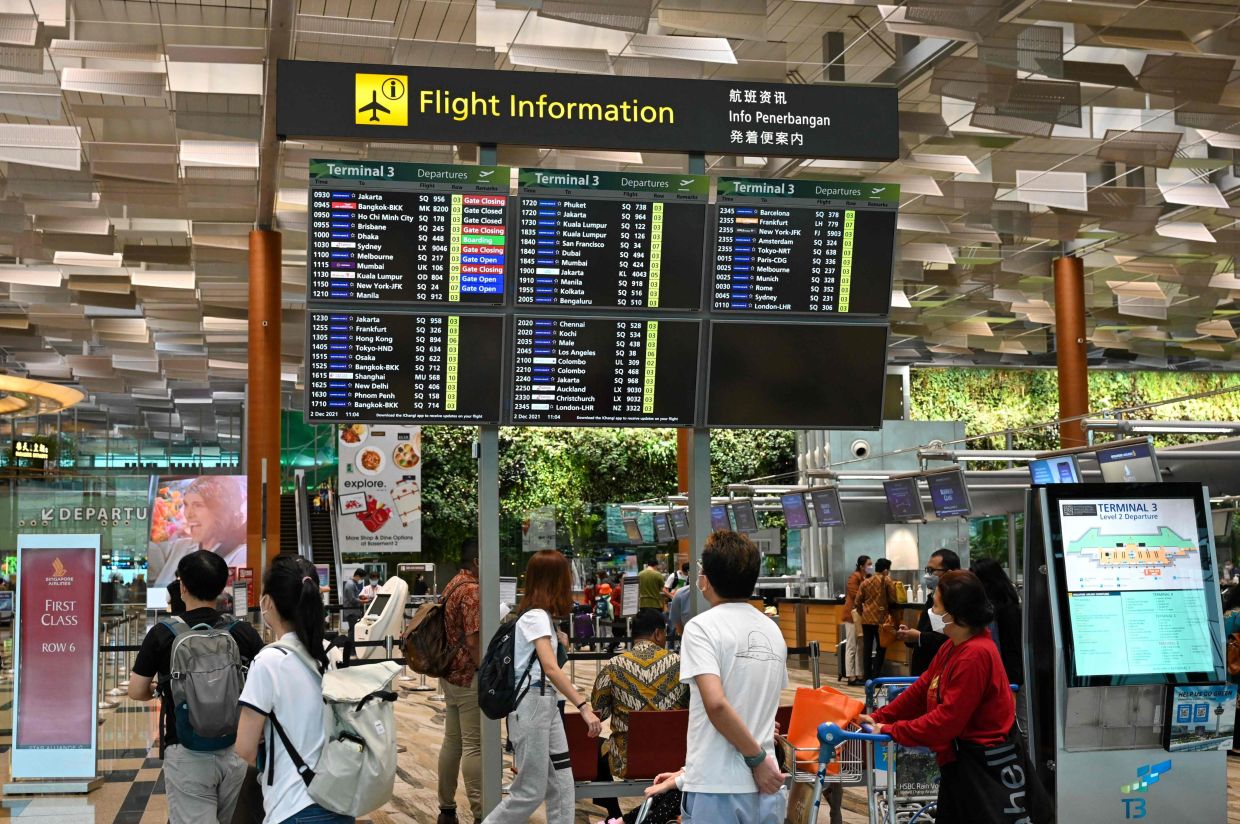
A Singapore court has handed down jail sentences to a Hong Kong mother and son for their roles in a chaotic and violent incident that unfolded at Changi Airport's Terminal 3 in June last year. Chan Sui-kwan, aged 65, received a six-month sentence on Monday for intentionally causing hurt with the intent to obstruct a public servant from performing his duties. Her son, Chan Wing-kwan, 42, was sentenced to ten days' imprisonment for voluntarily causing hurt to another person. The verdicts came after both individuals were convicted on July 29 following a court date they had missed months earlier, triggering an arrest warrant.
The incident that precipitated these convictions originated in the afternoon of June 30, 2024, when the son became increasingly agitated and hostile in the terminal. Court documents reveal that he had misinterpreted the actions and words of nearby travellers, believing they were deliberately mocking or ridiculing him. This perceived slight triggered an aggressive response, during which he kicked his own mother. When a 69-year-old bystander approached to offer assistance and check on the woman's welfare, she rejected his intervention, though she did not initially escalate the situation. Her son, however, took a more confrontational stance, openly challenging the older man to fight and adopting an overtly aggressive demeanour.
The situation deteriorated further as the pair moved to another level within the terminal. In this secondary location, the son once again kicked his mother, suggesting a pattern of volatility and disturbed behaviour. When the 69-year-old bystander attempted to summon police assistance by making a call, the son suddenly lunged towards him in a physically threatening manner. A violent struggle ensued between the son and the bystander, during which the younger man repeatedly struck the older man with his fists. The assault caused significant injuries to the bystander, including a haematoma to the head—a pooling of blood beneath the skin causing visible bruising and swelling—along with abrasions to the knee and bruising across his fingers.
Initial police response to the scene was relatively swift, with officers attending and documenting the incident. They recorded the passport details of both the mother and son before returning their travel documents, apparently allowing them to remain in the airport vicinity. However, later that same afternoon, officers encountered the pair again in the terminal's departure hall. At this second contact point, the situation escalated once more. The mother refused to surrender her passport to police and created a public disturbance, leading to her arrest.
As police moved to take the mother into custody, she physically resisted the officers. During this struggle to effect the arrest, she bit a police officer on his right forearm, penetrating through the fabric of his clothing and leaving a visible 1-centimetre mark along with bruising and swelling. The bite constituted an assault on a public servant and added weight to the more serious charges she would face in court. This act of resistance, combined with her earlier actions and refusal to comply with police instructions, escalated the severity of her legal position considerably.
The processing of this case through Singapore's legal system proved unusual in its timeline and procedural elements. The mother was brought before the courts only on November 18, 2024—more than four months after the incident itself occurred—while her son faced charges on April 24 last year. Both defendants missed a previously scheduled court appearance on July 22 this year, a failure that prompted judicial authorities to issue an arrest warrant to compel their attendance. This absence from court suggested either deliberate evasion or significant confusion about their legal obligations.
Following their eventual appearance, both were convicted on July 29, with sentencing handed down two days later on Monday. The disparity in their sentences reflects the different charges and the varying degrees of violence attributed to each person. The mother's six-month term specifically incorporates the aggravating element that her assault was directed against a police officer attempting to discharge his official duty—a factor that Singapore courts treat with particular gravity to maintain public order and respect for law enforcement authority.
For Malaysian and broader Southeast Asian readers, this incident underscores the serious consequences that can flow from seemingly spontaneous acts of violence in public spaces. Singapore's judicial system demonstrates a strong commitment to prosecuting assault cases comprehensively, particularly those involving assaults on police officers or bystanders who intervene to help others. The case also illustrates how relatively minor altercations can spiral rapidly into multiple offences when parties refuse to cooperate with authorities and respond physically to police intervention.
The extended timeline between the incident and sentencing, coupled with the defendants' failure to appear at a scheduled court date, indicates that individuals facing legal proceedings in Singapore cannot simply ignore the system or their obligations. The issuance of an arrest warrant and subsequent enforcement demonstrates that the judicial process will proceed and culminate in conviction even if defendants attempt to evade court appearances. For travellers in Singapore, the case serves as a reminder that violent conduct at public facilities like airports carries severe penalties and that assaulting police officers or refusing to cooperate with law enforcement authorities will result in substantially enhanced charges and sentences.

