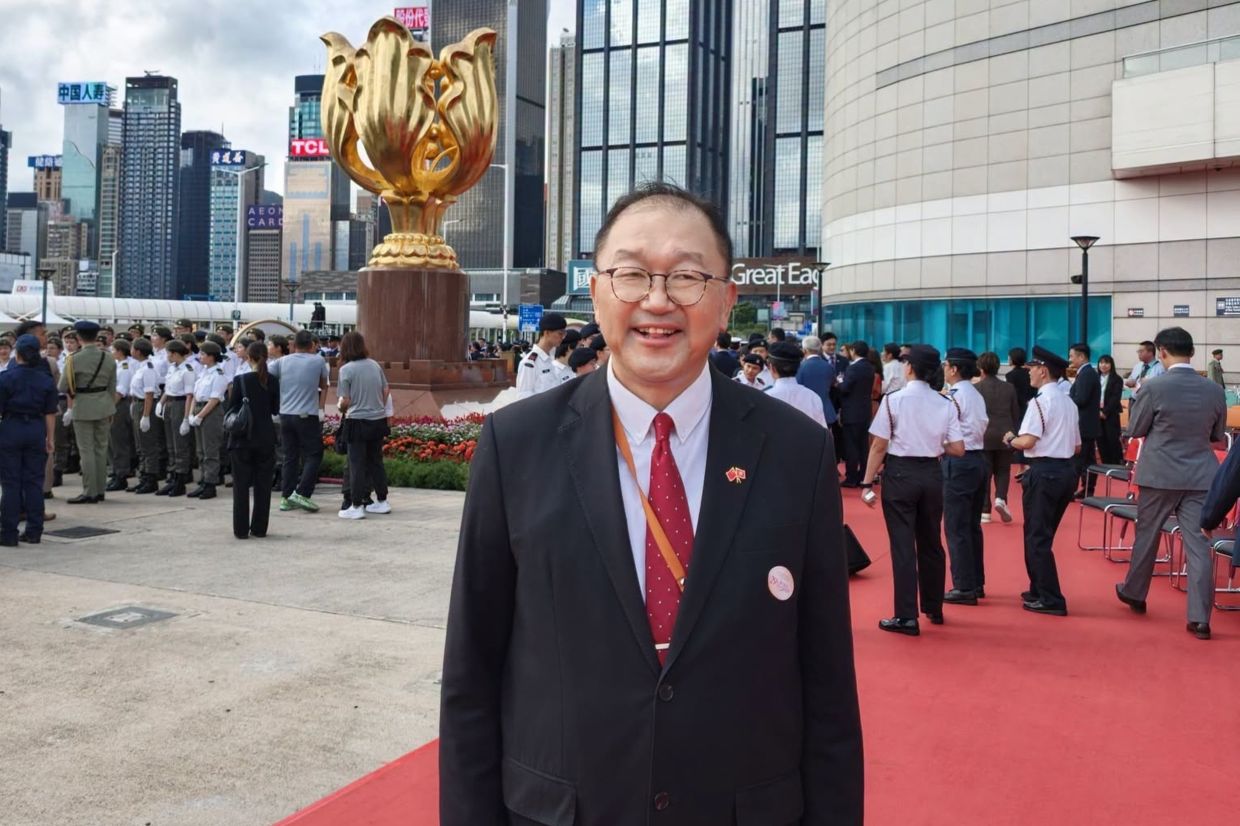
William Wong Kam-fai, a Hong Kong legislator and academic, has become the first member of the Legislative Council to resign over a scandal in more than 26 years, stepping down on Friday after his arrest on suspicion of drink-driving and involvement in a hit-and-run incident. The 66-year-old was detained on Monday night following a traffic accident on a university campus in which his vehicle collided with two parked cars. His swift resignation marks a significant moment in Hong Kong's political landscape, as such scandal-driven departures have become increasingly rare in recent years.
Wong's decision to step down came within days of the incident, with his formal letter of resignation submitted to Legco President Starry Lee Wai-king on Friday. In a brief statement, Wong expressed remorse for the distress caused to society and the legislature, acknowledging the gravity of his actions. He explained that his resignation was intended to prevent further disruption to the functioning of the Legislative Council and requested public understanding regarding his inability to discuss the matter in detail whilst police investigations remain ongoing. His commitment to continuing service to the community in alternative capacities suggested an attempt to salvage his broader public standing, even as his legislative role came to an abrupt end.
The Legislative Council president responded graciously to Wong's departure, commending his historical contributions to the institution and his work on behalf of Hong Kong. Lee's statement reflected the formal acceptance of what political observers view as an inevitable outcome given the severity of the allegations. Wong's resignation also raises questions about his position as a member of the Chinese People's Political Consultative Conference, China's top political advisory body, where his continued membership may face reconsideration following the scandal.
Political analysts in Hong Kong have largely interpreted Wong's decision as prudent and necessary. Lau Siu-kai, a consultant at the semi-official Chinese Association of Hong Kong and Macau Studies think tank, characterised the resignation as the optimal course of action to minimise reputational damage to both Wong personally and to the Legislative Council as an institution. Lau suggested that remaining in office could have provided ammunition for critics to attack the governance principle of patriots administering Hong Kong, potentially undermining confidence in the system itself. The swift resolution, according to this analysis, protects the broader political project whilst sacrificing one individual.
Tam Yiu-chung, Hong Kong's former sole representative to the National People's Congress Standing Committee, similarly endorsed the resignation as appropriate given the high standards expected of legislators. Tam noted that the incident represented a serious transgression that made continued service untenable, particularly in an environment where public integrity standards have become increasingly stringent. His comments reflect a consensus amongst Hong Kong's political establishment that maintaining institutional credibility requires swift and decisive action when scandals emerge at this level.
The practical impact of Wong's departure on the Legislative Council's operations appears limited, primarily because he represented the Election Committee constituency rather than a functional constituency. Functional constituencies, which represent specific economic or professional sectors, carry greater weight in legislative dynamics and cannot easily lose representation without triggering organised sector response. An Election Committee-elected seat, by contrast, represents a narrower constituency and its loss does not immediately compromise the legislature's capacity to function or reflect broader societal interests.
Whether the government will hold a by-election to fill Wong's vacant seat remains an open question. Tam clarified that no legal requirement mandates such an election, with the decision hinging on factors including the remaining duration of the current legislative term and broader financial considerations. The precedent from the previous Legislative Council is instructive: after Stephen Wong Yuen-shan, another Election Committee constituency legislator, left his seat in late 2022 to head a government think tank, the position remained vacant for approximately three years without a by-election being held. Constitutional Affairs Minister Erick Tsang Kwok-wai subsequently indicated in 2024 that fiscal prudence would influence such decisions, suggesting that cost-benefit analysis rather than democratic principle now guides such determinations.
Wong's resignation marks an extraordinary moment in Hong Kong's legislative history. The last legislator to resign over scandal was Gary Cheng Kai-nam in September 2000, just weeks after winning his seat. Cheng's departure followed revelations that he had concealed business relationships, leaked confidential government documents, and maintained an extramarital affair. He was subsequently convicted of bribery, misconduct in public office, false accounting, and theft, receiving an 18-month prison sentence in 2001. The 24-year gap between Cheng's resignation and Wong's departure underscores how scandal-driven exits have become less common in recent Hong Kong politics, whether due to enhanced vetting procedures, changing political norms, or the evolving composition of the legislature itself.
Beyond his legislative role, Wong held positions in various organisations and worked as an academic. The institution with which he was affiliated, Chinese University of Hong Kong, issued a statement on Friday indicating that it had suspended him from administrative duties whilst taking his professional conduct seriously. The university emphasised its commitment to rigorous standards regarding staff behaviour and ethics, whilst declining to comment further pending completion of the police investigation. This institutional response reflects broader efforts amongst Hong Kong's major organisations to distance themselves from the scandal and signal their adherence to high standards of accountability.
The incident itself occurred when Wong lost control of his vehicle near a staff residential area on the university campus at approximately 10.46 pm on Monday evening. The vehicle struck a parked car, which was then propelled into a second vehicle, resulting in the multiple-vehicle collision. The circumstances of the accident and the legal ramifications Wong may face remain subjects of ongoing police investigation. The incident has raised broader questions about accountability amongst Hong Kong's political and professional elite, particularly regarding conduct that might be viewed more leniently in other contexts but is increasingly scrutinised in a jurisdiction where governance credibility is considered essential to social stability.
From a Southeast Asian perspective, Wong's resignation offers insight into governance standards in Hong Kong under the current political system. The swift response from both Wong and the institutional apparatus suggests that mechanisms for managing reputational crises remain functional, even as other dimensions of Hong Kong's political system have undergone substantial transformation. The episode also reflects how accountability standards within Hong Kong's political system continue to operate, with individual actors potentially prioritising broader institutional health over personal position retention when scandals emerge.

