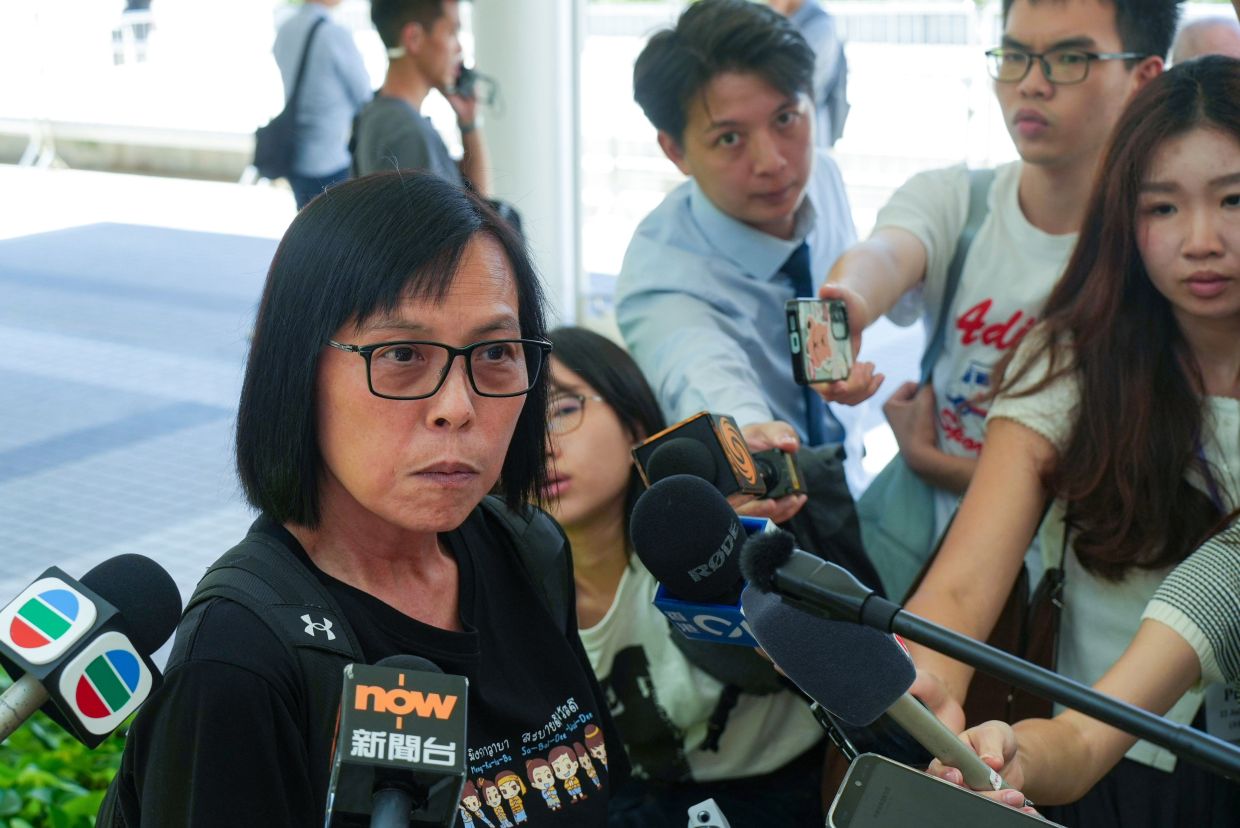
The independent committee tasked with investigating Hong Kong's Wang Fuk Court fire has opted not to pursue statutory authority, a decision that survivors and observers argue may fundamentally undermine the scope and effectiveness of the inquiry. Committee chairman Justice David Lok Kai-hong announced the panel would continue its work without requesting the chief executive to convert it into a statutory commission of inquiry as proceedings resumed this week following a six-week hiatus. The choice has triggered fresh concerns about whether the investigation possesses sufficient investigative powers to conduct a thorough examination of the blaze and identify systemic failures that contributed to the tragedy.
The distinction between a statutory and non-statutory inquiry carries significant practical implications for Hong Kong's investigative framework. A statutory commission of inquiry would grant investigators powers to compel witness testimony, demand documentary evidence, and conduct more rigorous cross-examination of officials and relevant parties. By declining to seek this formal status, the committee operates within more constrained parameters, relying largely on voluntary cooperation and the goodwill of potential witnesses. This structural limitation becomes particularly concerning when investigating incidents that may implicate government agencies, building authorities, and public safety officials who might otherwise face uncomfortable scrutiny.
The Wang Fuk Court fire, which occurred last year, claimed multiple lives and displaced numerous residents, making it one of Hong Kong's most significant recent residential disasters. Survivors and their families had anticipated that a statutory inquiry would provide them with greater recourse to demand answers and accountability from those responsible for building maintenance, fire safety compliance, and emergency response protocols. The independent committee's decision to forego such powers represents a departure from precedent in other major incidents where statutory authority was deemed necessary to ensure public confidence in the investigation's comprehensiveness.
Justice Lok's reasoning for maintaining the current non-statutory framework reflects broader debates within Hong Kong's governance about the appropriate level of investigative power that should be granted to independent panels. Proponents of the current approach argue that statutory status can become bureaucratically cumbersome and may extend inquiry timelines unnecessarily. However, this rationale does little to address survivors' substantive concerns about whether voluntary participation from officials will yield the complete truth about how the fire started, spread, and why evacuation procedures may have been inadequate.
The resumed proceedings this week mark a critical juncture in the investigation's trajectory. The six-week pause, while allowing the committee to consolidate findings and prepare for subsequent phases, also raises questions about momentum and public attention. Major inquiries into disasters benefit from sustained focus to maintain pressure on witnesses and prevent institutional memory from fading. The resumption occurs against a backdrop of diminishing media coverage and public discourse, potentially disadvantaging survivors who rely on sustained scrutiny to ensure thoroughness.
For Malaysian readers and Southeast Asian observers, Hong Kong's approach to post-disaster investigations offers instructive parallels regarding accountability mechanisms. Statutory commissions of inquiry have been utilised in Malaysia following significant incidents, generally with the understanding that such formal authority strengthens investigative legitimacy and public confidence. Hong Kong's deviation from this model suggests that even advanced regulatory systems can encounter tensions between efficiency and accountability, between respecting institutional cooperation and asserting investigative independence.
The implications extend beyond the immediate fire investigation to broader questions about how Hong Kong manages public safety oversight and building regulation enforcement. If the independent committee cannot compel testimony from Building Department officials, Fire Services personnel, or building management representatives, significant gaps in understanding preventive failures may persist. These gaps accumulate across incidents, creating systemic blind spots that leave future residents vulnerable to similar tragedies elsewhere in the territory.
Survivors have begun articulating their concerns through civil society channels and legal representation, signalling that the investigation's voluntary framework may not satisfy demands for accountability. In previous Hong Kong inquiries where statutory powers were withheld, survivors' representatives have subsequently pursued litigation to supplement findings, effectively creating a two-track system where official investigations and civil claims operate in parallel. This fragmentation imposes additional burden on victims whilst potentially diluting the authoritative weight of findings.
The committee faces a credibility test in the coming weeks as it examines critical evidence and questions key witnesses. Without statutory compulsion, its investigators must rely on persuasion and the perception that participation serves broader public interest. This dynamic can work reasonably well when witnesses have reputational incentives to cooperate transparently. However, institutional actors—particularly government agencies—may calculate that limited disclosure within a voluntary framework carries fewer risks than comprehensive exposure within a statutory proceeding.
Looking forward, the investigation's findings will likely influence how Hong Kong approaches similar inquiries into future incidents. Should the current process produce comprehensive explanations and clear accountability attributions, the non-statutory model may gain credibility. Conversely, if significant questions remain unanswered or responsibility becomes diffused across multiple parties without clear findings, pressure will mount to reform Hong Kong's investigative protocols to include statutory authority as standard for major incidents. Survivors' satisfaction—or lack thereof—will ultimately determine whether Justice Lok's decision to maintain the current framework proves defensible or becomes a cautionary tale about investigative restraint.