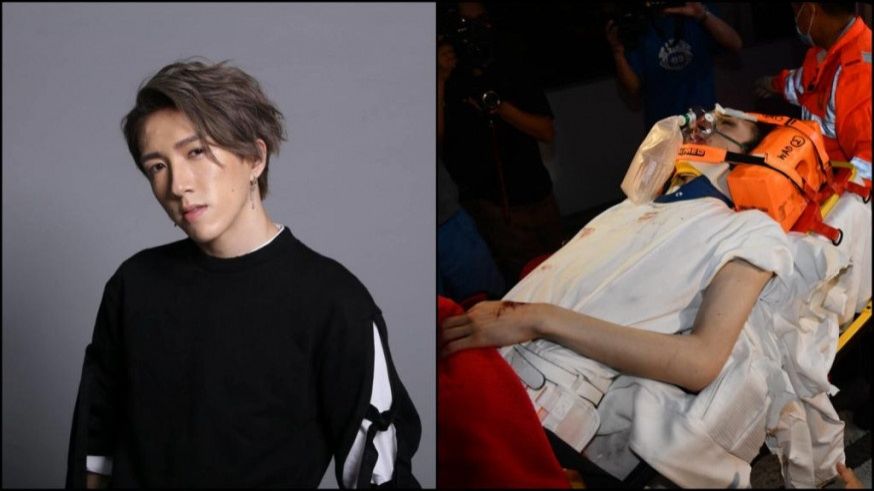
A Hong Kong court has awarded HK$6.29 million (approximately RM3.32 million) in damages to dancer Mo Li Kai-yin, whose performing career ended catastrophically when a massive LED screen fell on him during a Mirror concert in July 2022. The District Court ruling on June 15 represents a significant judgment in one of Hong Kong's most serious entertainment industry accidents, establishing important precedents for workplace safety and performer compensation in the region's vibrant entertainment sector.
Mo's life changed irreversibly on July 28, 2022, when a four-by-four-meter LED panel detached from the ceiling of Hong Kong Coliseum during the fourth show of the Cantopop boy band's planned 12-concert residency. The incident left the then-30-year-old dancer with a cervical spine dislocation and complete paralysis from the neck downwards, requiring emergency surgery and months of intensive treatment at Queen Elizabeth Hospital. The court's characterization of his injuries as "catastrophic" reflected the profound and permanent nature of the damage sustained.
The compensation package awarded to Mo encompasses multiple categories that acknowledge the full scope of his ongoing needs. Beyond the base damages, the court awarded him maximum compensation for permanent total incapacity, lifetime caregiving expenses, periodic payments, and comprehensive medical costs. This multifaceted approach recognises that his recovery extends far beyond the initial emergency medical intervention, encompassing decades of specialist care, rehabilitation, and support services. The ruling also mandated that his employer, Studiodanz, cover all legal costs and pay accumulated interest on the judgment.
The extent of Mo's dependency underscores why the compensation figure, while substantial, reflects genuine financial realities. The 31-year-old now requires three full-time caregivers to assist with every aspect of his personal care and daily living activities. The court's observations about his condition were unsparing: he has suffered permanent total incapacity and will require constant care and attention throughout his lifetime, making independent adult life impossible. This reality distinguishes his case from typical workplace injury claims, as his needs are essentially open-ended and will persist for potentially four or five decades.
Mo's journey to the accident was itself notable within Hong Kong's dance community. He discovered his passion for dance while attending university between 2015 and 2019, pursuing the art form with sufficient dedication to transition to full-time professional status by 2019. Within just three years, he had established himself as a versatile performer, working on concert productions, television programs, advertisements, and music videos across Hong Kong's entertainment ecosystem. He also balanced performance work with instruction, teaching at four dance studios including Studiodanz, the company that would later face legal accountability for the accident.
The role of Studiodanz in the proceedings revealed important workplace safety failures. Although the company declined to participate in the trial proceedings, it had previously received a regulatory fine of HK$132,000 for violations of occupational safety regulations related to the incident. This administrative penalty, while substantial, pales in comparison to the compensation award, suggesting that initial regulatory responses did not adequately capture the severity of the negligence that allowed a multi-ton LED structure to fall during a live performance with hundreds of audience members present.
Mo's recovery trajectory, though limited in scope, has demonstrated remarkable resilience and benefit from advanced medical interventions. Following the accident, he underwent surgery and rehabilitation at Queen Elizabeth Hospital before transferring to private medical facilities in Hong Kong and overseas, where he continues to receive specialized treatment. His rehabilitation programme incorporates cutting-edge technologies including regenerative medicine and implantable microstimulation devices. These interventions have yielded modest but meaningful gains: he has regained some motor function in his right arm and recovered sensation in bladder and bowel functions, improvements that significantly enhance quality of life despite his overall paralysis.
The personal sacrifice required from Mo's family during his recovery reveals the human dimensions behind the legal judgment. His father, Reverend Derek Li Shing-lam, resigned from his pastoral position in Canada and returned to Hong Kong to become his son's primary full-time caregiver, a role he maintained until his death on April 25. This familial commitment highlights how catastrophic injuries to young workers create cascading consequences for multiple family members, validating the court's emphasis on comprehensive lifetime support provisions in its compensation structure.
Mo's documented progress, while incremental, provides hope and demonstrates the value of sustained rehabilitation investment. A video posted on his Instagram account in March 2024 showed him operating an electric wheelchair using his right hand, a capability that may seem modest but represents significant independence in his circumstances. This visible progress reflects the potential of emerging medical technologies to improve quality of life for individuals with severe spinal injuries, though the fundamental reality of his paralysis remains unchanged and permanent.
The judgment carries implications extending beyond Mo's individual circumstances. For the Southeast Asian entertainment industry, including Malaysia's growing concert and performance sector, the ruling establishes that venue operators and production companies face substantial financial liability when structural failures cause performer injuries. The court's willingness to award maximum compensation across multiple categories signals that regulatory fines alone do not satisfy the legal obligations owed to workers whose careers and life prospects are destroyed by workplace negligence. This precedent may prompt enhanced safety protocols, more rigorous structural engineering reviews, and increased insurance requirements across concert venues throughout the region.
Moreover, the case highlights the vulnerability of contract performers and freelance workers in the entertainment industry who may lack traditional employment protections. Mo's status as an instructor at multiple studios and freelance performer exemplifies the precarious employment relationships common throughout Asian entertainment sectors. While he did maintain some employment relationship with Studiodanz, the court's broad interpretation of employer responsibility suggests that even companies with indirect involvement in performance spaces bear significant safety obligations toward performers working in their facilities.
The six-year timeline from accident to judgment also reflects the complexity and duration of compensation litigation in Hong Kong's legal system. For Malaysian performers and industry stakeholders observing this case, the extended process underscores the importance of robust insurance coverage and immediate legal engagement following serious workplace incidents. The compensation ultimately awarded to Mo, while acknowledging the permanence of his disability and lifetime care needs, required sustained legal effort to secure against a defendant company that chose not to defend itself in trial proceedings.

