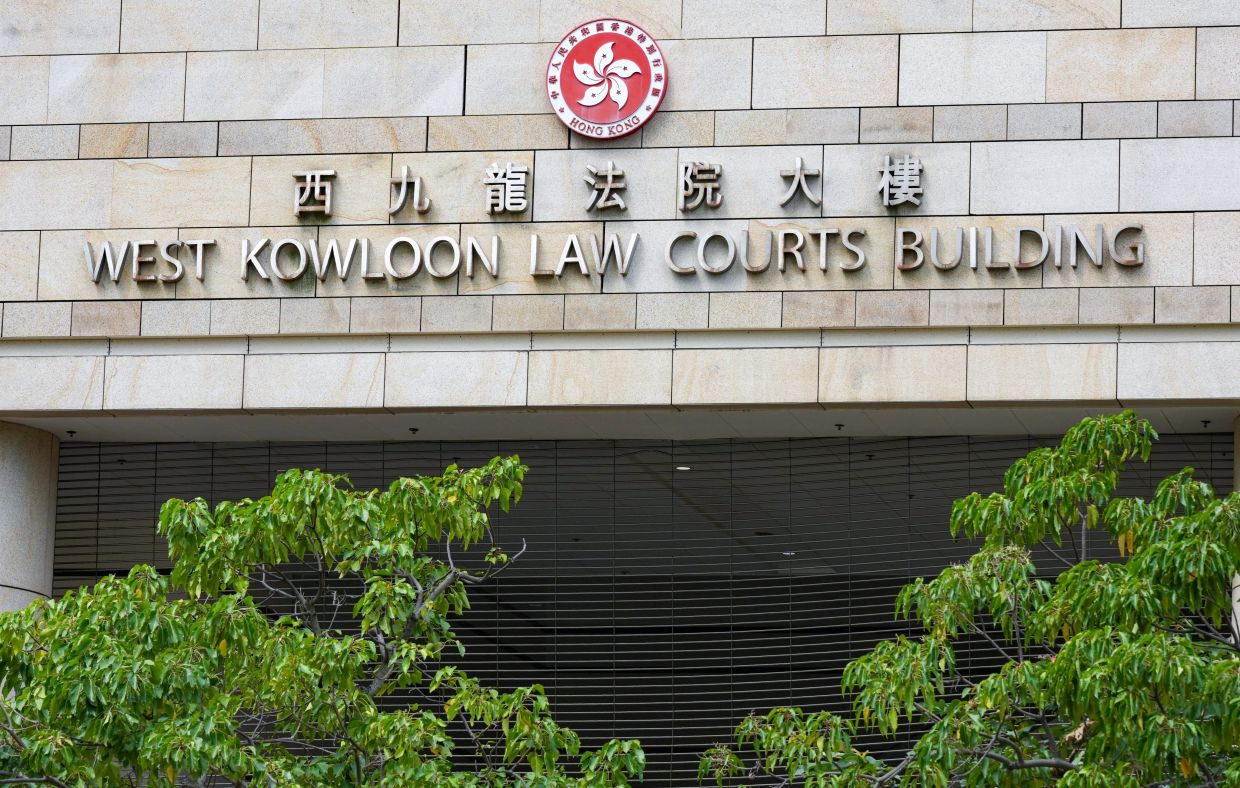
A Hong Kong court has handed down a four-month custodial sentence to a 65-year-old man with a history of sexual offences, following his guilty plea to indecent assault committed against a secondary school student aboard a public bus. The case, heard at West Kowloon Court on Tuesday, highlights the persistent challenge of protecting vulnerable commuters on public transport systems in densely populated urban areas, and raises questions about the adequacy of sentencing for repeat offenders in the territory.
William Wu Yiu-shing, a retired hardware salesman, committed the assault on June 5 as a KMB double-decker bus made its journey through the Mong Kok district. The attack occurred at approximately 12.10pm as the vehicle approached the intersection of Mong Kok Road and Sai Yeung Choi Street South, during what would have been a typical midday commute. The incident might have passed unnoticed had it not been for a street pedestrian who witnessed the encounter through the bus window and recorded the encounter on a mobile device, subsequently uploading the footage to social media platforms where it gained considerable traction.
The recorded footage, lasting 37 seconds, provided authorities and the court with clear visual documentation of the offence. In the video, Wu, wearing a light-coloured tank top, can be observed extending his left arm toward the seated teenager positioned directly in front of him on the upper deck. Despite audible warnings from pedestrians outside the bus who recognised the inappropriate behaviour unfolding before them, Wu persisted with the assault as the vehicle continued its route. The brazenness of the perpetrator's actions in a public setting, coupled with his apparent indifference to external admonishments, compounded the severity of the incident.
The victim, a Form Three student aged 17, reported to police that she experienced unwanted contact to her armpit region and witnessed the offender attempting to seize her. The traumatic nature of the encounter left her too frightened to react or intervene at the moment of assault. Following the incident, she hurried home, where she subsequently reported the matter to law enforcement. Her testimony underscores the vulnerability of young passengers navigating public transport systems and the psychological impact such violations inflict on victims.
Authorities apprehended Wu later that same day at the Hong Kong-Zhuhai-Macau Bridge border checkpoint after he returned from Macau. Upon arrest and subsequent questioning, Wu admitted to perpetrating the assault to fulfil sexual gratification. His admissions facilitated the expedited resolution of the case, as he entered a guilty plea last month, avoiding a protracted trial and allowing the court to proceed directly to sentencing deliberations.
The sentencing carries particular significance when considered against Wu's criminal history. The defendant carried three prior convictions for indecent assault, establishing a clear pattern of predatory behaviour toward non-consenting individuals. This escalating pattern of offending demonstrates a failure of previous interventions to deter or rehabilitate the offender, suggesting systemic vulnerabilities in how the justice system manages recidivists with entrenched patterns of sexual misconduct. The court's decision to impose four months imprisonment, whilst considerably below the maximum penalty available, reflected both his guilty plea and his stated willingness to engage with psychological treatment.
During Tuesday's proceedings, Wu's legal representative emphasised his client's acknowledgment of culpability and his candid admission regarding the similarities between his current offence and previous convictions. The defence counsel highlighted Wu's ostensible commitment to undergoing psychiatric or psychological intervention as part of any rehabilitation programme, signalling a potential recognition of his compulsive behavioural issues. Whether such therapeutic engagement can address the deeply rooted nature of Wu's offending patterns remains uncertain, though the judiciary's receptiveness to this mitigation suggests some optimism regarding rehabilitation possibilities.
Under Hong Kong law, indecent assault ordinarily carries maximum penalties of up to a decade of imprisonment when cases proceed through the District Court or beyond. However, when prosecuted through the magistracy system, penalties are capped at two years, restricting the available sentencing range significantly. Wu's four-month sentence falls comfortably within these constraints and reflects the magistrate's assessment of aggravating and mitigating factors specific to this case.
Wu has remained in custody since his prosecution commenced on June 8, meaning he has already served several months of his sentence prior to formal sentencing. Given standard remission policies in Hong Kong's correctional system, legal authorities estimate he may become eligible for early release within approximately one month of the sentencing announcement, potentially shortening his actual time behind bars considerably. This accelerated timeline from arrest to possible release within a six-month window has prompted commentary regarding whether such sentences adequately protect public safety or provide meaningful deterrence against future offending.
The case resonates beyond Hong Kong's borders for Southeast Asian observers, as public transport systems across the region face comparable challenges regarding passenger safety and sexual harassment. Many cities, including Kuala Lumpur, Bangkok, and Singapore, have implemented or expanded CCTV monitoring, increased plainclothes enforcement presence, and public awareness campaigns to combat such incidents. The visibility of Wu's offence through viral video documentation reflects broader societal trends whereby technology enables rapid exposure of crimes that might previously have remained unreported.
For Malaysian commuters and policymakers, this Hong Kong case underscores the importance of institutional frameworks addressing repeat sexual offenders. While Malaysia's criminal justice system incorporates similar provisions for indecent assault and molestation, questions persist about consistency in sentencing, the effectiveness of rehabilitation programmes for sex offenders, and whether public transport operators invest adequately in safety mechanisms including surveillance, staff training, and victim support protocols. The case also highlights how community vigilance—such as the pedestrian who recorded Wu's assault—can serve as a powerful counterweight to such crimes, though it simultaneously reflects the troubling reality that bystander intervention often remains the primary check against such behaviour.
The broader implications of Wu's sentencing extend to discussions surrounding recidivist management across Asian jurisdictions. Repeat sexual offenders present particular challenges for criminal justice systems attempting to balance punishment, public protection, rehabilitation, and proportionate sentencing. Wu's case, involving a pensioner rather than a younger offender, also challenges assumptions that such crimes predominantly involve younger perpetrators, suggesting that sexual predation transcends age demographics and may reflect deeply entrenched character pathology resistant to conventional corrective mechanisms.

