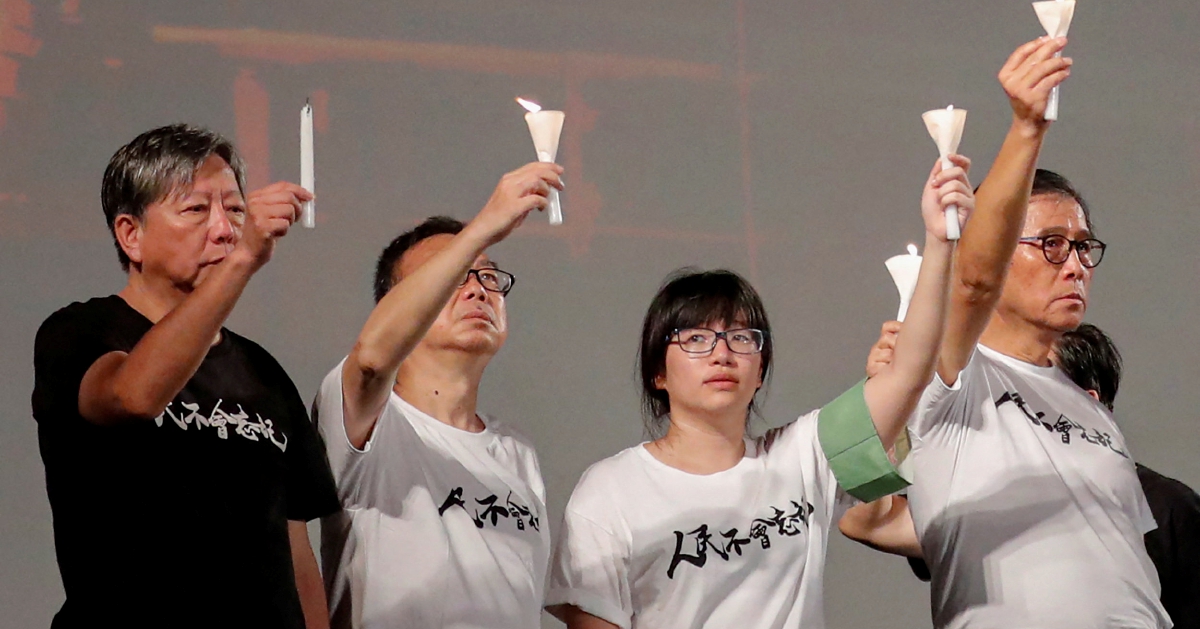
A Hong Kong court has convicted two prominent activists of inciting subversion in connection with their organisation of annual candlelit vigils honouring those killed during the 1989 Tiananmen crackdown in Beijing. The Friday verdict represents a pivotal moment in the region's ongoing political evolution, underscoring how commemorative activities—once commonplace in the territory—have become legally precarious under the National Security Law enacted in 2020.
The two activists had coordinated what became Hong Kong's most recognisable pro-democracy ritual: the Victoria Park vigils that annually drew thousands of residents lighting candles to remember the victims of the military crackdown. These events, held consistently for over three decades, embodied the freedoms of assembly and expression that Hong Kong once took for granted. The guilty verdict signals how dramatically the legal framework protecting such activities has shifted in recent years, creating new jeopardy for peaceful commemoration.
For Malaysian and Southeast Asian observers, this development carries particular significance. Hong Kong's transformation illustrates how security legislation can be weaponised against civil society activities, even those of a largely symbolic nature. The conviction based on organising memorial vigils—activities that would be legally protected in most democratic societies—demonstrates the expanding scope of what constitutes political subversion under the National Security Law's broad definitions. This pattern has implications for how regional governments might interpret and implement similar legislation elsewhere in Asia.
The Tiananmen crackdown itself remains a sensitive subject across China and territories under Beijing's authority. The 1989 military operation resulted in significant casualties when troops suppressed pro-democracy demonstrations. Commemorating these events has long been viewed by Beijing as politically contentious, and Hong Kong's vigils represented one of the few places in the Chinese-speaking world where such remembrance occurred openly and without state interference. The court's conviction effectively curtails this remaining public acknowledgment.
The National Security Law, imposed on Hong Kong by the National People's Congress Standing Committee in June 2020, criminalises secession, subversion, terrorism, and collusion with foreign forces. Critics argue the law's vagueness has allowed prosecutors considerable latitude in charging activists, journalists, and opposition politicians with subversion for conduct that would previously have been protected speech. The conviction of the vigil organisers exemplifies this expansive application, as organising a memorial service—without explicit calls for violent overthrow—has been deemed sufficient grounds for a subversion charge.
This judicial outcome also reflects broader changes in Hong Kong's political trajectory since the 2019 pro-democracy protests. That year's mass demonstrations over an extradition bill morphed into a wider movement challenging Beijing's influence and calling for democratic reforms. The subsequent imposition of the National Security Law, combined with electoral changes reducing the proportion of directly elected seats in the Legislative Council, has progressively constrained opposition politics and public dissent. Each conviction under the security law further delimits the boundaries of permissible political activity.
For the regional context, Hong Kong's experience offers cautionary lessons about how security legislation can reshape the political landscape once enacted. Southeast Asian governments considering or implementing analogous measures should anticipate that such laws—regardless of their stated purpose—tend toward expansive interpretation over time. What begins as targeted counter-terrorism or counter-separatism legislation can gradually encompass peaceful activism, journalism, and civil society work. The Hong Kong precedent demonstrates this trajectory in practice.
The vigils themselves had evolved into a cornerstone of Hong Kong's identity as a place where mainland China's sensitive political history could be discussed and remembered. International media coverage of these gatherings presented Hong Kong as distinct from mainland China in its openness to controversial commemoration. The criminalisation of the organisers effectively eliminates this visible distinction, aligning Hong Kong's legal constraints more closely with mainland practices regarding Tiananmen.
For activists and civil society organisations across Asia, the implications are sobering. If commemorative gatherings in Hong Kong—conducted peacefully and without inflammatory rhetoric—are now prosecutable as subversion, then the threshold for political liability has become dangerously low. This has potential chilling effects on grassroots activism throughout the region, particularly in countries with expanding security legislation. Communities considering peaceful demonstrations or commemorative events must now weigh the legal risks more carefully than before.
The conviction also raises questions about Hong Kong's continued status as a global financial hub and international city. Investors, foreign missions, and multinational companies have historically valued Hong Kong partly for its rule of law and protection of civil liberties. Increasingly politicised legal proceedings targeting activists—even those engaged in quiet commemoration rather than confrontational protests—may prompt reconsideration of the territory's institutional reliability and adherence to international norms regarding freedom of expression.
Looking forward, the verdict may embolden similar prosecutions against other forms of political expression. Rights groups warn that the security law's undefined terms and broad scope create opportunities for authoritarian mission creep. Other regional governments observing Hong Kong's legal trajectory may interpret such convictions as precedent for their own legislation, potentially leading to a regional contraction in space for civil society and peaceful protest.
The Hong Kong court's decision thus transcends a single conviction of two activists. It represents a defining moment in how Hong Kong—and potentially the broader Asia-Pacific region—will balance security imperatives with civil liberties. The outcome confirms that even historically protected activities like candlelit memorial vigils now carry substantial legal risk under the new security framework.

