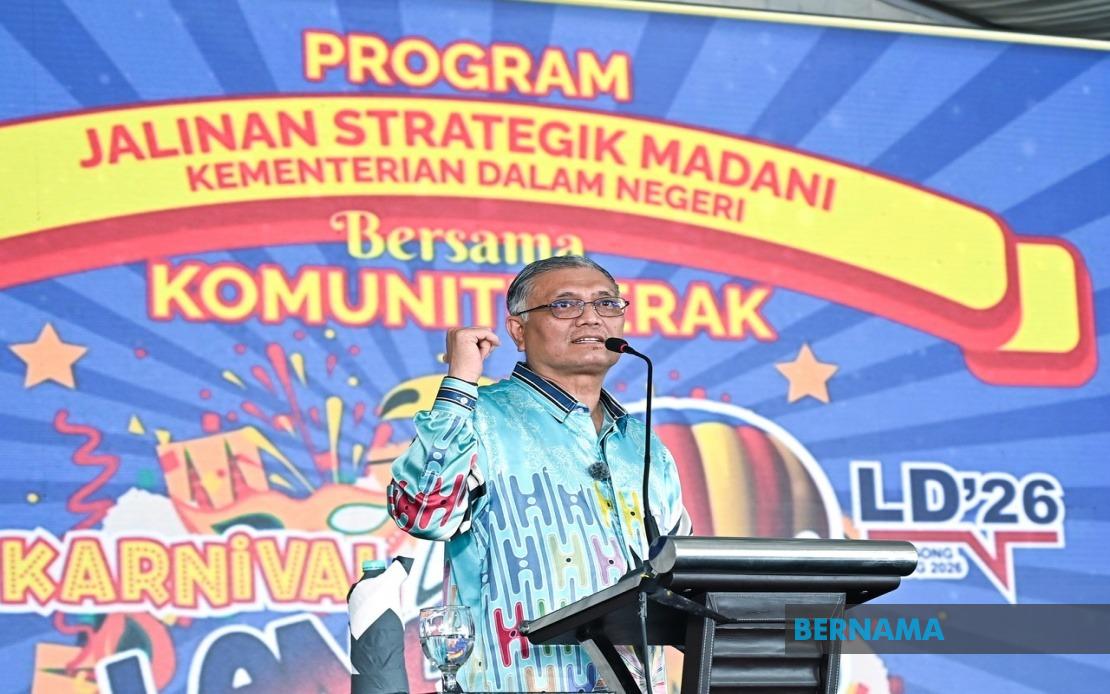
A two-day community engagement initiative launched by Malaysia's Home Ministry at Dataran Lenggong in Perak has demonstrated a fresh approach to connecting citizens with essential government services, moving beyond traditional office-based interactions to meet people in their own neighbourhoods. The MADANI Strategic Partnership Programme brought together multiple government agencies under one umbrella, creating an accessible venue where residents could address administrative needs, seek assistance, and interact directly with security and immigration officials without the typical bureaucratic formalities.
The event in Lenggong, coordinated with the Perak Community 2026 framework, reflects a broader shift in how Malaysian government ministries are adapting their service delivery models in the post-pandemic era. Rather than requiring citizens to navigate government offices during standard business hours, the programme transformed a public space into a comprehensive service hub featuring multiple agency counters. This decentralised approach recognises that many Malaysians, particularly in smaller towns and rural areas, face genuine barriers to accessing government services—distance, time constraints, and unfamiliarity with bureaucratic processes.
Deputy Home Minister Datuk Seri Dr Shamsul Anuar Nasarah, who also represents Lenggong as Member of Parliament, underscored the programme's dual purpose during the official launch. Beyond merely making services geographically accessible, he framed the initiative as creating genuine two-way dialogue between security agencies and communities. This distinction matters considerably, as it moves beyond a transactional model where citizens simply receive services to one emphasising collaborative problem-solving on local security challenges.
The programme featured exhibitions and direct engagement opportunities involving the Royal Malaysia Police (PDRM), the Immigration Department of Malaysia (JIM), and the National Anti-Drugs Agency (AADK). Each agency set up dedicated service counters where visitors could update personal records, file complaints, seek professional advice, or lodge reports on crime and drug-related concerns. The responsive attendance at these counters throughout the event suggested genuine public interest in accessing such services when they are conveniently provided.
Complementing the administrative aspects, the programme incorporated substantial community activities designed to build social cohesion alongside service provision. Nearly 1,190 participants engaged in recreational activities organised jointly by the People's Volunteer Corps (RELA) and the National Anti-Drugs Agency, including a fun run and cycling ride that traversed villages surrounding Lenggong. This integration of health promotion and community building with security agency presence represents a strategic effort to normalise positive interactions between government representatives and ordinary citizens.
The choice of Lenggong Valley as the venue carries particular significance given its UNESCO World Heritage Site designation. By routing the fun activities through local villages and highlighting the region's natural attractions—its scenic landscapes, biodiversity, and cultural heritage—the programme simultaneously promoted healthy lifestyle engagement while showcasing local tourism potential. This multi-layered approach demonstrates how government initiatives can serve multiple policy objectives simultaneously: security outreach, health promotion, tourism marketing, and community development.
For residents of Lenggong and surrounding areas, the programme addressed a practical gap in service accessibility that smaller towns often experience. While major urban centres typically have dedicated government service centres within reasonable distance, smaller municipalities frequently rely on travelling officers or require residents to journey to state capitals for routine administrative matters. By bringing comprehensive services directly to the community, the initiative removed friction from important processes like passport renewal, police report filing, and immigration inquiries.
The emphasis on addressing grassroots security concerns—including crime prevention and drug abuse—reflects current priorities within Malaysia's Home Ministry portfolio. By creating direct communication channels between residents and agencies like PDRM and AADK, the programme aims to improve intelligence gathering and community cooperation on security matters. This approach acknowledges that effective crime prevention and drug enforcement require genuine community partnership rather than top-down policing alone.
The MADANI branding itself carries significance within Malaysia's current political context, representing the Pakatan Harapan coalition's governance framework emphasising transparency, accountability, and people-centred service delivery. Programme initiatives bearing this label are intended to demonstrate commitment to these values through concrete action, making them visible and tangible for ordinary citizens beyond political discourse.
For other Malaysian municipalities and states considering similar initiatives, Lenggong's experience offers a practical blueprint. The combination of service delivery infrastructure, community activities, and security agency engagement provides a replicable model that doesn't require exceptional resources—primarily coordination, planning, and commitment to meeting citizens where they are rather than requiring citizens to navigate complex government systems. The strong participation rates suggest significant public receptiveness to this approach.
Looking forward, the success of such programmes may influence how Malaysian government ministries structure future community engagement. Rather than viewing service delivery and community development as separate functions, the integrated model demonstrated in Lenggong suggests potential for comprehensive initiatives that simultaneously address multiple social policy objectives while building stronger relationships between government institutions and the communities they serve.
The programme also illustrated how local elected representatives, in this case Datuk Seri Dr Shamsul Anuar as the area's Member of Parliament, can champion initiatives bridging constituents' practical needs with broader government objectives. This role is particularly valuable in smaller constituencies where personal political relationships remain influential in determining public perception of government effectiveness and responsiveness.

