Johor will become the focal point of a comprehensive infrastructure overhaul aimed at bolstering the Home Ministry's operational capabilities across the southern state, Home Minister Datuk Seri Saifuddin Nasution Ismail announced in Johor Bahru. The initiative reflects the ministry's recognition of Johor's strategic importance as a gateway state that handles critical functions in border management, law enforcement and public administration for the nation.
The development programme encompasses a broad spectrum of initiatives that will touch six major agencies operating under the Home Ministry umbrella. This integrated approach signals an attempt to create synergies between different enforcement and administrative bodies rather than treating them as isolated entities. The scale of the undertaking underscores how seriously the federal government views Johor's role in maintaining Malaysia's security posture and administrative efficiency in a state that handles millions of cross-border movements annually.
The Royal Malaysia Police will see tangible improvements to its physical infrastructure in the state. Construction of a new district police headquarters in Segamat represents a significant commitment to upgrading facilities in a district that serves as a crucial hub in the interior. Land acquisition for the Pengerang district police headquarters signals expansion into an area of growing economic activity and population density. Alongside these major projects, the ministry will undertake repairs to police housing quarters and lift systems at various premises, addressing maintenance backlogs that affect officer welfare and operational efficiency.
Border management capabilities will receive particular attention through substantial upgrades to immigration infrastructure. The Sultan Iskandar Building and Sultan Abu Bakar Complex, both critical interface points for international travel and trade, require modernisation to handle growing passenger volumes and to meet contemporary security standards. These facilities process tens of thousands of travellers daily, and bottlenecks or outdated systems directly impact Malaysia's image as an efficient entry point for visitors and investors in Southeast Asia.
The National Registration Department's expansion into Batu Pahat through a new district office reflects demographic growth in that area and acknowledges the administrative burden faced by citizens requiring identity documentation services. This decentralisation of services reduces travel burdens for residents and spreads the administrative load more efficiently across the state's network of service centres.
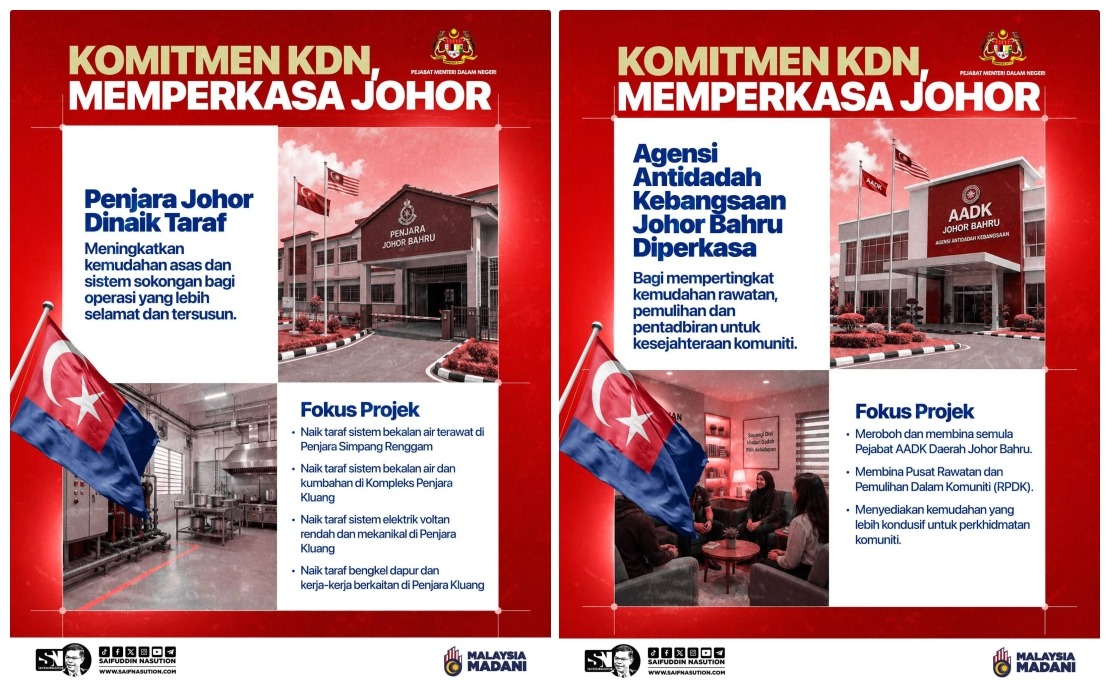
Correctional facilities will undergo systematic upgrades to basic systems at both Kluang and Simpang Renggam prisons, addressing infrastructure that directly affects conditions for both inmates and prison staff. These upgrades typically include electrical systems, plumbing, security infrastructure and living quarters, improvements that contribute to safer and more humane correctional environments. The National Anti-Drugs Agency's office and treatment centre redevelopment signals the ministry's commitment to the drug rehabilitation mission in a state where substance abuse remains a persistent challenge.
Maritime enforcement capabilities will be strengthened through the upgrading of the jetty and buildings at the Abu Bakar Maritime Base, infrastructure that supports Malaysia's navy and coast guard operations in the strategically important waters surrounding Peninsular Malaysia's southern coast. This base operates in waters where piracy, smuggling and illegal fishing remain ongoing concerns that require well-maintained facilities and equipment.
The timing of these announcements, coinciding with Johor's state election cycle where 2.7 million registered voters will elect 56 state assemblymen, reflects political considerations at the federal level. Incumbent governments typically accelerate infrastructure announcements before elections to demonstrate delivery on ground. However, these projects represent commitments that extend well beyond any single electoral cycle, suggesting genuine long-term planning for a state that contributes significantly to Malaysia's economic and security architecture.
For Malaysian readers, the implications are multifaceted. Johor residents will experience improved access to public services and presumably shorter wait times at border crossings and government offices. The broader Malaysian economy benefits from more efficient border management that reduces friction in trade and tourism flows. The announcements also signal that federal investment in state-level infrastructure remains contingent on political relationships between Putrajaya and state administrations, a dynamic that voters in Johor should weigh when considering their electoral choices.
The Home Ministry's emphasis on delivering benefits "to the people, for our personnel, for the nation" reflects an understanding that public service infrastructure requires investment not just for operational efficiency but for staff morale and public satisfaction. When immigration officers work in modern facilities with proper systems, and police personnel have adequate housing and working conditions, service quality typically improves. These human factors often determine whether citizens' interactions with government agencies feel professional and respectful or frustrating and inefficient.
From a Southeast Asian perspective, Johor's role as a border state makes these investments relevant beyond Malaysia's borders. The state serves as a transit point for people and goods moving between Malaysia and Singapore, one of the world's busiest bilateral relationships. Efficient customs and immigration processing at Johor's checkpoints facilitates regional commerce and tourism while maintaining security standards that protect all nations in the process.
The diversity of agencies mentioned—from police to maritime enforcement to drug control—illustrates the multifaceted nature of modern security governance. No single agency can address the complex challenges of border security, organised crime, drug trafficking and public safety in isolation. The Home Ministry's integrated approach across multiple bodies suggests an effort to break down silos and create more coordinated responses to transnational challenges that affect Johor disproportionately.

