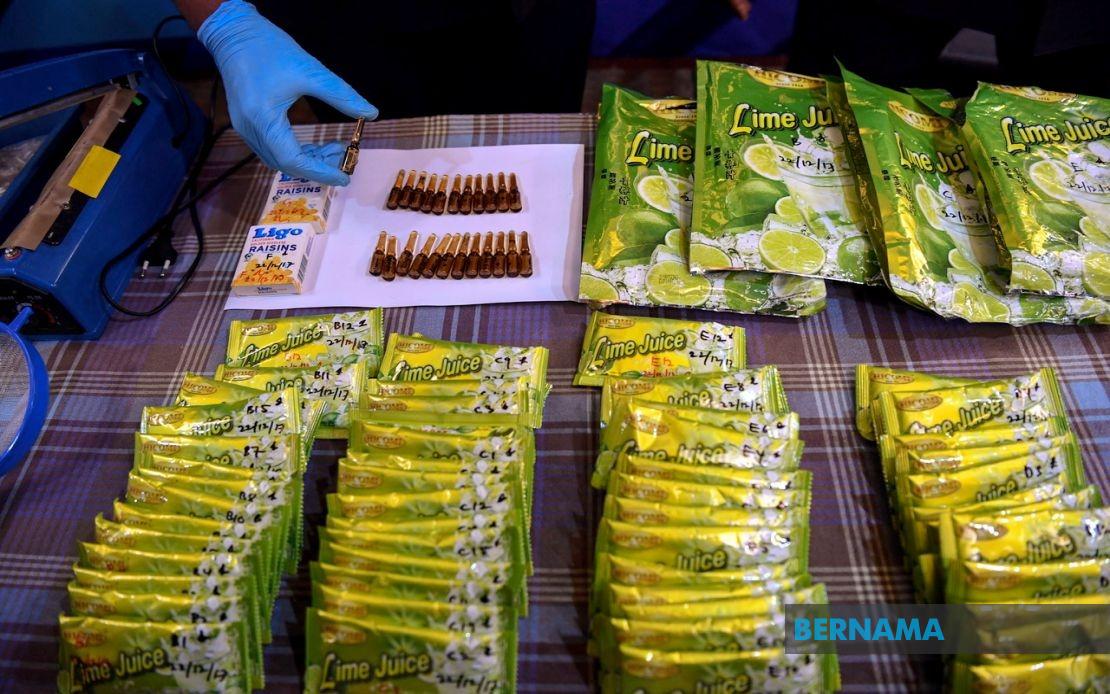
The Home Ministry has escalated its campaign against synthetic drug trafficking and abuse, citing escalating dangers from methamphetamine, designer pills marketed as "piu-piu," and fentanyl that have surfaced in Malaysian markets. Home Minister Datuk Seri Saifuddin Nasution Ismail indicated that these substances pose unprecedented challenges because of their extreme addiction potential, propensity for fatal overdoses, and documented connection to crime waves and deteriorating social conditions across urban and rural communities.
The scale of the problem has become evident through arrest statistics released in parliament. Between 2023 and June 2026, the Royal Malaysia Police documented 238,704 arrests nationwide related to various synthetic drug offences, a figure that underscores the pervasiveness of the issue and suggests that traditional enforcement methods are straining police resources. This volume of arrests, while indicating active policing, also reflects the difficulty authorities face in stemming supply chains that appear increasingly sophisticated and adaptable.
To confront this multifaceted threat, the police force has launched intensive operations including Op Tapis and Op Tapis Khas, spreading enforcement activities across densely populated urban centres, agricultural regions, and isolated remote areas. These operations involve collaboration with the National Anti-Drugs Agency and the Royal Malaysian Customs Department, representing a coordinated whole-of-government approach that acknowledges the complexity of drug interdiction. The partnership model recognises that no single agency possesses sufficient resources or jurisdiction to address trafficking networks that often operate across state and international boundaries.
Technological advancement has become integral to enforcement strategy. Drones and surveillance camera networks now complement traditional investigative techniques, providing authorities with enhanced capability to monitor trafficking routes and detect suspicious activity in areas previously difficult to patrol. This technological deployment particularly benefits enforcement in Sarawak and other rural regions where geographical isolation has historically made smuggling operations harder to detect. The investment in surveillance infrastructure signals recognition that modern drug operations require modern countermeasures.
Legislative reform is also underway to close gaps in existing drug control frameworks. The government is contemplating amendments to the Dangerous Drugs Act 1952 to formally classify newly emerging synthetic drugs and New Psychoactive Substances within the legislation's schedules. This legal modernisation is necessary because chemists working for trafficking organisations continuously modify molecular structures of drugs to circumvent existing laws, creating compounds that remain temporarily legal until authorities can evidence their dangers and legislators can respond. Without proactive legislative amendments, enforcement becomes reactive and perpetually behind emerging threats.
Beyond enforcement, the ministry is strengthening prevention programmes that target communities directly. Between 2023 and June 2026, authorities conducted 1,144 drug prevention initiatives nationwide designed to educate citizens about synthetic drug dangers. This community policing approach represents recognition that enforcement alone cannot succeed without corresponding reductions in demand. Public education campaigns, school-based interventions, and community engagement efforts attempt to build protective factors, particularly among young people vulnerable to experimentation.
Sarawak's situation illustrates the nationwide pattern while highlighting regional dimensions. During January through early June this year, authorities arrested 7,097 individuals across the state, including 342 traffickers, 1,314 people found possessing drugs, and 5,441 users. These figures suggest that Sarawak experiences proportionally high drug activity, possibly reflecting its geographic position relative to regional smuggling routes and its significant populations of young people in remote settlements with limited economic opportunities. The composition of arrests—predominantly users rather than traffickers—suggests that supply is outpacing demand reduction efforts, with street-level enforcement capturing casualties rather than dismantling supply chains.
Material seizures in Sarawak during the same period totalled 418.01 kilogrammes of drugs valued at RM53.73 million, demonstrating that enforcement operations successfully intercept significant quantities. However, the assessed street value suggests substantial profit margins that make trafficking lucrative despite seizure risks. Authorities also detained 13 individuals under preventive measures legislation and took action against 131 hardcore addicts under treatment provisions, indicating that intervention extends beyond incarceration to include therapeutic approaches and restriction orders.
Asset confiscation has become an enforcement lever designed to disrupt financial incentives sustaining trafficking organisations. In Sarawak, authorities seized syndicate assets valued at RM1.95 million, depriving criminal networks of reinvestment capital and demonstrating consequences beyond imprisonment. When traffickers face simultaneous threats of criminal prosecution and asset forfeiture, the risk-reward calculation shifts, though evidence suggests this has not yet achieved sufficient deterrent effect given ongoing arrests.
Forensic laboratory capabilities are being systematically enhanced to identify and characterise emerging synthetic substances. This technical investment enables authorities to profile new drugs more rapidly, track trafficking trends involving fentanyl analogues and other synthetic opioids, and facilitate faster regulatory responses. Improved forensic capability particularly assists customs and police officials at border crossings and major ports in identifying suspicious shipments that might otherwise enter distribution networks. However, forensic analysis remains labour-intensive, and laboratory capacity may struggle to keep pace with the chemical innovation occurring within trafficking organisations.
The intensified campaign reflects growing acknowledgement that synthetic drugs present qualitatively different challenges compared to traditional narcotics. Fentanyl's extreme potency means that minuscule quantities produce pharmacological effects, complicating both trafficking detection and addiction treatment. Designer pills marketed as "piu-piu" exploit the appeal of novelty and perceived safety among young consumers. Methamphetamine's stimulant properties create different social consequences than opioids, generating hyperactivity, paranoia, and aggression rather than sedation, contributing to violence and property crime.
The government's approach attempts to integrate enforcement, prevention, legislation, and treatment into a comprehensive response. Yet the continuing growth in arrests and the persistence of supply chains suggest that current measures, while increasingly sophisticated, have not yet achieved decisive advantage over trafficking organisations. Success will likely require sustained political commitment, adequate funding, international cooperation, and community participation extending far beyond law enforcement's traditional scope.

