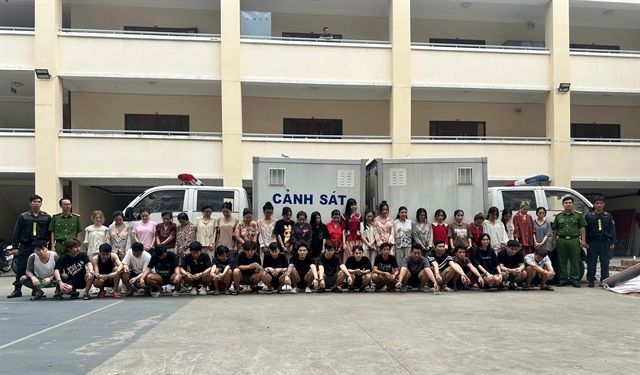
Vietnamese authorities in Ho Chi Minh City have dismantled an extensive illegal drug distribution network centred on electronic cigarettes laced with etomidate, a restricted anaesthetic substance. The operation resulted in the arrest of 49 individuals, including four foreign nationals, and the seizure of 1,670 vape pods along with several hundred grams of ketamine and methamphetamine, according to an announcement by the city's drug-related crime investigation police division on Wednesday.
Etomidate represents a particularly dangerous addition to the prohibited substance list because of its chemical properties and the ease with which it can be concealed in consumer products. The substance is a short-acting sedative exclusively intended for surgical anaesthesia under strict medical supervision by qualified specialists. The Vietnamese government incorporated etomidate into its controlled substances register in January, criminalising its manufacture, distribution, and consumption. Its inclusion on the proscribed list reflects growing concern about emerging drug trends that exploit new delivery methods to evade detection and regulation.
The contraband vape pods were ingeniously disguised as legitimate e-cigarette products, with their dangerous contents masked by appealing marketing names designed to attract young consumers. Street names such as "chill pod", "relaxation pod", "sleep-well pod", and "fly pod" presented the products as trendy wellness accessories rather than controlled substances. Law enforcement determined that these cartridges were likely distributed through venues and locations popular with youth demographics, including bars, karaoke establishments, rented apartments, and informal social spaces throughout the city.
The investigation originated when police received credible intelligence regarding an individual operating under the street nickname Ba Giá, who was engaged in buying and selling e-cigarettes along An Duong Vuong Street in An Lac Ward. Subsequent identification established this person as Nguyen Huu Huan, 28, originally from Dong Thap province in southern Vietnam. On June 25, authorities apprehended Huan alongside his spouse, Ngo Thi Kim Chi, 30, on suspicion of trafficking etomidate-laced vapes to Tran Phuc, a 31-year-old Ho Chi Minh City resident. The initial arrests proved instrumental in unravelling a broader criminal structure.
Further investigative work revealed the existence of multiple supply networks that were functioning simultaneously to source and distribute the illegal products. One distribution chain was allegedly overseen by Huynh Ngoc Thuy Nhu, 26, with the assistance of Hua Tuong Vy, 20, both residing in Ho Chi Minh City. These individuals served as intermediaries connecting manufacturers with street-level distributors. In a separate smuggling operation, Le Quoc Duy, 40, from An Giang province, orchestrated an international trafficking pipeline that transported vape cartridges across the porous border between Vietnam and Cambodia through minor crossing points before delivering the merchandise to Ho Chi Minh City. When apprehended, Duy was found with 37 vape pods, 200 grams of ketamine, and 200 grams of methamphetamine.
A third criminal faction identified during the inquiry involved international participants, with Han Kiat, identified as a Cambodian national, allegedly leading a group of three additional foreign accomplices. This network specifically targeted expatriate communities residing in Ho Chi Minh City, exploiting the relative invisibility of international populations and their potential unfamiliarity with Vietnamese drug laws. The four foreign detainees in total comprised two South Korean nationals, one Chinese national, and one Cambodian national, suggesting the involvement of transnational trafficking infrastructure.
The pharmacological profile of etomidate presents acute dangers that distinguish it from conventional illicit drugs. When inhaled through vaping devices, the substance bypasses normal metabolic processing and enters the circulation directly via the lungs, reaching the brain within seconds. Initial consumption produces subjective experiences including lightheadedness and mild hallucinations that might seem appealing to inexperienced users. However, acute exposure produces severe neurological consequences including neurotoxicity, profound drowsiness, involuntary muscle contractions, and unconsciousness. Critically, high-dose consumption or concurrent use alongside alcohol and other central nervous system depressants creates substantial risk of sudden cardiorespiratory failure and death.
The sophisticated marketing strategy employed by traffickers exploits multiple vulnerabilities in the current regulatory and enforcement environment. Young consumers may perceive the products as fashionable and contemporary because they utilise e-cigarette technology, which carries less social stigma than traditional drug consumption methods. Critically, law enforcement identified that criminals intentionally misrepresent the products' chemical composition as "undetectable" or "100 per cent negative" on standard drug screening tests. Commercial rapid testing kits available in retail settings can only identify conventional controlled substances including heroin, cannabis, and methamphetamine. Etomidate's distinct molecular architecture places it beyond the detection capacity of these mass-market screening tools, requiring sophisticated specialised laboratory analysis by government forensic facilities to confirm its presence.
The emergence of designer drug-delivery systems using contemporary vaping technology reflects a troubling adaptation by criminal networks seeking to maintain market advantage amid strengthened conventional drug enforcement. The concealment of controlled substances within products marketed as recreational accessories represents a significant challenge for public health and law enforcement. Neighbouring Southeast Asian nations, including Malaysia, confront comparable threats as transnational criminal organisations innovate delivery mechanisms and exploit regional trafficking corridors. The incident underscores the necessity for expanded international cooperation among law enforcement agencies, enhanced border security protocols, and public education initiatives specifically targeting young demographics vulnerable to sophisticated marketing of chemically complex substances disguised as lifestyle products.

