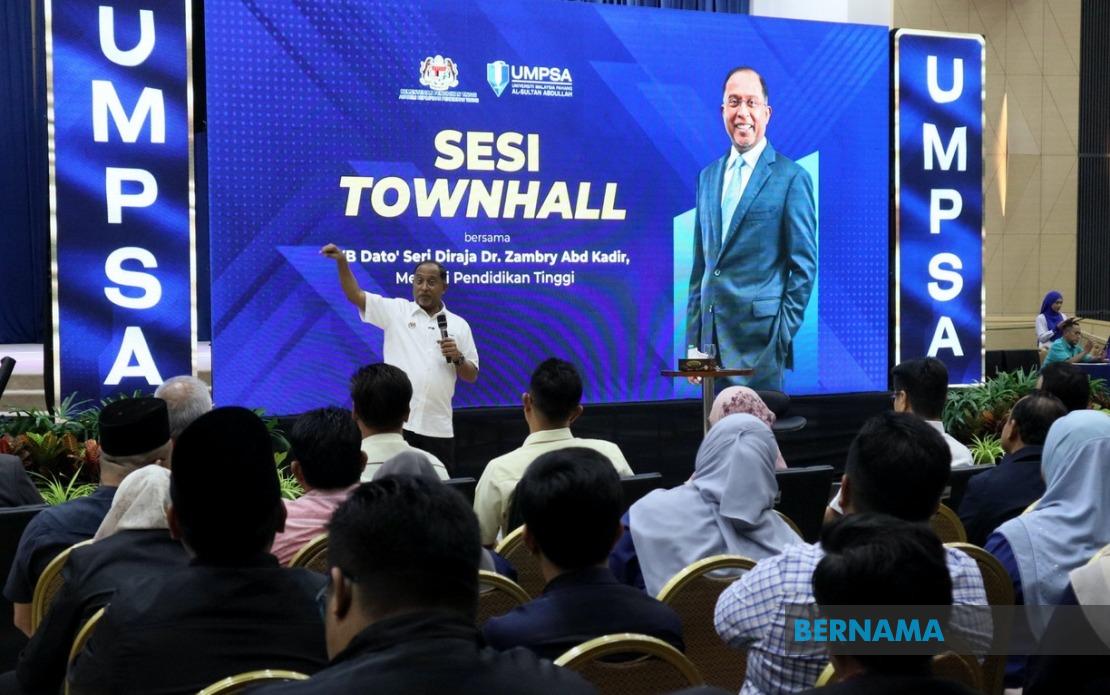
The Ministry of Higher Education has begun implementing Prime Minister Datuk Seri Anwar Ibrahim's recent instruction to reassess disciplinary measures taken against university students, signalling a significant shift in how Malaysian higher education institutions will handle student conduct violations. Minister Datuk Seri Dr. Zambry Abd Kadir confirmed the ministry is processing the directive, which addresses longstanding tensions between institutional discipline and student freedoms on campus.
The government's move reflects broader efforts to reform university governance following Anwar's announcement regarding the repeal of the Universities and University Colleges Act 1971, commonly known as AUKU. This colonial-era legislation has been particularly controversial for restricting student political expression and activism. By directing the ministry to review existing cases, the Prime Minister is seeking immediate relief for students already punished under the old regulatory framework, even as the formal legislative amendment process continues.
Zambry outlined that the initiative encompasses multiple layers of institutional review. Departments responsible for student affairs across universities have been tasked with identifying cases where sanctions were imposed primarily due to criticism directed at government officials or policies. The minister stressed that this examination must carefully balance institutional discipline with the evolving understanding of student rights that now characterises Malaysia Madani, the government's reform agenda. The approach requires sensitivity to the distinction between legitimate institutional enforcement and the suppression of legitimate academic discourse.
Vice-chancellors from public universities have already convened with the director-general of higher education to discuss implementation protocols. This coordinated approach suggests the ministry recognises that consistent policy application across Malaysia's public university system is essential. The ministry intends to issue a formal statement outlining specific procedures that institutions should follow when reviewing previous disciplinary decisions. This centralised guidance aims to prevent divergent interpretations that could create inconsistencies in how students' cases are reassessed.
However, extending these reforms to private higher education institutions presents distinct challenges. Malaysia's private university sector operates under a different legislative framework, specifically the Private Higher Educational Institutions Act 1996. Zambry acknowledged that private institutions cannot simply be compelled to adopt identical procedures, yet the minister expressed hope that privately-run universities, particularly those with state involvement or ownership, would voluntarily align their practices with public sector reforms. This voluntary approach reflects the complexity of Malaysia's bifurcated higher education system.
The Prime Minister's position distinguishes between university-level disciplinary consequences and matters falling under criminal law. While students penalised through university procedures may receive relief from their institutional sanctions, those whose conduct triggered Royal Malaysia Police investigations would remain subject to criminal proceedings. This distinction is crucial for understanding the scope of the directive—it represents a recalibration of institutional authority over student conduct rather than blanket amnesty for all consequences stemming from political expression.
For Malaysian students and the broader academic community, this development carries substantial implications. Universities have traditionally wielded considerable power over student life through disciplinary mechanisms that, critics argue, discouraged campus engagement with controversial topics. The reassessment process signals that the government now views such institutional caution as counterproductive to developing an informed, engaged citizenry. Students previously sanctioned for peaceful protest or critical speech may finally face removal of penalties that had affected their academic records and future prospects.
The timing matters considerably within Malaysia's political context. The AUKU repeal has been discussed for years but remains incomplete as legislative action. Anwar's directive to expedite relief through administrative review allows the government to demonstrate commitment to reform while the formal amendment process advances. This pragmatic approach acknowledges that students currently disadvantaged by the old system cannot simply wait for parliamentary deliberation to conclude. The ministry's parallel process creates momentum for substantive change even before law reform is finalised.
Universities must now grapple with practical challenges in implementing this directive. Identifying which previous cases involved disciplinary action primarily for government criticism requires careful case-by-case examination. Some sanctions may have resulted from multiple violations, making determination of whether political expression was the primary or merely contributory factor genuinely complex. The pending formal statement from the ministry should clarify evidentiary standards and decision-making frameworks to guide institutions through this retrospective review process.
The broader significance extends beyond individual student cases. This exercise signals a fundamental reconsideration of the relationship between Malaysian universities and political authority. By directing institutions to remedy past disciplinary decisions, the government is implicitly acknowledging that previous restrictions on student political engagement were excessive. For Southeast Asia's higher education landscape, where several countries maintain tight controls on campus activism, Malaysia's pivot toward greater student freedom could carry regional influence. Other governments may face pressure to justify continued restrictions when Malaysia moves toward expanded academic autonomy.
Looking forward, universities must balance renewed commitment to student freedoms with their institutional responsibilities. The challenge lies in creating campus environments where legitimate criticism and political engagement flourish while maintaining standards regarding other forms of misconduct. Institutions will need to develop clearer policies distinguishing between protected academic expression and genuinely harmful behaviour. This nuanced approach differs markedly from the previous framework, which often conflated political expression with institutional indiscipline.
The Ministry of Higher Education's implementation of Anwar's directive represents one of the most tangible manifestations of Malaysia Madani's reform agenda. By moving to redress previous injustices against students within the university system's existing authority, the government demonstrates that institutional reform need not wait for complete legislative overhaul. However, the effectiveness of this initiative ultimately depends on how seriously universities approach case reviews and whether they genuinely recalibrate their understanding of appropriate disciplinary boundaries in a more open political era.

