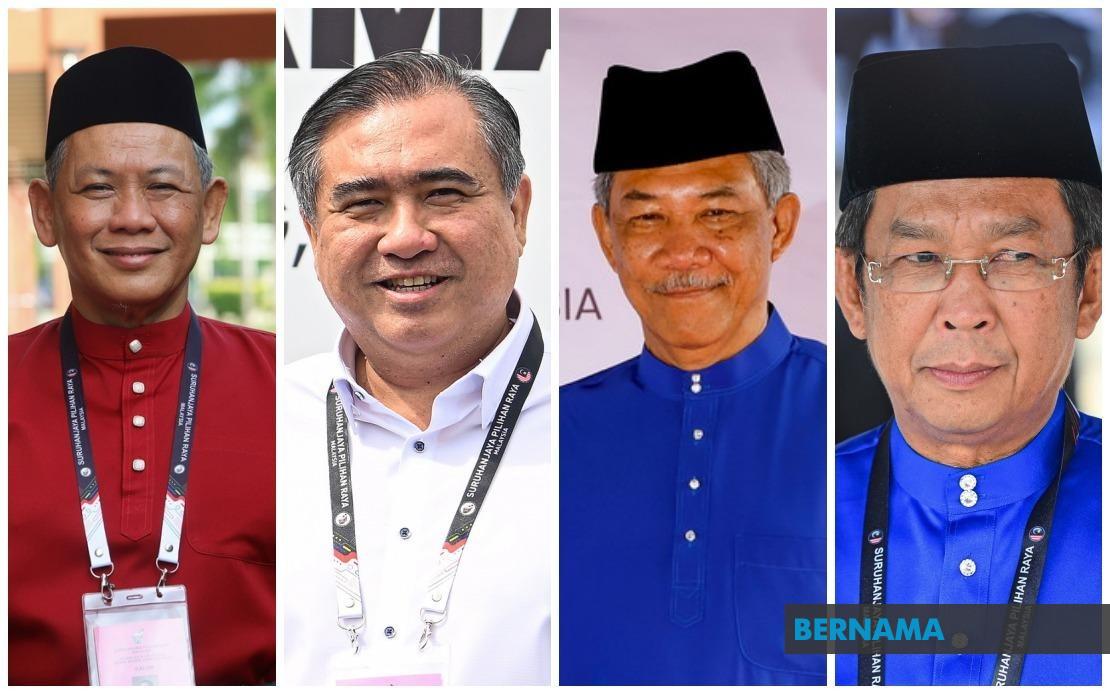
The 16th Negeri Sembilan state election is shaping up as a significantly more contested affair than observers might have anticipated, with several heavyweight political figures from Malaysia's major coalitions discovering that securing or retaining their seats will require more than incumbency or party machinery. Following the close of nominations on July 18, the electoral landscape reveals a state where traditional strongholds are under genuine pressure and where generational shifts are beginning to reshape political competition at ground level.
Among the most prominent figures facing determined challenges is Datuk Seri Aminuddin Harun, who serves as both Pakatan Harapan's Negeri Sembilan chairman and the state's caretaker Menteri Besar. His position in the Linggi constituency has become a three-way contest, pitting him against the incumbent Barisan Nasional representative Datuk Mohd Faizal Ramli and Bersatu's Datuk Zamri Md Said. This triangular battle underscores the growing fragmentation of electoral contests in Malaysia's states, where the emergence of Bersatu as a significant force has complicated the traditional two-coalition framework that dominated Malaysian politics in the preceding decade.
DAP's national secretary-general Anthony Loke, who also holds the portfolio of Transport Minister in the federal cabinet, confronts a battle in Chennah, a constituency that his party has controlled consistently since 2013. His challenger, Siow Kong Choon, represents Barisan Nasional and carries the distinction of leading the MCA Youth wing in Negeri Sembilan. The contest in Chennah carries particular significance because DAP's near-monopoly on this seat had suggested a secure power base within the state's electoral configuration, yet the emergence of a competitive challenger indicates that even established party positions cannot be assumed.
In Rantau, Barisan Nasional's Datuk Seri Mohamad Hasan—known colloquially as Tok Mat to his constituents—faces perhaps the most symbolically charged matchup of the election. As the Foreign Minister and deputy president of UMNO, Mohamad has represented Rantau continuously since 2004, establishing himself as the seat's defining political figure across two decades. His challenger, Dr Azizul Hakim Mahdi, represents Pakatan Harapan and embodies the demographic transition occurring within Malaysian politics, being approximately half the age of the incumbent. This contest potentially signals whether established political figures can maintain their grip on constituencies as voter demographics shift toward younger, more diverse electorates seeking different leadership qualities and policy priorities.
The Pertang constituency presents another high-profile contest involving Datuk Seri Jalaluddin Alias, Negeri Sembilan's UMNO chief, who faces challenges from both Pakatan Harapan's Mohd Umry Abdul Khois and Bersatu's Mohd Faizal Fadli Mohd Idrus. Jalaluddin has held the seat consistently since 2013, but the presence of multiple challengers indicates that his political dominance cannot be assured in an election where coalition fragmentation is reshaping traditional patterns of voter allegiance across the state.
The Nilai constituency showcases another significant development: a five-cornered contest that fragments electoral competition in ways previously less common in Malaysian state politics. DAP's national deputy chairman J. Arul Kumar, serving as the incumbent and Pakatan Harapan's standard-bearer, competes against Datuk Lai Chien Kong from Barisan Nasional, Datuk V. Saravana Kumar representing Bersatu, Berjasa's Zamani Ibrahim, and independent candidate Omar Mohd Isa. Such multi-candidate contests create scenarios where plurality rather than majority victories become conceivable, potentially altering how state assembly seats are won and what mandate successful candidates can claim.
Sri Tanjung generates considerable attention for featuring both a five-cornered competition and what may represent a generational turning point in Malaysian electoral politics. The incumbent PH representative Dr G. Rajassekaran faces A. Achutan from Barisan Nasional, two independent candidates, and notably, Bersatu's Leevineshwaraan Murugan, who at just 23 years old represents the youngest candidate contesting this election. His candidacy, despite likely being a long-shot for victory, symbolizes the increasing willingness of political parties to field youthful candidates in state elections, potentially signaling recognition that younger demographics require more direct representation within electoral processes.
The overall composition of candidates reflects significant changes in Malaysia's electoral environment. A total of 103 candidates are competing for 36 state assembly seats, with Pakatan Harapan fielding the maximum complement of 36 candidates, Barisan Nasional presenting 25, Bersatu contesting with 24, and Perikatan Nasional offering 11. This distribution indicates that while the traditional two-coalition structure persists, newer political formations have secured sufficient organizational capacity to contest substantially across the state, challenging assumptions about the permanent dominance of older political alliances. Additional candidates from Berjasa, ASLI, PSM, and four independent entries further complicate the electoral mathematics.
The 14-day campaign period commenced immediately following nomination closure, extending until July 31, with early voting scheduled for July 28 and main polling day set for August 1. This compressed timeline places emphasis on ground-level organization and the ability of candidates to mobilize supporters efficiently within limited windows. The brevity of the campaign period may advantage established incumbents with existing voter networks but could also favor challengers whose campaigns generate momentum quickly around particular local grievances or national political narratives.
For Malaysian political observers, the Negeri Sembilan election provides a microcosm of broader transformations within the nation's electoral system. The inability of major political figures to guarantee comfortable victories reflects deepening voter volatility, the persistent impact of Bersatu's emergence as a genuine electoral force, generational transitions within the electorate, and constituency-level dynamics that national party machinery increasingly cannot override. The state's competitive character suggests that Malaysian electoral politics has entered a phase of greater unpredictability where incumbency and seniority offer protection but no guarantee, and where multiple coalitions can realistically compete for control of state assemblies, creating genuine uncertainty about electoral outcomes.

