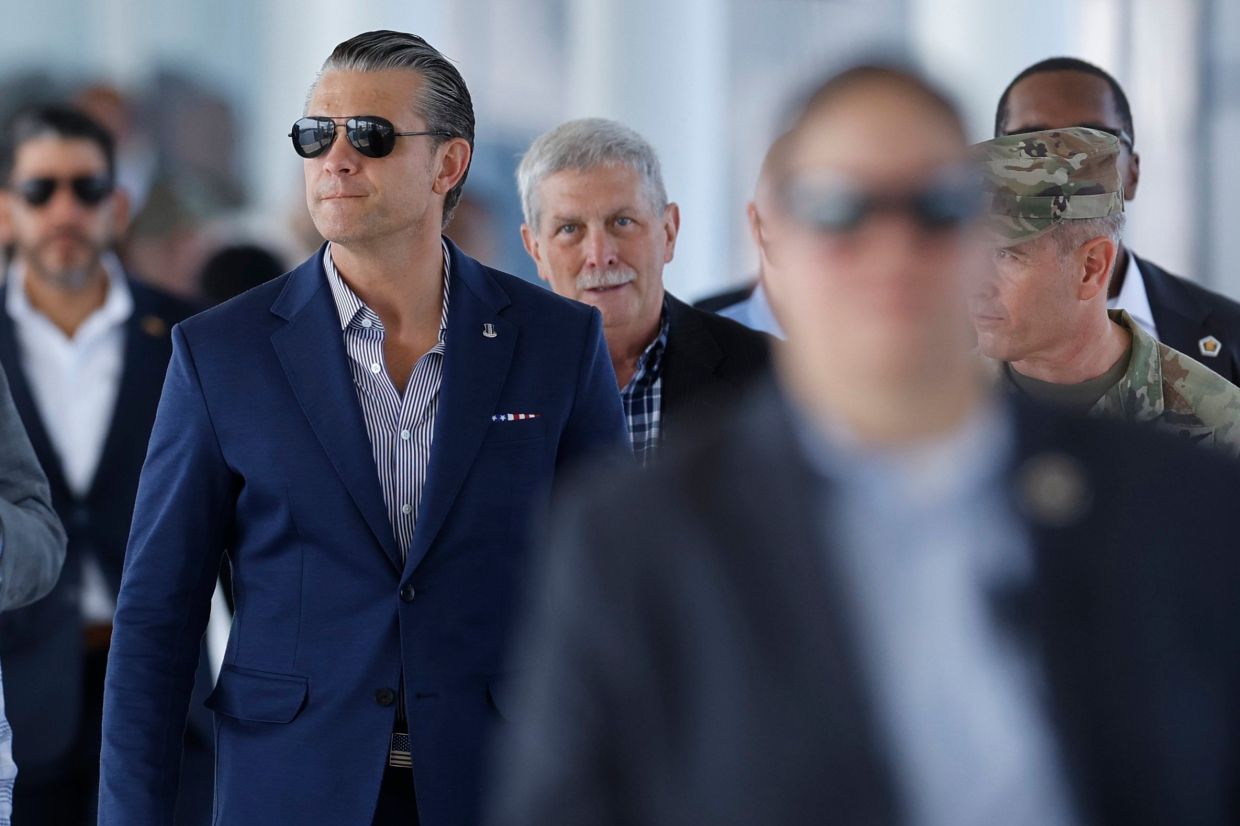
Pentagon Secretary Pete Hegseth's grip on his position has weakened considerably, according to unnamed officials within the Defence Department, creating uncertainty at a crucial moment for military relations between Washington and Beijing. Sources speaking without authorisation described Hegseth as being "on the verge of losing his job", citing an unresolved dispute over Iran policy compounded by a barrage of critical media coverage. The timing of this instability is particularly fraught, arriving just as American and Chinese defence officials have begun restoring communication channels that deteriorated during previous administrations.
The past several months have witnessed an unexpected thaw in the military relationship between the world's two largest economies. Since President Donald Trump and Chinese leader Xi Jinping convened in Beijing during May, contacts between the armed forces of both nations have occurred at nearly every institutional level, with one informed observer characterising current ties as the strongest they have been in over a decade. This diplomatic warming extended to the defence sector, with Hegseth himself publicly affirming at an international forum that military-to-military relations had improved substantially under the current administration. The constructive approach appeared to reflect a broader Trump-Xi consensus about building a more stable and mutually beneficial relationship.
However, this fragile progress now faces potential disruption should Hegseth be forced from office. The Pentagon announced last month that senior American defence officials, including Alvaro Smith, the deputy assistant secretary responsible for China, Taiwan and Mongolia relations, had engaged in substantive discussions with Chinese Vice-Minister of Foreign Affairs Ma Zhaoxu in Washington. Smith publicly credited Hegseth's leadership in the process, describing efforts to repair what he characterised as "a once-broken military-to-military channel" and highlighting tangible progress in restoring institutional connections. This personal investment by the Pentagon chief in the relationship represents more than mere bureaucratic activity; it signals sustained commitment at the highest levels of defence establishment authority.
Chinese analysts have raised concerns that Hegseth's departure could slow the momentum being built in bilateral military exchanges. Zhao Minghao, a specialist in international relations at Fudan University in Shanghai, suggested that Trump might require Hegseth to serve as a scapegoat for frustrations over the Iran conflict, noting that cabinet reorganisations typically precede American midterm election cycles. Should the Pentagon chief lose his position, according to Zhao's assessment, the absence of established relationships between his successor and Chinese Defence Minister Dong Jun would necessitate a prolonged recalibration period. Hegseth has already held multiple meetings with Dong Jun, including notable encounters in Malaysia and during Trump's recent Beijing visit—relationships built over months that would need rebuilding with a replacement.
Yet American officials offered a more optimistic outlook, suggesting that leadership transitions need not necessarily derail the developing defence relationship. Significantly, several sources indicated that Ely Ratcliffe, the current Deputy Secretary of Defence and a key figure in recent military-to-military exchanges, has made a favourable impression on Chinese officials. Ratcliffe participated in the Washington meeting with Ma Zhaoxu that the Chinese Foreign Ministry described in glowing terms as an "in-depth" discussion of bilateral concerns. More notably, Chinese counterparts have reportedly been impressed by Ratcliffe's stated position that Taiwan, the self-governed island claimed by Beijing, does not constitute a vital existential interest for the United States—a formulation that aligns closely with Beijing's preferred diplomatic framing.
The Taiwan question remains perhaps the most sensitive flash point in US-China relations, making Ratcliffe's characterisation of the issue significant for Chinese policymakers. While the United States maintains the longstanding position that Taiwan is not an independent state recognised in Washington, American law and policy simultaneously commit the nation to providing defensive weapons systems to the island and opposing any forced military unification. Beijing's official stance continues to reserve the right to use military force if necessary to bring Taiwan back under mainland control, creating an inherent tension that has produced periodic crises. Ratcliffe's apparent willingness to deprioritise Taiwan in the hierarchy of American strategic concerns suggests a potential philosophical alignment that could facilitate smoother defence cooperation.
Several American sources familiar with current military-to-military contacts characterised the present state of engagement as "very good", with one observer cautioning that the arrival of a new defence secretary would likely prove inconsequential unless that replacement represented a China-hostile ideology. This assessment implies that the institutional momentum toward improved military relations has become sufficiently established to survive personnel transitions, provided that fundamental policy direction remains consistent. The working-level discussions between uniformed military officers and defence technical specialists continue to proceed at a steady pace, suggesting that the relationship operates on multiple tracks rather than depending solely on top-level personalities.
Zhao's analysis emphasised that if Ratcliffe remains in his current Pentagon position, he could provide critical continuity in military exchanges and engagement protocols. The restoration of defence communications between Washington and Beijing emerged partly from Trump and Xi's shared commitment to building relations founded on "strategic stability", a concept that inherently implies the need for robust defence dialogue and transparency mechanisms. This foundational agreement between the two leaders transcends any single cabinet official, providing institutional weight to the bilateral military relationship that should theoretically survive transitional disruptions.
The anticipated state visit by President Xi to Washington next month presents another opportunity to reinforce the defence relationship, with military-to-military cooperation likely featuring prominently on the diplomatic agenda. Zhao suggested that Xi's travel to the United States, his first state visit since 2015, would serve as an occasion to further solidify the constructive approach that both leaders have endorsed. The Chinese leadership appears committed to building on the progress achieved in Beijing, with senior officials signalling openness to deeper military engagement. However, the domestic American political uncertainty surrounding Hegseth's continued tenure introduces an element of unpredictability that could complicate coordination and messaging during this sensitive period.

