An elderly woman who developed heat stroke while seeking refuge in a parked automobile represents a sobering new dimension to the disaster unfolding in southwestern Japan. The woman in her seventies was discovered lifeless in a vehicle in Kumamoto Prefecture on Thursday, bringing the confirmed death toll from the magnitude 7.1 earthquake to 36 fatalities. Her death underscores a mounting concern among disaster management officials and medical experts: that the combination of earthquake devastation and unseasonably extreme temperatures is creating a lethal secondary crisis that may claim more lives in the coming days.
The powerful quake struck Kumamoto Prefecture on Kyushu, Japan's southernmost main island, on Tuesday, unleashing widespread destruction across the region. Beyond the immediate structural damage and injuries sustained during the initial tremor, survivors now face compounded health threats that extend far beyond the earthquake itself. The death of this woman, whose sheltering strategy seemed reasonable in ordinary circumstances, illustrates how disaster conditions can rapidly shift, transforming what appears to be a safe refuge into a deadly trap when environmental factors intensify.
Meteorological data reveals the severity of the climatic challenge facing the region. The Japan Meteorological Agency recorded temperatures reaching 36.6 degrees Celsius in Kumamoto city on Saturday, registering at what officials classify as "extreme heat" levels. Forecasters warned that readings could climb even higher in subsequent days, creating an environment where prolonged exposure without adequate cooling becomes medically dangerous. For a region already struggling with fundamental post-disaster infrastructure failures, these escalating temperatures compound vulnerabilities across an already traumatised population.
The circumstances of the woman's death carry particular significance for understanding emerging disaster management gaps in contemporary Japan. According to reporting from NHK public television, she was found in a vehicle that lacked fuel, meaning the engine and its air-conditioning system could not operate. This detail reveals a critical failure point: evacuees seeking shelter in vehicles face a brutal calculation between fuel consumption costs and survival, a trade-off that ordinary earthquake survivors should never be forced to navigate. Recognising this systemic weakness, Kumamoto governor Takashi Kimura has publicly urged automobile-sheltering evacuees to maintain continuous refuelling to keep their vehicles' cooling systems operational.
The broader shelter crisis compounds these heat-related dangers dramatically. Approximately 9,000 individuals remain housed in crowded conventional evacuation facilities, including converted community centres, school gymnasiums, and repurposed classrooms. Many of these sites lack functional air-conditioning systems, leaving inhabitants vulnerable to heat stress in an environment already characterised by inadequate sanitation and minimal privacy. Many other survivors have opted to remain outdoors or sleep in vehicles, prioritising privacy and autonomy over potentially marginally better conditions in official shelters, a preference that increases their exposure to temperature hazards.
Fundamental infrastructure failures continue hampering the region's recovery trajectory. Nearly 47,000 households remain without dependable freshwater access, a crisis that intensifies the physiological stress heat places on human bodies. Simultaneously, fuel shortages across the prefecture limit both individual transportation options and the ability of emergency services to deliver aid efficiently. These cascading supply disruptions mean that even well-intentioned evacuees face objective barriers to accessing the most basic survival resources.
The search and rescue operation at Aeon Mall in the town of Kashima concluded on Saturday after extracting five living survivors and retrieving seven bodies. An explosion, which the company attributes to a natural gas leak occurring after the initial quake, caused catastrophic structural failure at the shopping complex, collapsing walls and an entire floor. Approximately 3,000 shoppers had been safely evacuated before the blast, but several employees remained inside, caught between the initial earthquake danger and the subsequent explosion hazard. This incident exemplifies how earthquakes can trigger cascading secondary disasters that compound initial casualty figures.
The physical destruction across Kumamoto Prefecture remains substantial. Authorities have documented over 180 homes completely destroyed, with an additional 3,800 structures sustaining varying degrees of damage requiring assessment and repair. Beyond these structural losses, 105 individuals have sustained injuries directly attributable to the earthquake, while two additional deaths remain under investigation pending determination of whether they qualify as earthquake-related fatalities. The missing persons count remains officially unknown, as search operations continue with deployment of thousands of Self Defence Force troops, police units, rescue personnel, and search-and-rescue dogs.
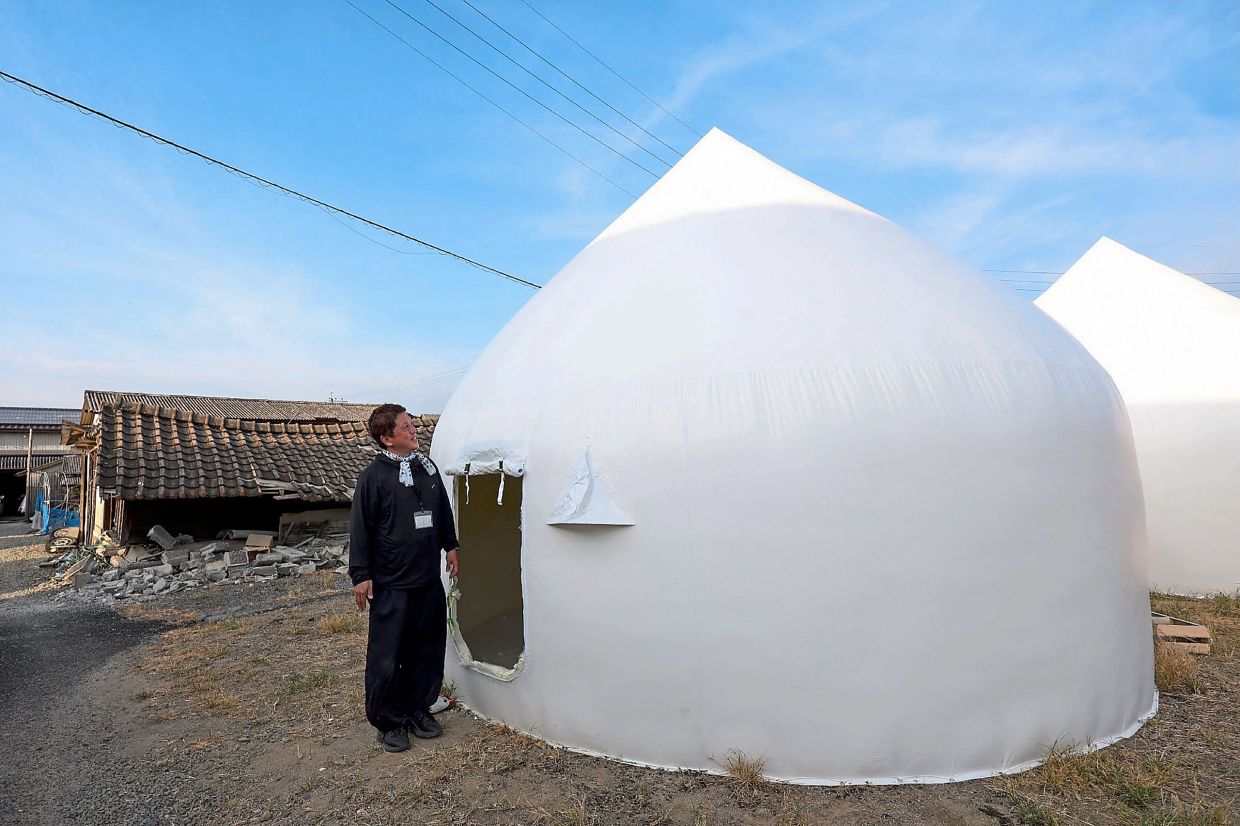
Prime Minister Sanae Takaichi has pledged comprehensive government mobilisation in response to mounting humanitarian needs. During a government task force meeting on Saturday, she committed to delivering water, food supplies, portable toilet facilities, and crucially, additional air-conditioning units and privacy partitions to evacuation centres. Her statement—"The government is determined to do everything we can"—reflects official acknowledgment that current conditions remain inadequate for protecting vulnerable populations against both earthquake-related dangers and heat-induced medical emergencies. These interventions, while necessary, arrive only after the system's fundamental inadequacies have already claimed lives.
Expert commentary has long criticised Japan's approach to emergency shelter provision, highlighting how crowded conditions, poor sanitation, and absence of privacy generate additional physiological and psychological stress that exacerbates existing health vulnerabilities. The Kumamoto disaster validates these concerns empirically, demonstrating that post-disaster mortality extends far beyond immediate earthquake trauma. For Malaysia and other Southeast Asian nations with significant seismic exposure, the Kumamoto experience offers crucial lessons about designing disaster shelter systems that account for tropical and subtropical heat challenges—an environmental reality that distinguishes earthquake response in this region from Japanese historical precedents developed in more temperate climates. The integration of climate factors into emergency management protocols represents an essential adaptation for developing resilient disaster response infrastructure across the region.

