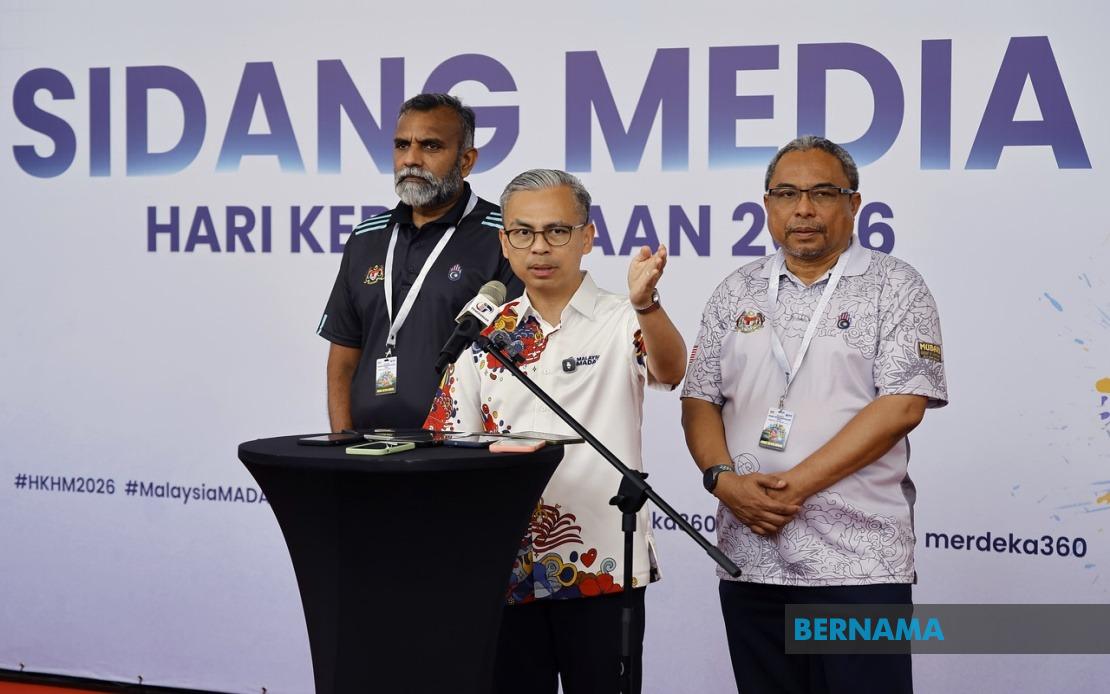
Organisers of Malaysia's 2026 National Day celebrations have issued guidance recommending visitors to Dataran Putrajaya wear N95 masks as the country faces ongoing air quality challenges from regional haze. The precautionary measure, announced by Communications Minister Datuk Seri Fahmi Fadzil, aligns with directives from the Health Ministry and reflects growing awareness of how seasonal air quality fluctuations can impact public health during large gatherings.
Fahmi, who chairs the main organising committee for the 2026 National Day and Malaysia Day celebrations, emphasised that mask-wearing remains voluntary rather than mandated. This approach balances public health concerns with individual choice, allowing attendees to assess their own risk levels based on personal circumstances and health status. The distinction between advisory and compulsory measures demonstrates the organisers' intent to remain flexible while still communicating health risks transparently to the public.
Particularly vulnerable groups have been specifically targeted in the advisory. Parents accompanying young children, individuals with asthma, and other high-risk populations are being urged to bring masks, particularly N95 variants which offer superior filtration compared to standard surgical masks. This targeted approach acknowledges that haze-related respiratory effects do not affect all attendees equally, with certain demographics experiencing more pronounced symptoms or health complications from air quality deterioration.
Beyond mask provision, the organising committee has taken comprehensive preparatory steps to manage potential health emergencies. Medical personnel from the Health Ministry have been strategically positioned throughout the celebration venue to respond immediately to any health incidents. According to Fahmi, all medical stations are operational and functioning according to protocol, with no significant concerns raised thus far. This layered approach to health management—combining preventive measures with responsive medical capacity—represents a mature approach to risk mitigation at large public events.
The distribution of N95 masks to more than 10,000 participants reflects the scale and ambition of this year's National Day arrangements. By providing protective equipment directly to participants, organisers remove barriers to compliance with health recommendations and demonstrate institutional commitment to attendee welfare. This proactive step extends beyond mere advisory messaging to tangible support that facilitates protective behaviour.
The full dress rehearsal conducted prior to the main event proceeded without complications, suggesting logistical readiness across multiple operational dimensions. The smooth execution of this preparation exercise provides confidence that the health infrastructure, crowd management systems, and emergency response protocols are functioning as designed. Rehearsals of this nature serve as critical stress-tests for complex public events, identifying potential bottlenecks before they can affect actual celebrations.
Media coverage of the festivities will receive enhanced infrastructure support this year. A notable increase to 823 accredited media practitioners—up substantially from approximately 600 the previous year—will document the celebrations. This expansion in journalistic presence reflects both growing regional and international interest in Malaysia's national commemoration and the need for robust communications infrastructure to accommodate expanded coverage demands.
The Malaysian Communications and Multimedia Commission has invested in additional technical capacity to support this expanded media presence. Installation of supplementary communications equipment at 102 separate celebration venues signals recognition that modern national events require sophisticated telecommunications architecture. Coordination between the Network Monitoring Centre and private telecommunications operators ensures that internet access—essential for real-time reporting and content distribution—remains stable throughout the event. This technical preparedness addresses a critical dependency for contemporary media operations.
Security arrangements have received particular attention from law enforcement authorities. The Royal Malaysia Police have maintained surveillance and coordination protocols specifically designed for the National Day occasion, with no noteworthy security incidents reported in pre-event assessments. Public order appears stable, and police assessments suggest that crowd management and security operations are proceeding according to established procedures. This absence of concerning incidents in the lead-up to celebrations typically indicates effective intelligence, planning, and coordination among relevant agencies.
The convergence of multiple preparatory initiatives—health infrastructure, media facilities, security arrangements, and logistical planning—demonstrates the comprehensive nature of modern national celebrations in Malaysia. These events function simultaneously as patriotic expressions, media spectacles, public health exercises, and security operations, requiring coordinated expertise across numerous government and private sector organisations.
For Malaysian residents and potential international visitors, these preparations signal that authorities have thoughtfully considered the operational and welfare dimensions of gathering large crowds during a period of environmental air quality stress. The willingness to issue clear health guidance, provide protective resources, and position medical capabilities reflects an institutional commitment to managing the intersecting challenges of public celebrations, environmental conditions, and citizen welfare in contemporary Malaysia.

