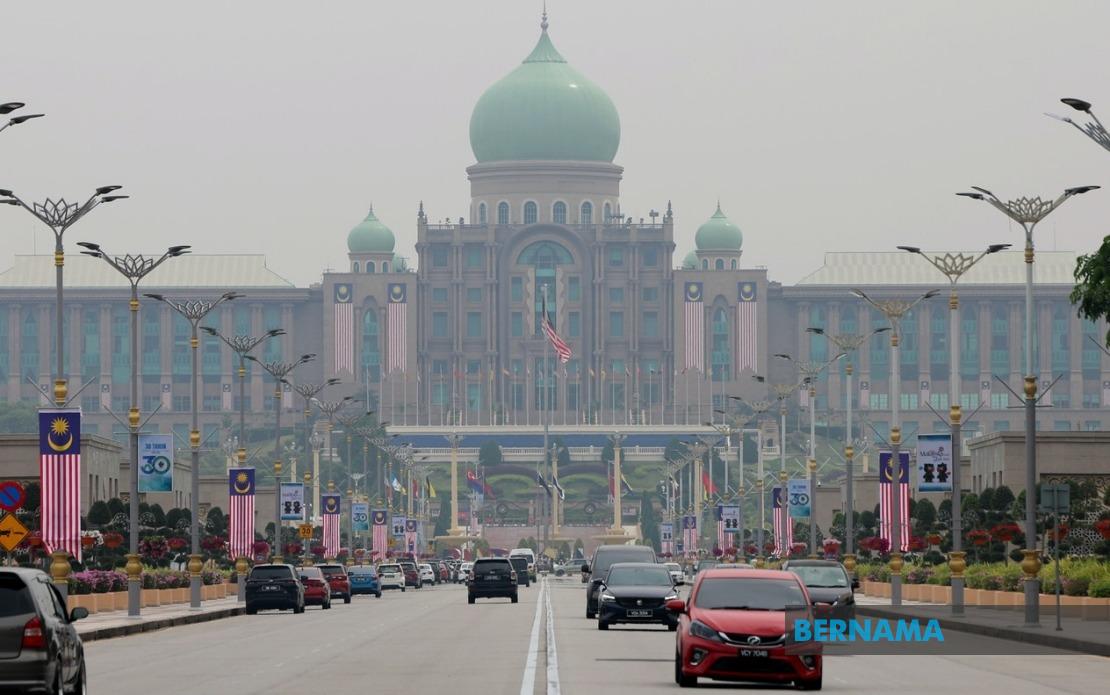
The transboundary haze problem affecting Southeast Asia will feature prominently when Prime Minister Datuk Seri Anwar Ibrahim meets with Sultan Hassanal Bolkiah of Brunei this week, Malaysian High Commissioner to Brunei Datuk Mohd Aini Atan has indicated. The air quality crisis is likely to occupy a central place in discussions during the 27th Malaysia-Brunei Annual Leaders' Consultation, the highest-level bilateral mechanism between the two nations that has been held annually for over two decades.
Anwar's two-day working visit to Bandar Seri Begawan commencing tomorrow comes at a critical moment for Sarawak, which is experiencing some of the most severe air pollution readings recorded in the state this year. The presence of Sarawak Premier Tan Sri Abang Johari Tun Openg and Sabah Chief Minister Datuk Seri Hajiji Noor at the consultation means that the perspectives and urgent concerns of East Malaysia's leaders will be directly represented at the highest level of bilateral engagement. This inclusion ensures that regional dimensions of the crisis receive adequate attention rather than being sidelined as a peripheral concern.
Data from Malaysia's Air Pollutant Index Management System portal provides stark evidence of the severity gripping Sarawak. The Serian area recorded a deeply concerning "very unhealthy" API reading of 204 as of 5 pm on 20 August, the day before the bilateral talks. This classification indicates air quality levels that pose significant health risks to vulnerable populations including children, the elderly, and those with respiratory or cardiovascular conditions. The reading represents the kind of acute air pollution event that disrupts schools, hospitals, and normal economic activity across affected communities.
Several other Sarawak districts have also slipped into the "unhealthy" category, painting a picture of widespread air degradation across the state. Kuching, the state capital and largest urban centre, registered an API of 195, while Samarahan reached 182. Sri Aman, another major population centre, recorded 179, Sarikei posted 158, and Sibu, an important commercial hub in central Sarawak, measured 152. These readings indicate that the problem is not confined to a single locality but represents a systemic regional phenomenon affecting multiple districts simultaneously.
The Malaysia-Brunei annual leaders' consultation format provides an ideal diplomatic platform for addressing transboundary environmental challenges that neither nation can solve unilaterally. While Brunei itself has not reported haze readings at dangerous levels, the sultanate shares maritime and terrestrial borders with Malaysian Sarawak and sits within the same atmospheric circulation patterns that carry smoke and particulate matter across the region during seasonal burning episodes. Brunei's strategic interests in maintaining regional stability and protecting the health of its own population give Sultan Hassanal Bolkiah a vested stake in collaborative solutions.
The haze phenomenon in Southeast Asia typically stems from uncontrolled or inadequately supervised agricultural burning, particularly in peatland regions where fires are difficult to extinguish and produce acrid smoke that travels hundreds of kilometres. Sarawak's geography—characterised by extensive peatland areas and significant agricultural operations—makes it both a source and a victim of such pollution. Previous years have witnessed similar crisis episodes, prompting regional governments to strengthen transboundary cooperation frameworks, though implementation challenges persist.
Bilateral discussions at prime ministerial and monarchical level carry particular weight in Southeast Asian diplomatic culture, where such top-tier engagement signals the priority a government attaches to specific issues. By elevating the haze question to this forum rather than leaving it to technical or environmental ministry discussions, Malaysia underscores the gravity of the crisis and the expectation that urgent executive action is needed. Brunei's willingness to receive this discussion also demonstrates regional solidarity on environmental protection.
The participation of both Sarawak and Sabah leaders provides crucial local input into bilateral negotiations. Tan Sri Abang Johari Tun Openg, as premier of the most severely affected state, brings on-the-ground knowledge of impacts on agriculture, tourism, public health, and economic activity. Datuk Seri Hajiji Noor's presence ensures that Sabah's perspectives on the broader East Malaysian context are integrated into the discussion. Their involvement transforms the consultation from an abstract diplomatic exchange into a practical engagement grounded in the realities facing communities experiencing dangerous air quality.
Regional solutions to haze typically involve strengthening transboundary monitoring systems, coordinating enforcement against illegal burning, supporting alternative livelihoods for communities dependent on slash-and-burn agriculture, and developing early warning mechanisms. Malaysia and Brunei, through their bilateral consultation mechanism and engagement within ASEAN frameworks, have opportunities to pioneer enhanced cooperation approaches. Such discussions often focus on technology transfer, capacity building, and establishing rapid-response protocols when air pollution episodes threaten populations.
The timing of this consultation reflects the seasonal pattern of Southeast Asian haze episodes. August falls within the critical period when agricultural burning intensifies ahead of harvest seasons or land preparation cycles. The urgent API readings make the agenda item particularly timely rather than merely routine diplomatic business. Sultan Hassanal Bolkiah and Prime Minister Anwar Ibrahim are thus positioned to drive concrete commitments that could yield measurable improvements in air quality across the region.
Beyond the immediate haze crisis, the Malaysia-Brunei consultation provides opportunity to examine broader environmental governance frameworks and the adequacy of existing regional mechanisms. Smaller nations like Brunei sometimes find their environmental concerns marginalised in larger regional forums, making bilateral channels invaluable for raising issues and seeking collaborative solutions. The sultanate's voice on transboundary pollution carries weight precisely because it is expressed through high-level bilateral engagement rather than multilateral statements that can be diluted through consensus-building.
The inclusion of the haze issue at this level of consultation demonstrates how environmental challenges have become inseparable from bilateral political agendas in Southeast Asia. Climate change, air pollution, and resource degradation are no longer peripheral matters discussed only by technical specialists but central concerns that shape relationships between governments. Malaysia and Brunei's commitment to addressing smoke haze through their highest-level mechanism reflects recognition that environmental security is as important as traditional security concerns for regional stability and citizen welfare.

