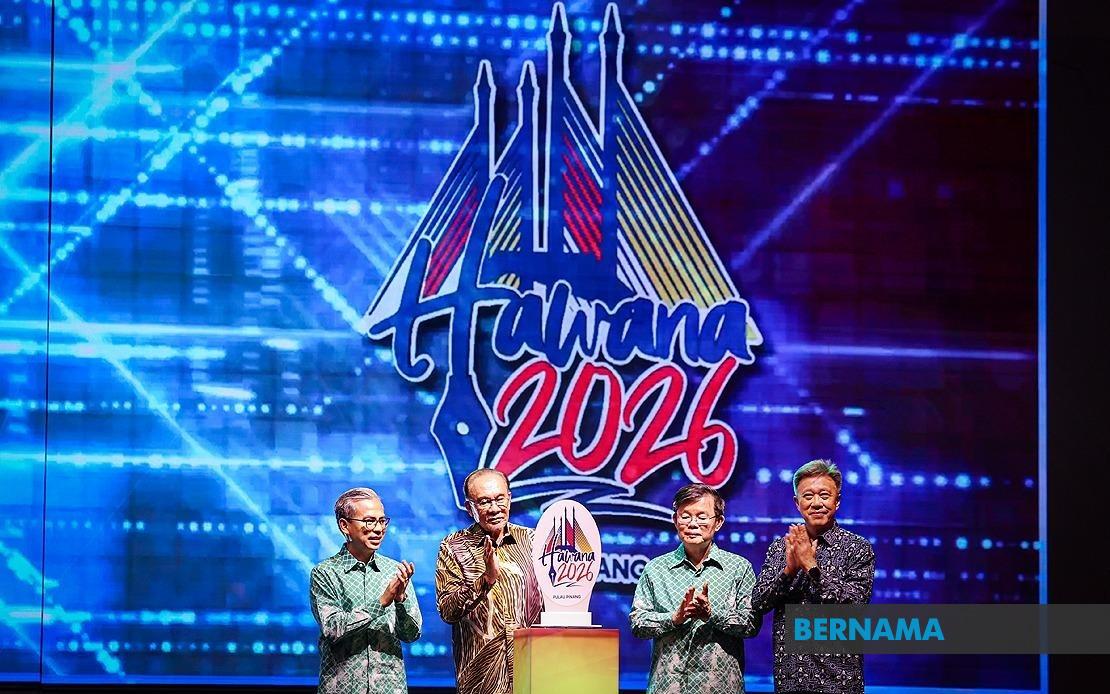
Malaysia's journalism fraternity concluded a three-day national celebration in Penang that brought together nearly 1,000 media professionals from across the country and neighbouring ASEAN nations, reaffirming the sector's commitment to integrity and credibility. The event, officially wrapped up at PICCA@Arena Butterworth Convention Centre, demonstrated Malaysia's continued investment in journalism as a cornerstone of informed democracy, whilst significantly strengthening media cooperation ties with Indonesia, Cambodia and Timor-Leste.
Prime Minister Datuk Seri Anwar Ibrahim, who officiated the main HAWANA 2026 ceremony on Saturday, used the occasion to announce substantial support measures for the profession. Beyond acknowledging journalism's critical role in building responsible societies, Anwar committed an additional RM1 million to the Tabung Kasih@HAWANA welfare fund, signalling government recognition of the financial pressures facing journalists in an increasingly precarious media landscape. The move represents tangible backing for an industry grappling with structural changes as audiences migrate to digital platforms and traditional revenue models face erosion.
The government also reaffirmed its commitment to the Media Innovation Fund, specifically designed to help local news organisations accelerate their digital transformation. This dual approach—combining welfare support with investment in modernisation—reflects an understanding that Malaysian media must evolve technologically to remain viable and competitive regionally. For editors and publishers watching from newsrooms across the country, these announcements signal that digital transition is not merely encouraged but supported at the highest policy levels.
Communications Minister Datuk Fahmi Fadzil expanded the support ecosystem by announcing Telekom Malaysia as a new strategic partner contributing RM500,000 to the welfare fund. Since its 2023 inception, the Tabung Kasih@HAWANA has already distributed RM2.26 million to 773 media practitioners facing hardship—a tangible recognition that journalism, despite its perceived prestige, often leaves practitioners economically vulnerable. The widening corporate participation suggests growing business sector acceptance that media stability serves broader economic and social interests.
The event bestowed significant professional recognition through major awards. Datuk Suhaimi Sulaiman, former Broadcasting director-general, received the HAWANA Award for his outstanding contributions across broadcasting and journalism throughout a long career shaping Malaysia's media regulation. Equally poignant was the posthumous Special HAWANA Award presented to Azlan Idris, the late head of Bernama Radio who passed away in January at age 57. As his widow, Wan Syahrina Wan Abdul Rahman, accepted the honour with visible emotion, the ceremony underscored journalism's human cost—Azlan had served in multiple broadcast roles and helped organise four HAWANA editions since the news agency established its radio service in 2007.
Beyond ceremonial honours, HAWANA 2026 functioned as a substantive working forum for the region's media industry. Malaysia's national news agency Bernama formalised a memorandum of understanding with Timor-Leste's Agência Noticiosa de Timor-Leste (TATOLI), with Communications Minister Fahmi and Timor-Leste's Secretary of State for Social Communication Expedito Loro Dias Ximenes witnessing the agreement. Such bilateral arrangements strengthen institutional relationships and create frameworks for news exchange, training cooperation, and professional standard-setting across a region where media credibility faces significant pressure from disinformation and resource constraints.
The broader three-day carnival component, featuring performances by local acts including Bunkface and Exists, demonstrated that media celebration need not remain confined to conference halls. The RIUH Pi HAWANA Carnival attracted more than 24 creative brands and 20 food vendors alongside interactive workshops, drawing tourism revenue to Penang whilst making journalism accessible to general audiences. This cultural dimension helps combat the perception that journalism is an elite profession disconnected from ordinary life, instead positioning media practitioners as contributors to broader creative and cultural ecosystems.
Multiple concurrent seminars tackled substantive industry challenges that preoccupy newsrooms nationwide. The Malaysian Federation of Media Clubs organised a Media Retreat 2.0, the Malaysian Press Institute hosted a town hall questioning journalism's future survival by 2035, and the Malaysian Media Council convened senior leaders for strategic dialogue. These parallel sessions acknowledged that media integrity cannot be asserted through rhetoric alone—it requires ongoing professional development, honest assessment of systemic challenges, and collaborative problem-solving among editors, publishers and journalists confronting technological disruption, audience fragmentation and economic pressures simultaneously.
Penang Governor Tun Ramli Ngah Talib hosted a separate dinner honouring nearly 350 media practitioners from across Malaysia and ASEAN, acknowledging journalism's nation-building contributions. This gesture, hosted by state leadership rather than purely industry figures, signals official recognition that media health extends beyond commercial concerns to touch fundamental democratic functioning. For a region where press freedom indices fluctuate and government-media relations remain occasionally fraught, such high-level acknowledgment carries symbolic weight in affirming journalism's legitimacy.
Bernama's successful organisation of HAWANA 2026, including the first live television broadcast in the event's history, demonstrated Malaysia's national news agency operating at full institutional capacity. The event's coordination required managing diverse stakeholder interests—government, private media, international delegations, cultural performers and civil society—whilst maintaining professional standards and delivering logistical complexity across three days. This capability matters for regional perception; it positions Bernama and by extension Malaysian media institutions as operationally sophisticated partners for ASEAN cooperation.
Hosting HAWANA in Penang, rather than Malaysia's traditional media centre Kuala Lumpur, represented a deliberate choice to showcase regional infrastructure and distribute economic benefits. The state demonstrated capacity to host large-scale national events whilst managing international delegations, suggesting that media and creative industry development need not concentrate exclusively in the capital. For other states considering media infrastructure investment, HAWANA's Penang iteration provided a practical model.
Ultimately, HAWANA 2026 reflected a media industry taking stock of profound transformation. The theme 'Media Integrity Strengthens Credibility' directly confronts the sector's central challenge: in environments saturated with misinformation and fractured audiences, only journalism grounded in verifiable facts, transparent methodology and ethical commitment can sustain public trust. By combining welfare support for struggling practitioners, investment in digital capability, regional cooperation frameworks, and professional development forums, Malaysia's journalism establishment signalled that integrity requires both idealism and institutional support structures. For Southeast Asian media watching these developments, the message was clear: media survival depends on simultaneous commitment to professional standards and practical adaptation to radically transformed information ecosystems.

