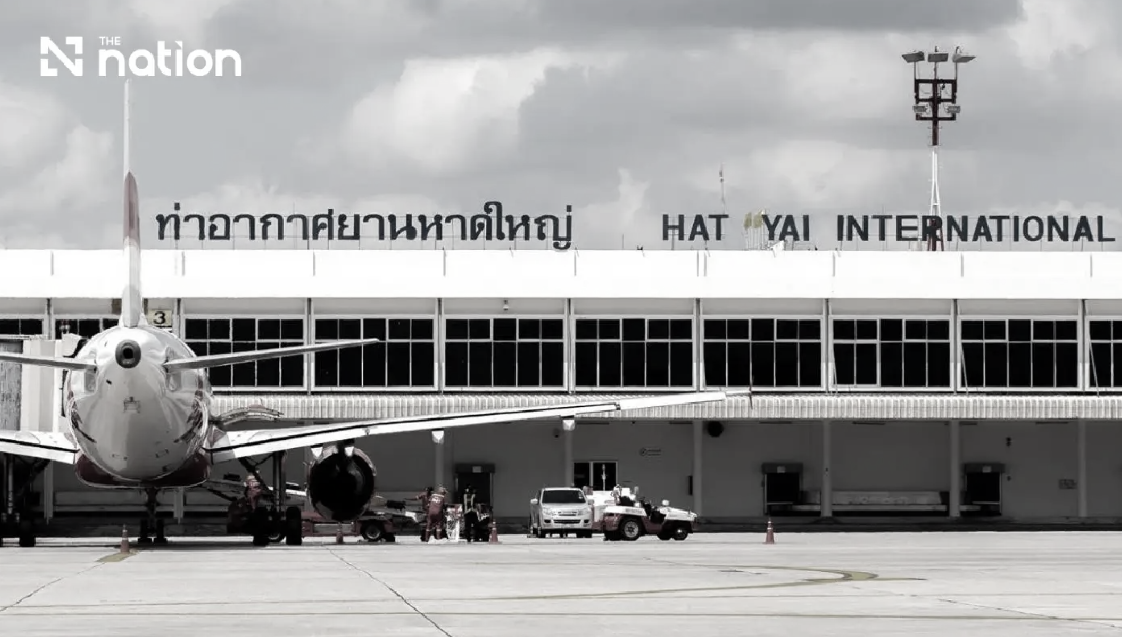
Hat Yai International Airport, one of Thailand's busier regional hubs serving visitors and residents across southern Thailand and neighbouring Malaysia, temporarily shut down its primary runway on Wednesday afternoon following an accident involving an airport fire engine. The incident, which occurred on Runway 26, forced the airport authority to issue an immediate closure notice and redirect incoming aircraft to alternative facilities, disrupting the afternoon schedule and affecting dozens of passengers heading to the southern Thai coastal region.
The airport issued a formal aviation notice, known as a NOTAM, declaring Runway 26 inaccessible from 1.55pm until 4.30pm on June 17, 2026. Officials cited safety considerations as the primary reason for the extended closure window, indicating that the incident area required careful management and assessment before normal operations could resume. This precautionary approach, while necessary for passenger safety, created cascading disruptions across the afternoon flight schedule as aircraft already airborne had to be diverted to alternative landing sites.
With Runway 26 offline and no other runway available for landing operations, Hat Yai Airport became temporarily unable to accept inbound traffic. The geographical proximity of Krabi Airport, located roughly 140 kilometres away on the Andaman Coast, made it the natural alternative destination for diverted flights. Passengers boarding aircraft headed to Hat Yai faced unexpected route changes and potential delays as pilots received instructions to proceed to Krabi instead.
Flight tracking data from Flightradar24 provided real-time confirmation of the diversions, showing at least two major commercial flights rerouted on Wednesday afternoon. Thai Airways International flight TG263 and Thai Lion Air flight SL712, both scheduled arrivals at Hat Yai, were redirected to Krabi Airport. The data offered rare public visibility into what might otherwise have remained an internal airport operational matter, allowing relatives and travel companions monitoring flight progress to understand why their aircraft suddenly changed course.
The incident created uncertainty and frustration among passengers, many of whom were unaware of the underlying cause of the diversion. One traveller with a relative aboard Thai Airways flight TG263 contacted Hat Yai Airport directly seeking clarification about the operational disruption. Airport representatives acknowledged that an emergency situation had developed but declined to provide substantive details at that moment, likely prioritising immediate safety management over media relations during the active incident.
The lack of transparency during the initial response phase reflects common airport crisis communication protocols, where authorities typically restrict information sharing until they have fully assessed the situation and secured all areas. However, this cautious approach can leave confused passengers and their families with incomplete information about why their flights are diverted, creating anxiety and complaints that ripple through social media and traveller networks across the region.
Communications eventually became clearer for some passengers. The traveller who had contacted airport officials reported that Thai Airways flight TG263 ultimately landed safely at Krabi Airport, resolving the immediate safety concern for those aboard. The safe landing underscored that despite the ground-level incident, the diversion protocols functioned as intended and posed no secondary risk to airborne aircraft or their crews. Other diverted passengers presumably experienced similar outcomes, though not all details of the afternoon's movements were publicly documented.
The incident highlights the vulnerability of single-runway airports in handling unexpected operational disruptions. Hat Yai Airport, serving the populous provinces of Songkhla, Satun, and Phatthalung as well as cross-border traffic from neighbouring Malaysian states like Perlis and Kedah, depends heavily on continuous runway availability. Any closure, whether planned maintenance or emergency-driven, immediately constrains capacity and forces difficult operational decisions. For a facility handling domestic regional traffic and international flights, even a few hours of closure generates significant economic ripples across tourism, commerce, and business travel sectors.
The fire engine accident raises questions about ground operations protocols and safety procedures at the airport. Fire and rescue vehicles operate within restricted airfield areas where stringent protocols should prevent such incidents. The circumstances of how a fire engine became involved in an accident on an active runway area merit investigation, particularly regarding vehicle operations, driver training, and the spatial separation between emergency response equipment positioning and active flight zones. These details typically emerge through formal incident reports published weeks or months after the event.
For Malaysian travellers and businesses with connections to Hat Yai, incidents like these underscore the importance of monitoring real-time flight information and maintaining flexible itineraries when travelling through regional airports. Hat Yai Airport serves as a vital connection point for cross-border commerce and tourism, linking Thailand's southern provinces to Peninsular Malaysia's northern states. Disruptions to this facility can affect supply chains, business meetings, and holiday plans for thousands of travellers annually, making operational reliability a critical concern for the broader Southeast Asian business community.
Airlines using Hat Yai as a regular destination likely reviewed their contingency procedures following this incident, ensuring crew members understand diversion protocols and that communication systems can rapidly notify affected passengers. The combination of quick airport closure, successful diversions, and safe landings suggests that while the fire engine accident created disruption, the underlying safety systems and emergency procedures functioned adequately in response.