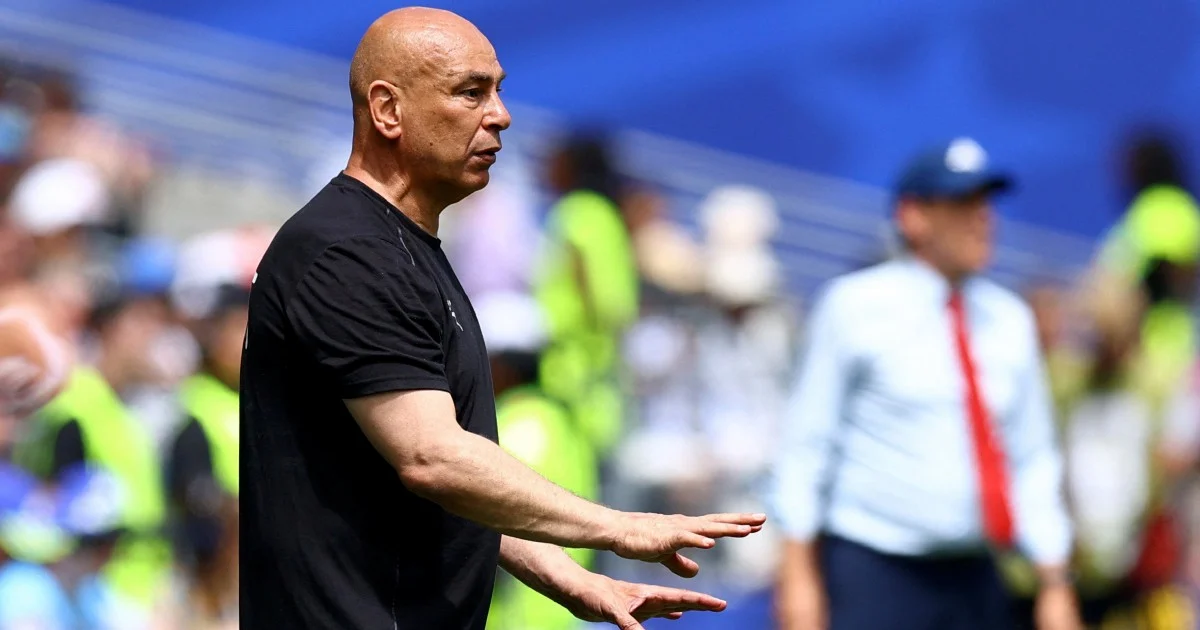
Hossam Hassan has moved swiftly to quash mounting speculation about potential friction within the Egyptian squad, particularly involving the nation's most celebrated footballer Mohamed Salah, as the Pharaohs prepare for a defining moment in their World Cup campaign. Speaking ahead of Sunday's Group G showdown against New Zealand at BC Place in Vancouver, the Egyptian coach emphasised that the team remains unified and focused solely on delivering what could prove to be a landmark achievement in the country's sporting history. His remarks come amid the intense scrutiny that invariably surrounds any perceived discord involving elite footballers of Salah's stature, especially during high-stakes international tournaments where media narratives can quickly spiral beyond what actual circumstances warrant.
The head coach's explicit denials carry particular weight given that Egypt's World Cup fortunes hinge significantly on the performance and availability of Salah, whose exploits at Liverpool have cemented his position as one of contemporary football's premier attacking talents. Hassan's intervention suggests the coaching staff has identified the need to address external noise that might otherwise become a distraction for players requiring absolute mental clarity during tournament play. In the modern football environment, where social media amplification can transform isolated incidents into perceived crises within minutes, such proactive communications from management represent a necessary safeguard against unnecessary pressure accumulating within the dressing room.
The match against New Zealand represents a critical juncture for Egypt's World Cup ambitions. Group G configurations demand that teams navigate several formidable opponents, and dropping points against any opponent—particularly one potentially perceived as more accessible—could severely compromise advancement prospects. The New Zealanders, despite their geographic isolation and smaller domestic league profile, have demonstrated across multiple World Cup campaigns that they should never be underestimated. Their recent performances have shown increasing sophistication in their tactical approach and competitive intensity, elements that could genuinely trouble Egypt if the Pharaohs approach the encounter without appropriate respect and preparation.
Egypt's World Cup journey carries profound significance throughout the Arab world and across Africa more broadly. A strong performance or tournament progression would resonate beyond mere sporting achievement, representing cultural validation for a nation with deep footballing traditions yet limited recent success at the sport's highest echelon. The pressure accompanying such expectations is genuinely substantial, and Hassan's role includes not merely selecting players and formulating tactics but also managing the psychological dimensions of competing under such concentrated focus. His team selection and preparation protocols must account for these intangible pressures whilst maintaining the technical and physical standards demanded by elite international competition.
The squad composition itself reflects Hassan's confidence in his chosen group's collective strength and internal harmony. Modern football requires not just individual talent but sophisticated levels of integration, mutual understanding, and tactical flexibility that only emerge through sustained preparation and cohesive team-building. Hassan's assertion that no issues exist within the squad should be understood as extending beyond mere denial of gossip—it represents an affirmation that his coaching staff has successfully created an environment where players from disparate club backgrounds can function as an integrated unit pursuing shared objectives.
Salah's personal circumstances—including his recovery from various minor injuries and adjustments to different tactical systems employed by his club and country—have provided ample material for speculation. His role within the Egyptian attacking structure differs markedly from his function within Liverpool's framework, requiring constant calibration by coaches and ongoing psychological adjustment by the player himself. Such complexities are entirely normal within international football yet frequently become subject to overheated media interpretation when individual players command the global profile Salah enjoys.
BC Place's neutral venue carries its own dynamics for both teams. Neither side benefits from home advantage, meaning success will depend purely on preparation quality, tactical execution, and collective motivation. The stadium's indoor climate control and modern facilities ensure that external environmental factors will not provide convenient explanations should either team underperform. Such conditions theoretically favour the more disciplined and psychologically composed side, potentially rewarding Hassan's team if they have indeed achieved the unity he claims.
Egypt's historical relationship with the World Cup includes memorable moments yet frustratingly limited progression beyond group stages. This context makes Group G encounters disproportionately important, as early elimination remains an ever-present possibility despite squad quality. Hassan understands that his primary responsibility involves ensuring that his players concentrate exclusively on technical and tactical dimensions rather than permitting external narratives to fragment focus. His emphatic dismissal of discord rumours should be viewed as a necessary managerial intervention designed to isolate his team from distraction sources.
The upcoming fixture will reveal whether Hassan's public assertions about squad harmony translate into on-field performance. New Zealand's visiting status and relative isolation from major international football developments mean they may approach the match without the psychological weight that Egyptian expectations impose. This structural advantage for the New Zealanders—operating largely beyond the scrutiny and pressure that swirls constantly around high-profile nations—represents a genuine tactical consideration for Hassan's preparation. Egypt's response to such pressure, channelled through individual players like Salah, will ultimately determine their World Cup trajectory and whether this tournament finally delivers the sustained success that generations of Egyptian footballers and supporters have pursued.

