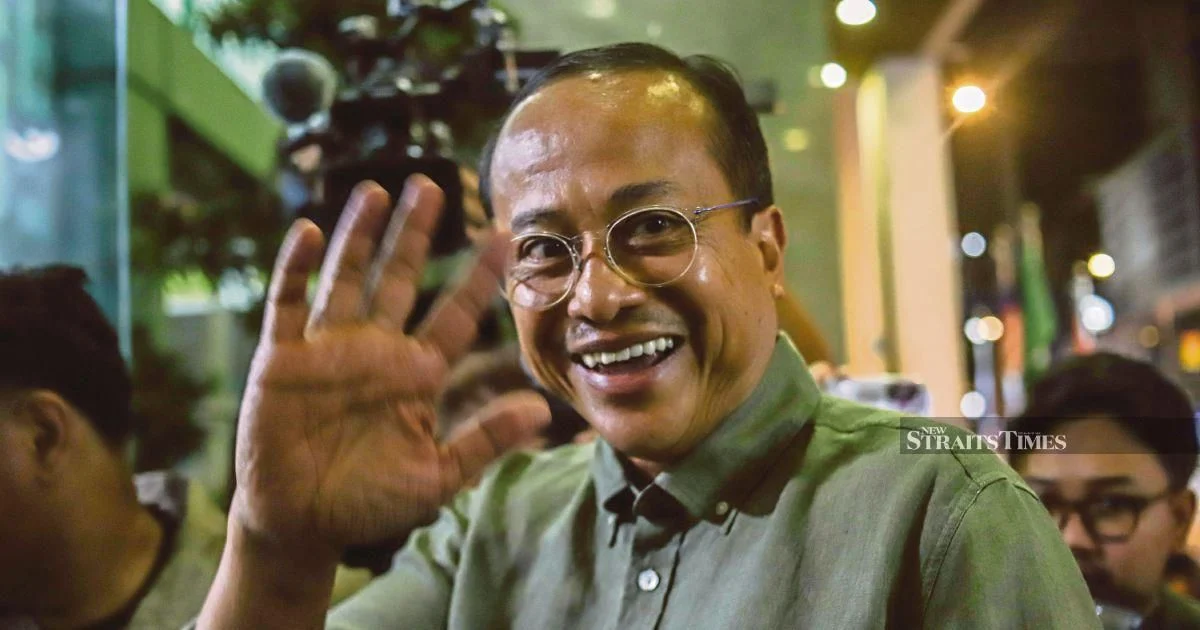
Datuk Seri Hamzah Zainudin's tenure as Opposition Leader in the Dewan Rakyat continues without formal institutional recognition, as the Perikatan Nasional coalition has not issued an official notice confirming his reappointment to the role. The Larut member of Parliament has assumed the duties associated with the position, yet the absence of documented notification from the coalition raises questions about the legitimacy and durability of his appointment in the eyes of Parliament's administrative machinery.
The delay in formalising Hamzah's status points to broader complexities within the opposition bloc's operational framework. Perikatan Nasional, which comprises several political parties, typically coordinates such appointments through formal channels to ensure that all parliamentary procedures are correctly observed. The failure to lodge the requisite notice suggests either administrative oversight or deeper internal disagreements about the Opposition Leader designation that have yet to be publicly aired.
In parliamentary systems modelled on Westminster conventions, the Opposition Leader holds a constitutionally significant role with specific rights and responsibilities. These include leading parliamentary scrutiny of government policies, enjoying certain procedural privileges, and representing the opposition's collective interests during legislative sessions. Without official recognition through proper channels, Hamzah's ability to exercise these functions fully may be questioned by government ministers, parliamentary officials, or other MPs seeking to challenge his authority.
The situation reflects a pattern of political manoeuvring that has characterised Malaysian opposition politics since Perikatan Nasional solidified itself as the primary alternative to the Pakatan Harapan-led government. Coalition cohesion has frequently proven fragile, with member parties sometimes acting independently or dragging their feet on formalising joint decisions. In this instance, the lack of documented notice may indicate that one or more coalition partners have reservations about Hamzah's leadership or prefer to maintain flexibility regarding the Opposition Leader position.
Hamzah himself, as a prominent Umno figure and former Senior Minister, brings substantial political weight to the role. His appointment would have been expected to command automatic recognition from Perikatan Nasional's component parties, which include Umno, PAS, Bersatu, and smaller partners. Yet the administrative hiatus suggests that even within a coalition, formal procedures cannot be taken for granted when political sensitivities exist regarding power distribution and representation.
For Malaysian parliamentary watchers, this development underscores the perpetual tension between informal political arrangements and formal constitutional requirements. While Hamzah may exercise Opposition Leader functions with the tacit acceptance of coalition MPs and without facing immediate parliamentary challenges to his standing, the absence of official notification creates a grey zone. This could later provide grounds for disputing decisions he makes in his opposition capacity or for questioning whether parliamentary procedures dependent on his formal role recognition have been properly executed.
The implications extend beyond Hamzah personally. Opposition unity depends partly on clear internal hierarchies and agreed-upon institutional mechanisms. When the Opposition Leader position lacks unambiguous official status, it potentially weakens the collective voice of MPs representing non-government parties. Parliamentary scrutiny of executive action—a cornerstone of democratic governance—requires opposition structures that command undeniable legitimacy and procedural standing.
Government officials and parliamentary administration officials will likely maintain diplomatic silence on the matter unless forced to adjudicate a specific procedural dispute. However, they are likely aware of the notification gap and may be waiting to see whether Perikatan Nasional eventually formalises the arrangement or allows the current anomalous situation to persist indefinitely. Such institutional ambiguity can be exploited by whoever wishes to weaken opposition effectiveness.
Peering ahead, Hamzah and Perikatan Nasional leadership face a choice: formalise his Opposition Leader status through proper written notice and thereby conclusively establish his parliamentary standing, or continue operating in an ambiguous space where his authority rests on political convenience rather than documented institutional recognition. The longer the notice remains unissued, the more questions may be raised about whether the appointment is truly settled or merely provisional pending further coalition deliberation.
For Malaysian voters and political observers seeking to understand the real distribution of power within opposition ranks, this situation is instructive. It reveals that even apparently resolved internal opposition decisions can remain technically unsettled and subject to revisit. It also suggests that administrative formality, far from being mere bureaucratic routine, carries political consequence in Westminster-style systems where procedure and precedent matter greatly. The Opposition Leader role, whatever its practical exercise, derives enhanced authority and influence when backed by explicit institutional recognition.