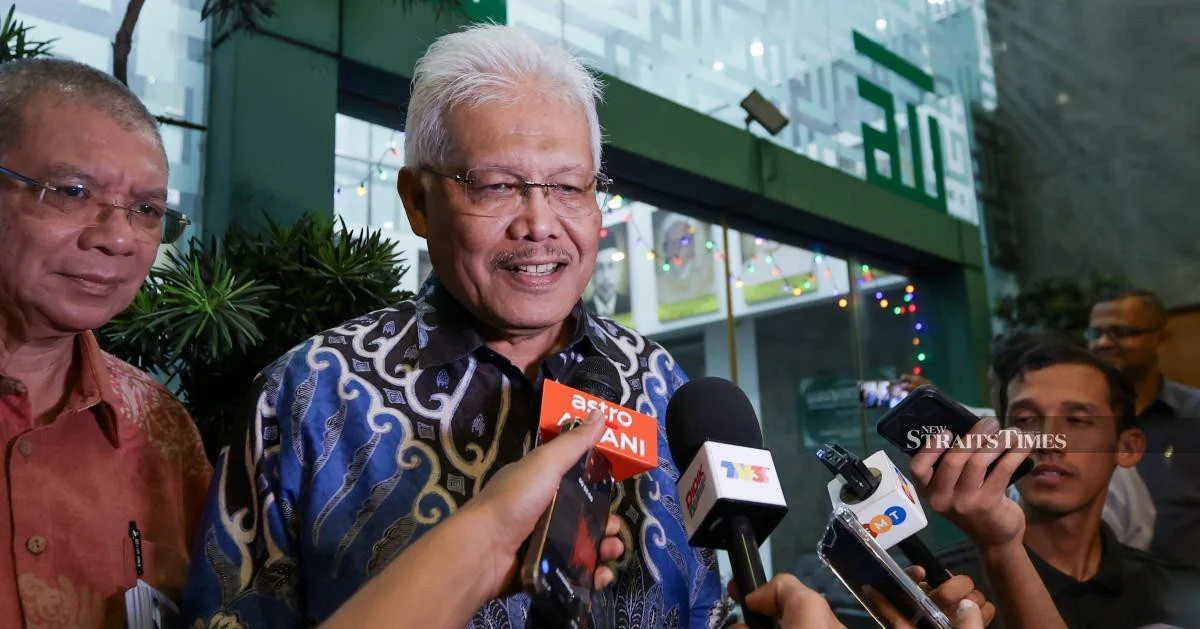
The parliamentary seating chart released for Monday's sitting has formalized what opposition watchers suspected: Datuk Seri Hamzah Zainudin is stepping back into the opposition leader's front-row position in the Dewan Rakyat, a move that tangibly represents shifting political dynamics within Malaysia's fractious opposition bloc. The adjustment will see Tan Sri Muhyiddin Yassin, the Bersatu president, relocated further back along the bench, signalling both a change in parliamentary protocol and deeper questions about how the opposition intends to consolidate its voice against the government.
The reallocation reflects the fluid nature of Malaysia's political landscape, where coalition alignments and leadership roles remain subject to rapid recalibration. For Malaysian observers, the symbolic importance of who occupies the opposition leader's seat extends beyond mere seating etiquette; it signals which figure commands the opposition's negotiating authority and media platform within parliament. Hamzah's reinstatement thus carries weight not just for the Pakatan Harapan coalition but for how the opposition will present itself during what promises to be a demanding parliamentary year ahead.
Muhyiddin's movement down the seating row underscores the complex relationship between Bersatu and the broader Pakatan Harapan alliance. Though Bersatu remains a coalition member, the party has frequently pursued parallel political strategies and maintained a degree of autonomy that sometimes complicates unified opposition messaging. By repositioning the Bersatu president away from the frontmost opposition bench, the seating arrangement effectively reorders the hierarchical visibility within parliament, with implications for how media and government respond to opposition interventions.
The timing of this shift arrives amid broader recalibrations within Malaysia's opposition politics. For roughly a year, the opposition has grappled with questions of internal cohesion, leadership legitimacy, and strategic direction. Hamzah's return to the leader's seat represents one attempt to clarify that hierarchy and project a more unified face to parliamentary business. Whether this translates into substantive improvement in opposition coordination remains to be seen, but the symbolic gesture matters for morale and public perception.
From a procedural standpoint, the opposition leader's seat confers speaking privileges, first-refusal access to parliamentary time, and the presumed right to direct opposition questioning and policy critiques. These are not mere ceremonial perquisites; they constitute operational advantages in a legislature where attention, air time, and the ability to frame debate carry real political weight. Hamzah's occupancy of this position therefore translates into enhanced platform visibility for whatever policy positions he wishes to advance during parliamentary sittings.
For Malaysian voters and observers tracking opposition movements, such shifts often pass beneath the radar despite their substantive consequences. The public focus tends to centre on election results and ministerial scandals rather than parliamentary mechanics. Yet the daily business of opposition politics—question time, parliamentary procedural maneuvres, committee work, and the cumulative impression created by sustained oversight—significantly influences how ruling coalitions exercise power and how public opinion forms regarding governance quality.
The Dewan Rakyat's physical layout, with government benches on one side and opposition facing directly across, creates an environment where positioning and proximity carry psychological and practical consequences. The opposition leader's front-row placement means direct line-of-sight engagement with government figures, immediate access to the Speaker's attention, and the psychological advantage of occupying the most visible opposition position. These factors compound across a parliamentary term, shaping perceptions of opposition effectiveness.
Bersatu's trajectory within opposition politics has proven particularly complex. The party entered Pakatan Harapan as a junior partner following its dramatic split from UMNO, bringing with it Muhyiddin's experienced leadership and substantial parliamentary numbers. Yet tensions between Bersatu's interests and broader coalition positions have periodically surfaced, with the party sometimes adopting positions that emphasize its distinct identity rather than unified coalition messaging. The seating realignment may signal an attempt to integrate Bersatu more fully into coalition structures, or conversely, it might reflect underlying calculations about coalition hierarchies that remain opaque to outside observers.
For Southeast Asian regional analysis, Malaysia's opposition dynamics warrant attention given their influence on broader governance patterns. A fragmented, disunited opposition typically results in reduced policy scrutiny and legislative accountability, outcomes that affect not only Malaysian citizens but also regional stability and investment confidence. Conversely, an opposition capable of coordinated, credible oversight can enhance governance quality and institutional health. The seating chart adjustment, though procedurally modest, forms part of this larger picture.
Hamzah himself brings considerable parliamentary experience and a track record of navigating coalition politics from leadership positions. His resumption of the opposition leader's formal seat suggests confidence within the opposition bloc that his presence in that prominent position will serve coalition interests more effectively than alternative arrangements. Whether this proves accurate will depend on his ability to maintain coalition unity while advancing substantive policy alternatives to government positions.
The Monday sitting will provide the first opportunity for observers to assess how this restructured opposition leadership manifests in actual parliamentary performance. The seating arrangement is merely structural; what matters ultimately is whether the opposition can translate this clearer hierarchy into more coordinated, impactful interventions during debate, questioning, and legislative processes.
As parliament reconvenes, Malaysian media and political analysts will watch carefully to assess whether Hamzah's return to the opposition leader's seat heralds a period of stronger opposition cohesion or whether deeper structural tensions within the opposition bloc will continue to surface. The symbolism is clear; the substance remains to be demonstrated.

