The attendance of Sabah Chief Minister Datuk Seri Hajiji Noor and a delegation of senior Gabungan Rakyat Sabah (GRS) leaders at the 2026 PKR National Congress in Melaka on August 15 has been interpreted as a tangible demonstration of the strengthening political and institutional bonds between Sabah's administration and Malaysia's federal government, even as both entities remain formally separated by different political alignments.
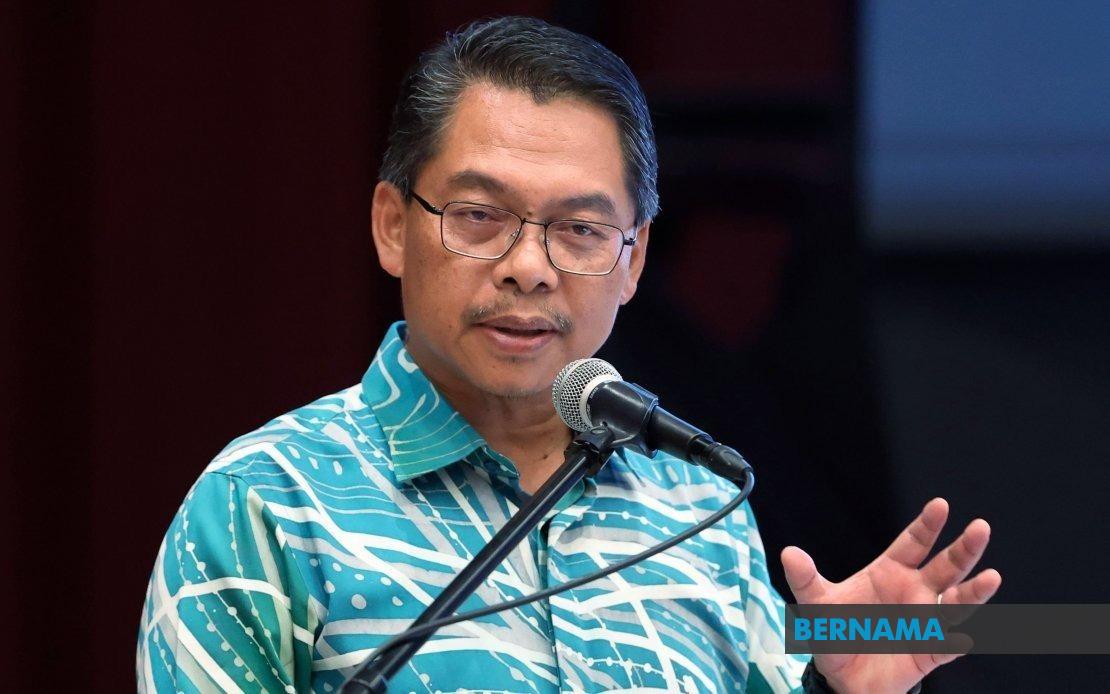
Datak Mustapha Sakmud, who chairs the Sabah PKR Leadership Council and simultaneously serves as Minister in the Prime Minister's Department overseeing Sabah and Sarawak Affairs, characterised the cross-party gathering as emblematic of a cooperative framework that transcends conventional political divisions. His remarks emphasised that the collaboration extends far beyond the ceremonial or symbolic, instead encompassing practical coordination across multiple governance domains. This expanded scope of cooperation reflects a maturation in Malaysia's federal-state relations, particularly in how resource allocation, policy implementation, and administrative coordination are now negotiated between Kuala Lumpur and Kota Kinabalu.
The strategic priority outlined by Mustapha centred on channelling the fruits of political stability into tangible improvements for ordinary Sabahans. He articulated a three-part developmental agenda: ensuring economic opportunities materialise at the grassroots level, upgrading the physical and social infrastructure that communities depend upon daily, and systematically addressing the persistent grievances that directly affect household welfare and livelihoods. This framing transforms what might otherwise appear as a mere gesture of cross-party civility into a substantive commitment to developmental outcomes, positioning cooperation as an instrumental mechanism for advancing Sabah's material interests rather than as an end in itself.
Under the MADANI administration of Prime Minister Datuk Seri Anwar Ibrahim, Mustapha articulated a federalist philosophy that acknowledges Malaysia's constitutional structure requires development policies sensitive to regional diversity. Rather than imposing uniform national templates, he suggested, inclusive and equitable implementation must account for Sabah's distinctive economic profile, demographic composition, geographic challenges, and historical circumstances. This perspective carries particular significance given the longstanding perception among Sabahans that federal development programmes have historically skewed towards Peninsular Malaysia, and that the state's unique circumstances have been underappreciated in Kuala Lumpur's policy formulation.
A prominent theme in Mustapha's statement involved the Malaysia Agreement 1963 (MA63), the foundational constitutional document that established Malaysia through the federation of Malaya, Singapore, Sabah, and Sarawak. He reaffirmed PKR's commitment to champion the implementation of MA63 within what he termed a "fair federal framework" that respected Sabah's "position and special status." This language reflects ongoing sensitivities about Sabah's constitutional standing. The state has long contended that certain provisions of MA63—particularly those relating to financial arrangements, education policy autonomy, and religious affairs—have been progressively eroded or reinterpreted by federal authorities over the decades. By anchoring cooperation to an explicit commitment to MA63 principles, Mustapha signalled that Sabah's participation in the federal system remains conditional upon respect for its constitutional bargain.
The composition of the GRS delegation itself carried political significance. Datuk Seri Dr Joachim Gunsalam, Hajiji's Deputy Chief Minister and a key figure in Sabah's administrative hierarchy, was present alongside several ministerial colleagues responsible for rural development, youth affairs, and education policy. This was not a token appearance by junior figures but rather a substantive showing of Sabah's senior political establishment. The deliberate inclusion of these specific portfolio holders suggested that the cooperation extends into concrete policy domains—infrastructure development in rural areas, youth employment initiatives, and educational standards—rather than remaining confined to rhetorical gestures.
Musatpha's closing remarks explicitly framed political difference as compatible with pragmatic cooperation when national and subnational interests align. His statement that "political differences should not be a barrier to us sitting together and building mutual understanding when it comes to the interests of Sabah and its people" articulates a particularist logic: where Sabah's collective welfare is concerned, party affiliation becomes secondary to effective advocacy and resource mobilisation. This perspective has grown increasingly influential in Malaysian state politics, as Chief Ministers of various political persuasions have learned that federal leverage and developmental outcomes often depend more on effective lobbying and administrative coordination than on partisan alignment with Putrajaya.
The 2026 PKR National Congress itself, held at the Melaka International Trade Centre and themed "Memugar Reformasi, Membina MADANI," provided the institutional platform for this demonstration of cooperation. Prime Minister Anwar Ibrahim, in his capacity as PKR president, officiated proceedings. The congress serves as both a party forum and an occasion for the MADANI administration to showcase its federal-state coordination achievements. Sabah's prominent representation thus served multiple communicative purposes: demonstrating to Sabah voters that their leaders command respect in federal circles, signalling to other states the benefits of constructive engagement with the federal government, and reinforcing the MADANI administration's narrative of inclusive governance.
For Malaysian observers tracking federal-state dynamics, the Sabah delegation's presence at a PKR congress despite GRS's separate political identity indicates a practical shift in how Malaysian federalism operates in practice. Rather than a winner-take-all system where the ruling federal coalition dictates terms to non-aligned states, the emerging model appears to involve negotiated coordination. Sabah's Chief Minister can maintain his party's independence whilst simultaneously securing federal investment, policy flexibility, and recognition of state-specific grievances through selective engagement and strategic cooperation on shared priorities.
The implications extend beyond Sabah. Other Malaysian states, particularly those governed by opposition-aligned administrations or parties distinct from the federal coalition, will likely study how Hajiji and the GRS have managed to secure developmental commitments and policy concessions whilst maintaining political autonomy. The Sabah model suggests that effective statecraft in contemporary Malaysia involves less ideological rigidity and more pragmatic dealmaking—a development that may gradually reshape the tenor of Malaysian politics away from zero-sum partisanship and towards issue-based federalism.
Looking forward, the sustainability of this cooperation framework will depend on whether federal commitments regarding development allocation, MA63 implementation, and policy autonomy translate into measurable improvements in Sabah's economic indicators and quality of life. If the federal government follows through on implied undertakings, the Sabah-federal cooperation model could become a template for other sub-national jurisdictions. Conversely, if cooperation yields only symbolic gestures whilst material outcomes remain disappointing, Sabah voters and leaders may revert to more confrontational stances, potentially destabilising the delicate equilibrium that currently permits effective partnership across political lines.

