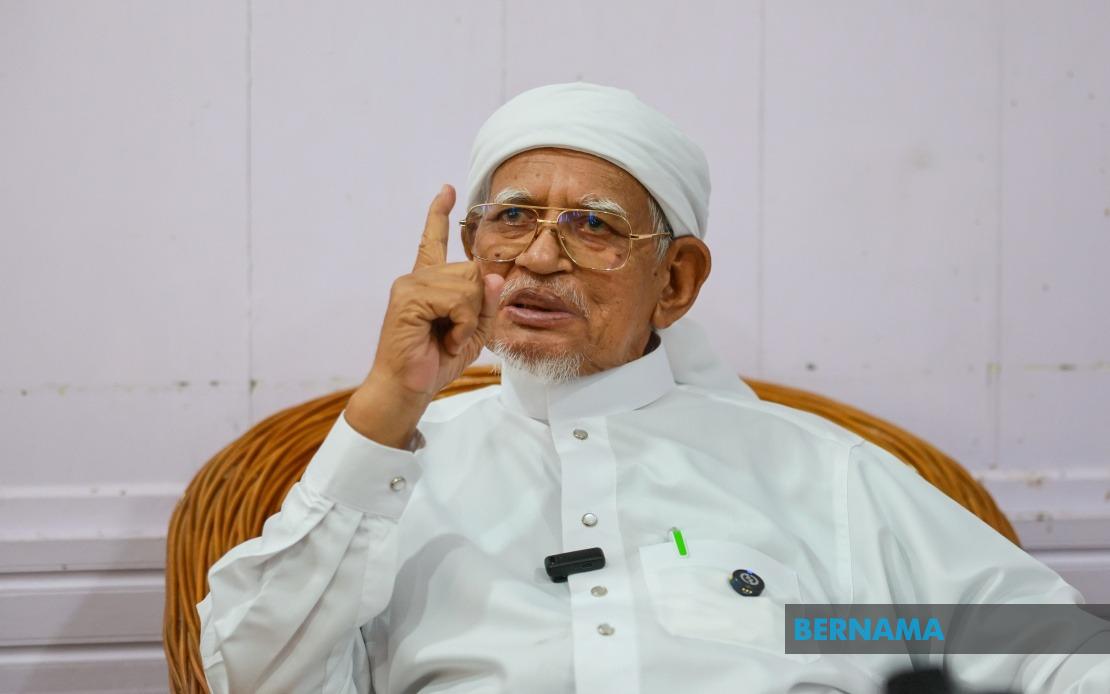
A deepening rift within Malaysia's opposition Perikatan Nasional coalition has erupted into a public constitutional dispute, with senior figures offering sharply conflicting interpretations of how membership can be terminated. PAS president Tan Sri Abdul Hadi Awang asserted on Wednesday in Marang that Bersatu has automatically forfeited its standing within PN following the party's announcement to establish a separate political alliance, suggesting that no formal notification is required once a member party signals its intention to pursue other coalitional arrangements.
Abdul Hadi's position represents an aggressive interpretation of PN's constitutional framework. The PAS leader contended that by publicly stating its intention to form another coalition, Bersatu had effectively triggered an automatic exit mechanism, rendering the party no longer a constituent member of PN regardless of whether formal procedures had been followed. Speaking after a religious lecture at Rusila Mosque, Abdul Hadi suggested that PN possessed no obligation to issue official correspondence to Bersatu clarifying its expulsion, as the withdrawal was considered complete upon the announcement of coalition-building intentions.
This claim directly contradicts Bersatu's public understanding of how the coalition operates. Datuk Seri Mohamed Azmin Ali, serving as the party's secretary-general, issued a forceful rebuttal, emphasizing that Bersatu maintains full legitimacy as a PN member and that no constitutional mechanism exists permitting automatic revocation of membership status. Azmin argued that Abdul Hadi's interpretation conflicts with the explicit terms of PN's foundational documents and represents an overreach of power by the PAS president.
The specific constitutional issue centres on Clause 7A of the Perikatan Nasional Constitution, which Azmin cited as the authoritative framework governing membership decisions. According to Azmin's reading, only the PN presidential council possesses the constitutional authority to determine whether a component party remains in good standing. This interpretation places significant procedural requirements between any theoretical grounds for expulsion and the actual termination of membership, requiring formal convening of the council rather than permitting unilateral declarations by individual leaders.
Azmin emphasized that Bersatu's membership status remains unresolved because the PN presidential council has not yet assembled to address the question, meaning no official mechanism has been triggered despite Abdul Hadi's public assertions. The Bersatu secretary-general further stressed that Abdul Hadi, regardless of his position within PAS or PN's broader structure, lacks the individual authority or veto power to determine another party's membership standing unilaterally. This framing positions the dispute as one concerning the separation of powers within PN's institutional structure rather than a straightforward factual disagreement about what transpired.
Bersatu's response escalates the conflict beyond rhetorical disagreement. The party announced its intention to lodge a formal complaint with the Registrar of Societies, suggesting that leadership views Abdul Hadi's claims as potentially unlawful interference with the party's legal status and constitutional rights within the coalition. This move signals that Bersatu does not intend to accept Abdul Hadi's interpretation passively but instead plans to invoke regulatory mechanisms to challenge what it considers an improper assertion of power.
The underlying tension reflects broader instability within PN following Bersatu president Tan Sri Muhyiddin Yassin's statements about forming a new alliance, reportedly to occur after the Negeri Sembilan state election. Muhyiddin's suggestion that Bersatu would pursue alternative coalitional partnerships fundamentally unsettled the PN arrangement and exposed divergent views about what such coalition-building would mean for existing membership obligations. While Muhyiddin's public statements may have been intended as exploratory or conditional, Abdul Hadi appears to have interpreted them as triggering irreversible consequences.
For Malaysian political observers and the broader Southeast Asian region, this dispute illuminates the fragility of opposition coalitions constructed without robust institutional safeguards. PN was initially formed as an alternative to the ruling Barisan Nasional, but the coalition's constitutional framework apparently lacks clear procedures for managing member parties that pursue parallel alliance strategies. The absence of clarity about what constitutes a breach of membership obligations or how such breaches are adjudicated creates dangerous ambiguity when political tensions surface.
The dispute also raises questions about the distribution of authority within PN's structure. Abdul Hadi's assertion of power to determine membership through unilateral declaration suggests either a misunderstanding of PN's constitution or an attempt to consolidate PAS's influence within the coalition at Bersatu's expense. If PN's presidential council indeed holds exclusive authority under Clause 7A, then Abdul Hadi's public claims represent precisely the kind of unauthorized individual action that coalition structures are designed to prevent.
The timing of this conflict matters considerably. As Malaysian politics remains fluid following recent electoral cycles, opposition coalitions require stability to present credible alternatives to voters. Publicized disputes over membership and constitutional authority undermine such credibility and suggest internal governance problems that may concern potential political allies considering joining PN or voters considering supporting it. The escalation from Abdul Hadi's claims to Bersatu's threat of regulatory complaints indicates that behind-the-scenes negotiations have apparently failed to resolve the disagreement.
Bersatu's invocation of the Registrar of Societies introduces an external institutional check into an internal political dispute, potentially shifting the nature of the conflict from a matter of coalition politics to one of legal interpretation regarding party registration and rights. If the Registrar determines that PN has improperly attempted to revoke Bersatu's membership, it could reinforce Azmin's position and establish legal precedent about coalition operational boundaries. Conversely, if the Registrar finds constitutional grounds for Hadi's interpretation, it would represent a significant victory for PAS's reading of PN's rules.
Looking forward, this dispute will likely require resolution through either constitutional amendment clarifying membership procedures or formal mediation by PN's leadership structure. Whether the presidential council convenes to address the question remains uncertain, but the public airing of this disagreement suggests that PN's underlying unity is considerably more fragile than public presentations might suggest. For Malaysian and regional analysts tracking opposition development, the episode demonstrates how detailed constitutional questions can quickly become symbols of deeper power struggles within political coalitions.

