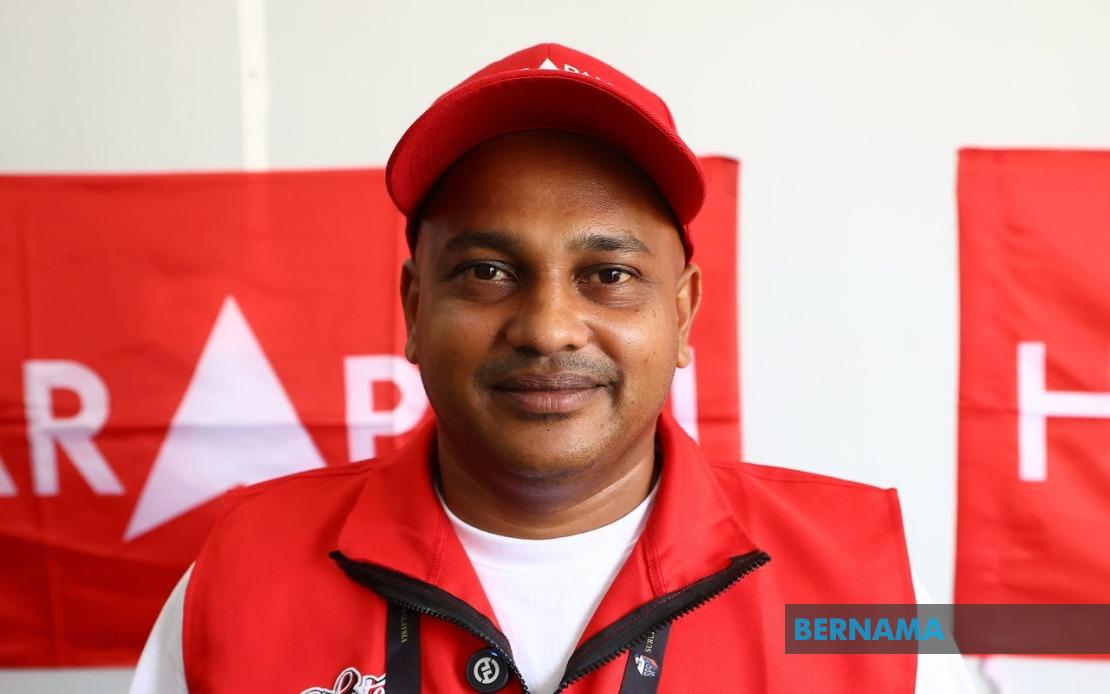
Pakatan Harapan's candidate for the Layang-Layang state seat, Guna Balakrishnan, has laid out an ambitious first-term agenda centred on addressing infrastructure deficits and community safety concerns. Speaking at the opposition coalition's campaign headquarters in Kluang, Guna identified four interconnected challenges that emerged as recurring grievances during his constituency engagements: inadequate street lighting, spotty digital infrastructure, escalating conflicts with wildlife, and the persistent problem of organized theft targeting oil palm smallholders. These pledges reflect a calculated strategy to appeal to both rural and semi-urban voters in a constituency of 25,181 registered electors, many of whom depend on agriculture or work in remote areas where basic services remain inconsistent.
The street lighting initiative targets resolving between 50 and 60 percent of outstanding complaints during the initial hundred-day window following his hypothetical victory. This measured approach—neither overambitious nor dismissive—suggests Guna has absorbed feedback that incremental progress may resonate more credibly than sweeping guarantees. Rural constituencies across Malaysia have historically struggled with fragmented lighting systems, particularly in feeder roads and agricultural zones where nightfall creates both safety and economic concerns for residents engaged in evening commerce or travelling home late from harvests.
On telecommunications, Guna offered a more optimistic timeline, contending that internet and mobile signal expansion could be substantially resolved within the same timeframe given that foundational infrastructure already exists. His reasoning hinges on the notion that additional transmitter installations represent an engineering rather than a financial barrier. This assertion carries particular weight in Johor's agricultural heartland, where connectivity gaps have widened the divide between digitally-enabled urban centres and peripheral zones. The ability to access market prices, coordinate logistics, and sustain remote work has become essential for competitiveness, making this commitment politically and economically significant beyond mere campaign rhetoric.
The wild animal encroachment issue reflects a broader environmental management challenge intensifying across peninsular Malaysia's transition zones. As agricultural and residential areas encroach on forest reserves, encounters between residents and fauna—ranging from minor property damage to dangerous confrontations—have mounted. Guna's positioning of this as an immediate priority acknowledges that quality of life encompasses not just economic opportunity but physical security and the preservation of livelihood assets from wildlife predation. Smallholder palm growers face compounding pressures from falling commodity prices and climate volatility without also managing crop losses to unauthorized harvesting and animal raids.
The pledge to combat organized palm fruit theft directly addresses a vulnerability exploited by criminal networks operating throughout Johor and Sabah. These operations inflict disproportionate losses on small-scale growers who lack security infrastructure and harvesting coordination. By elevating this concern to campaign prominence, Guna signals receptiveness to a constituency demographic often neglected by higher-level policymaking. Such theft networks depend on indifference or resource constraints among local authorities; a candidate demonstrating commitment to tighter monitoring and faster response times potentially positions himself as an advocate for agriculture rather than simply another politician seeking rural votes.
Guna's comprehensive manifesto extends beyond the hundred-day framework to encompass longer-term governance priorities. Flood mitigation has become non-negotiable across Johor following repeated inundations that devastate farm productivity and household finances. Road infrastructure improvements serve both practical transportation functions and symbolize government attentiveness to spatial inequality between metropolitan Johor Bahru and peripheral districts. These foundational investments create conditions for subsequent economic diversification and population retention, preventing the brain drain and capital flight that plague rural Malaysia.
The manifesto's human capital dimensions reveal a deliberate pivot toward inclusive growth. Women's entrepreneurship programming addresses the gender gap in business ownership and income generation within agricultural communities. Technical and Vocational Education and Training (TVET) expansion recognizes that secondary school leavers increasingly require practical, employer-aligned credentials rather than academic streaming alone. This positioning aligns with federal workforce development initiatives while offering local constituencies tangible pathways to improved livelihoods. Similarly, establishing dedicated senior citizen activity centres (PAWE) acknowledges the growing demographic weight of Malaysia's ageing population and the social cohesion benefits of intergenerational engagement within rural communities.
The Layang-Layang contest represents a three-way race that reflects Johor's complex political fractioning. Guna faces Barisan Nasional's Chua Jian Boon and incumbent Abd Mutalip Abd Rahim representing Perikatan Nasional. This triangulation creates uncertainty; incumbent advantage may prove decisive, or voter dissatisfaction with the sitting representative could enable breakthrough candidacy. Pakatan Harapan has invested organizational resources into Johor's urban and semi-rural constituencies where the coalition maintains organizational presence and messaging coherence. The July 11 election and July 7 early voting window provide limited time for campaign narratives to crystallize among the 25,181 eligible voters in this district.
For Malaysian voters and political observers, Johor's state election serves as an indicator of coalition strength heading into potential federal political realignment. Pakatan Harapan's performance across diverse constituencies—from metropolitan Johor Bahru to agricultural Layang-Layang—will signal whether the coalition maintains resilience following turbulence in federal politics. Guna's focus on localized grievances rather than abstract ideological positioning reflects a pragmatic recognition that voters in economically vulnerable constituencies prioritize immediate material improvement over broader systemic narratives. How effectively such candidates translate campaign promises into deliverables will determine whether Pakatan Harapan consolidates or erodes its rural voter foundation in coming years.

