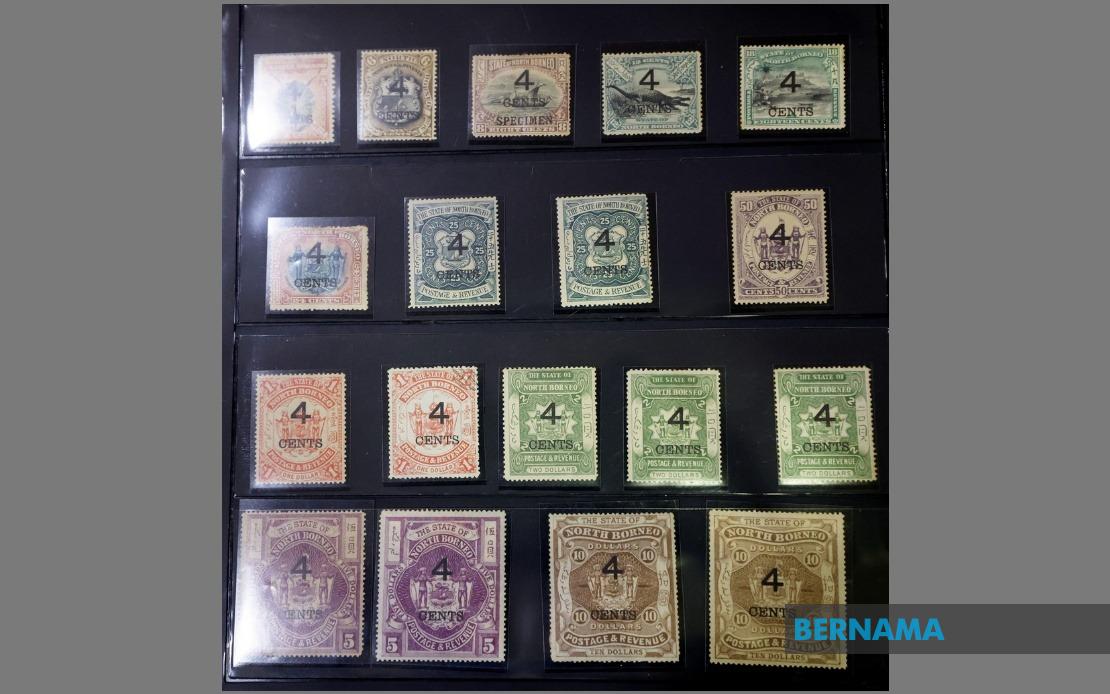
The fragile world of historical stamp collecting faces a critical juncture in Sabah, where efforts to safeguard North Borneo's philatelic treasures have taken on new urgency. These stamps, now surpassing the century mark, represent far more than postal artifacts—they embody the documented history of a territory's transformation across eight decades. As these collectibles grow scarcer and increasingly difficult to obtain, experts warn that without deliberate preservation action, an invaluable historical record could vanish from public memory, taking with it untold stories of Sabah's development.
Dr Shari Jeffri, the 56-year-old founder and president of the Borneo History Association, has emerged as a leading voice in this conservation movement. He characterizes the philatelic collection issued between 1883 and 1963 not merely as valuable items for collectors, but as a "living archive" that demands intergenerational stewardship. His perspective reflects a broader understanding that these stamps constitute primary source material for understanding how Sabah saw itself and presented itself to the world during the British colonial era and immediately afterward. The challenge, however, extends beyond mere accumulation—it requires cultivating genuine interest among younger Malaysians who have grown up in an age of instant digital communication.
The generational shift away from stamp collecting represents one of the most pressing threats to preservation efforts. Today's younger generation has minimal exposure to philately compared to previous decades, when stamp collecting commanded genuine popularity as a hobby. The enthusiast base continues to shrink, leaving fewer people with the knowledge, passion, and resources to maintain these collections properly. Antique shops across Kota Kinabalu report diminishing customer interest and increasing difficulty in sourcing materials, a trend that mirrors global patterns in hobby collecting. This decline in engagement means fewer people understand why these stamps matter or possess the expertise to authenticate and care for them appropriately.
Recent surveys of Kota Kinabalu's antique trade revealed the economic reality confronting collectors and institutions alike. North Borneo stamps command substantial prices on the secondary market, with valuations fluctuating based on age, condition, and rarity. Notably, researchers uncovered an album containing a six-cent stamp from the 1954-1961 period, featuring Queen Elizabeth II alongside a Dusun woman, alongside a ten-cent denomination depicting logging activities. These specific examples illustrate how stamps functioned as visual records of the territory's economic activities and cultural identity during the mid-twentieth century, embedding colonial-era imagery and indigenous representation within postal artifacts.
Dr Jeffri's personal journey into philately illuminates how collecting traditions historically passed through families and communities. Much of his own impressive collection originated from inheritance—stamps and postal artifacts accumulated by his late grandfather, who worked at the Recreation Club Jesselton during the 1920s. His grandfather's initial inspiration came from observing British officers engaged in stamp collecting, demonstrating how the hobby crossed cultural boundaries during the colonial period. This familial transmission of knowledge and collections remains crucial, yet increasingly fragile as traditional household structures shift and younger family members pursue different interests.
Introduced to stamp collecting at merely seven years old, Dr Jeffri only became a serious, active collector during his secondary school years through friendships with fellow enthusiasts. His nearly four decades of involvement in philately have yielded deep expertise in the historical evolution of North Borneo's postal systems. Among his most prized possessions are two two-cent stamps from the inaugural 1883 issue, which display brown sailing boats and original postmarks. These particular items hold significance beyond monetary value; for serious collectors, the 1883 issue represents a fundamental requirement for any comprehensive collection, as each stamp functions simultaneously as a historical document recording specific moments and developments in territorial history.
The British North Borneo Chartered Company introduced stamps in 1883, maintaining their use for approximately five decades until 1963. This 52-year span witnessed substantial design evolution that tracked changing official perceptions of the territory's identity and resources. Early issues, continuing roughly until 1892, featured generic symbols including lions, boats, and tigers alongside the company's motto. Beginning around 1894, designers fundamentally reimagined stamp aesthetics by incorporating Borneo's distinctive native flora, fauna, and wildlife—a shift reflecting growing emphasis on the territory's natural resources and unique ecological character. Subsequent redesigns in 1935 incorporated imagery that more explicitly asserted Sabah's distinct identity, while denominations expanded from modest two-sen values to one-dollar denominations, accommodating diverse postal needs.
The technical aspects of stamp preservation present specialized challenges that distinguish philately from casual collecting. Dr Jeffri emphasizes that maintaining stamps in acid-free albums constitutes an essential requirement for preventing deterioration and color fading over extended periods. Stamps bearing complete postal cancellations possess particular significance among specialists, as these marked examples preserve comprehensive postal information including mailing dates, specific post office names, times, and geographic locations where correspondence originated. This information transforms individual stamps into pieces of documentary evidence regarding postal networks, communication patterns, and administrative geography during their operational periods.
Authentication and value assessment require specialized expertise that remains concentrated among relatively few practitioners. The composition of stamp paper, including the adhesive layer's characteristics, fundamentally determines authenticity and monetary worth. Dr Jeffri has cultivated knowledge by consulting with recognized experts including Voon Kyam Foh and Tan Chun Lim in Singapore, while cross-referencing specialized catalogues such as Commonwealth & British Empire Stamps. This international engagement reflects how serious philatelic scholarship operates within established networks of expertise, emphasizing the importance of mentorship and documented standards in maintaining collection integrity.
While digital communication has fundamentally transformed how people exchange information and maintain relationships, the historical significance of North Borneo's postal artifacts has not diminished. These stamps function as tangible witnesses to Sabah's colonial transformation, economic activities, cultural representation, and administrative development across multiple decades. Each stamp encodes information about what colonial administrators considered important enough to depict, what resources they wished to emphasize, and how they imagined the territory's identity. Without deliberate preservation efforts, these historical documents face degradation, dispersal, and ultimate loss to future researchers and the broader Malaysian public.
The preservation challenge extends beyond individual collectors to encompass institutional commitment and public education. Malaysian institutions, particularly those in Sabah, could develop specialized collections and exhibitions that contextualize North Borneo stamps within broader narratives of regional history and identity. Educational programs might revive younger interest in philately by emphasizing stamps' historical and cultural significance rather than monetary value alone. Digital archiving could complement physical preservation by creating accessible records and documentation. Without such systematic approaches, the knowledge embedded within these century-old stamps risks disappearing precisely when modern scholarship tools could unlock unprecedented historical insights from these carefully preserved artifacts of Sabah's past.

