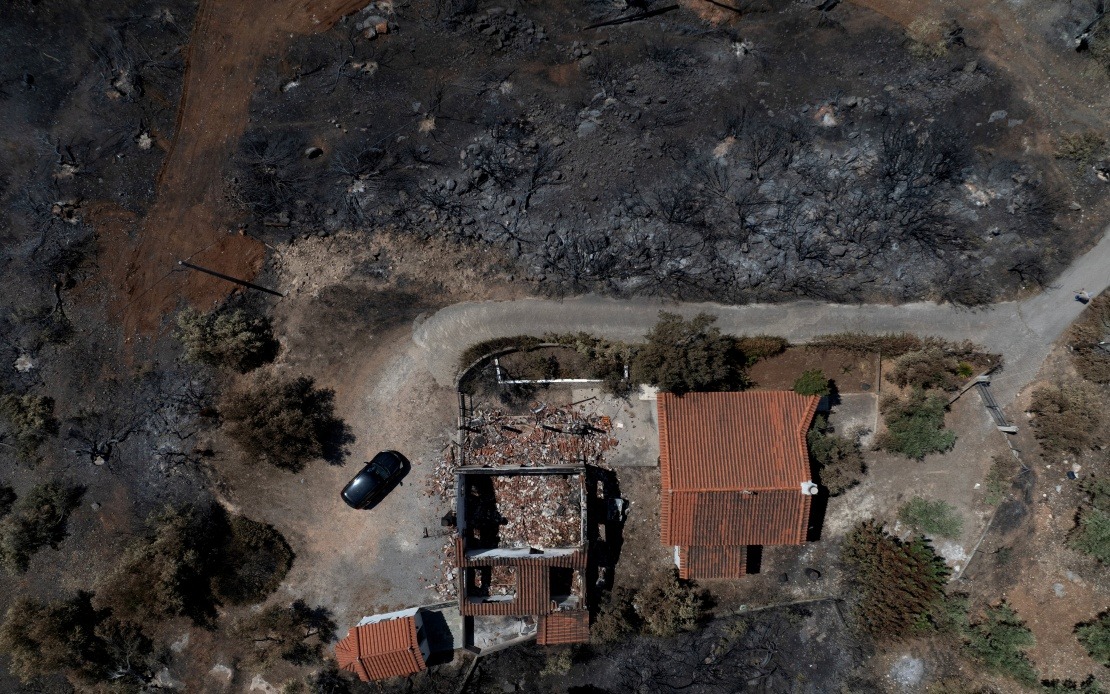
Greece has imposed its most severe wildfire alert across three densely populated regions including the capital Athens, signalling the country's intensifying struggle with catastrophic fire conditions during an unprecedented heat wave. On Wednesday, the General Secretariat for Civil Protection classified the danger level as Category 4—the maximum rating—for Thursday across Attica, Viotia, and Evia, triggering an emergency response that mobilises all available personnel from fire services, police, and military forces to protect vulnerable communities and critical infrastructure.
The decision to activate this "red alert" underscores the escalating severity of Greece's wildfire crisis, a challenge that has grown increasingly frequent and destructive across the Mediterranean region. Climate scientists have linked such extreme fire seasons to rising global temperatures, which extend the period during which vegetation becomes dry and combustible. For Southeast Asian nations monitoring their own environmental vulnerabilities, Greece's experience offers a cautionary example of how rapidly wildfire emergencies can overwhelm even well-resourced countries when weather patterns shift dramatically.
Under the maximum alert protocol, the National Civil Protection Mechanism operates with all resources fully mobilised and continuously deployed. Ground teams and aerial units conduct systematic patrols throughout at-risk zones, while authorities have imposed strict restrictions on vehicle movement and public access to forests and other fire-prone areas. These preventive measures aim to eliminate potential ignition sources and ensure rapid detection should fires ignite despite precautions. Residents have been explicitly instructed to refrain from any activities that might spark blazes, reflecting the precarious fire conditions forecast for the region.
The timing of this alert came as emergency responders were simultaneously managing multiple active fire fronts across the country. On Wednesday itself, firefighters successfully contained a major blaze near Koropi, located southeast of Athens, that had erupted in low vegetation within the Driggia area. The operation required 52 firefighters—including three specialist forest commando units—alongside 14 ground vehicles, while four helicopters and two water-dropping aircraft provided aerial support. A command helicopter coordinated the response, and authorities deployed thermal and optical drone cameras to monitor fire behaviour in real time, demonstrating the sophisticated technological infrastructure now essential for managing large-scale fire emergencies.
More concerning, however, is an enormous wildfire that ignited last week in Viotia and has since spread into western Attica, becoming what officials describe as a major incident. Satellite monitoring data from the European Union's Copernicus system confirms that this single blaze has consumed approximately 14,424 hectares—an area equivalent to roughly 35,642 acres—making it a catastrophe of significant proportions for the affected regions. The scale reflects how quickly wildfires can propagate when weather conditions favour their spread, consuming vast tracts of forest and agricultural land in a matter of days.
The human cost of this crisis has already proven tragic. On Sunday, two firefighting helicopters collided during operations against the spreading Viotia-Attica fire, killing a Danish pilot and a Greek aerial coordinator. The collision underscores the extreme risks that personnel face when battling large-scale wildfires, particularly when multiple aircraft operate in close proximity during low-visibility conditions complicated by smoke. Such incidents highlight the operational challenges emergency services encounter when demand for aerial firefighting resources far exceeds the safe capacity of available equipment.
The wildfire emergency occurring simultaneously across multiple locations reflects a broader pattern affecting Mediterranean nations. Greece, along with Spain, Portugal, Italy, and Turkey, has experienced catastrophic fire seasons with increasing regularity over the past decade. Scientists attribute this trend partly to climate change, which lengthens fire seasons by creating extended periods of high temperatures and low precipitation. For developing and developed nations across Southeast Asia and the Indo-Pacific, Greece's predicament serves as evidence that wildfire disasters can strike wealthy, organised countries with substantial emergency response capacity, suggesting that less-resourced nations may face even greater challenges managing comparable crises.
The Greek government's emphasis on prevention during the red alert phase reflects accumulated experience from previous fire seasons. By restricting public access to forests and vehicles in vulnerable zones, authorities attempt to minimise preventable ignitions—many wildfires result from human carelessness rather than natural causes. The dispatch of arson investigation teams to fires such as the Koropi blaze indicates concern that deliberate fire-setting may account for some incidents, a phenomenon that has plagued Mediterranean countries periodically throughout history.
For regional context, Greece's wildfire challenges occur within a broader Mediterranean and Middle Eastern climate crisis. Turkey, just across the border, has also experienced devastating fires in recent years, as have countries throughout the region. The concentration of such disasters in countries sharing similar geography and climate conditions suggests that Southeast Asian nations with comparable tropical and subtropical conditions should prepare for potentially intensifying fire seasons. Malaysia's own monsoon patterns and occasional dry spells create seasonal fire risks, particularly in peatland regions where fires can burn underground and remain difficult to extinguish.
The full activation of Greece's civil protection mechanism demonstrates how contemporary wildfire management demands coordinated responses spanning multiple government agencies and technologies. Real-time satellite monitoring, drone surveillance, aerial firefighting assets, and ground teams must operate in concert, a coordination challenge that requires substantial investment in both equipment and training. Nations without comparable infrastructure may struggle to mount effective responses when fire seasons intensify, highlighting why international cooperation and knowledge-sharing about wildfire management have become increasingly important for regional security and environmental protection.
As Thursday's red alert period commences across Attica, Viotia, and Evia, Greek emergency services remain on heightened readiness to respond rapidly to any fire ignitions. The convergence of multiple fire fronts, ongoing dangerous weather, and the previous week's tragic helicopter collision create an exceptionally challenging operational environment. The scale of the ongoing Viotia-Attica fire—already consuming over 14,000 hectares—suggests that Greece faces weeks of intense firefighting efforts ahead, even as the immediate threat to populated areas receives maximum preventive attention through the current red alert protocol.

