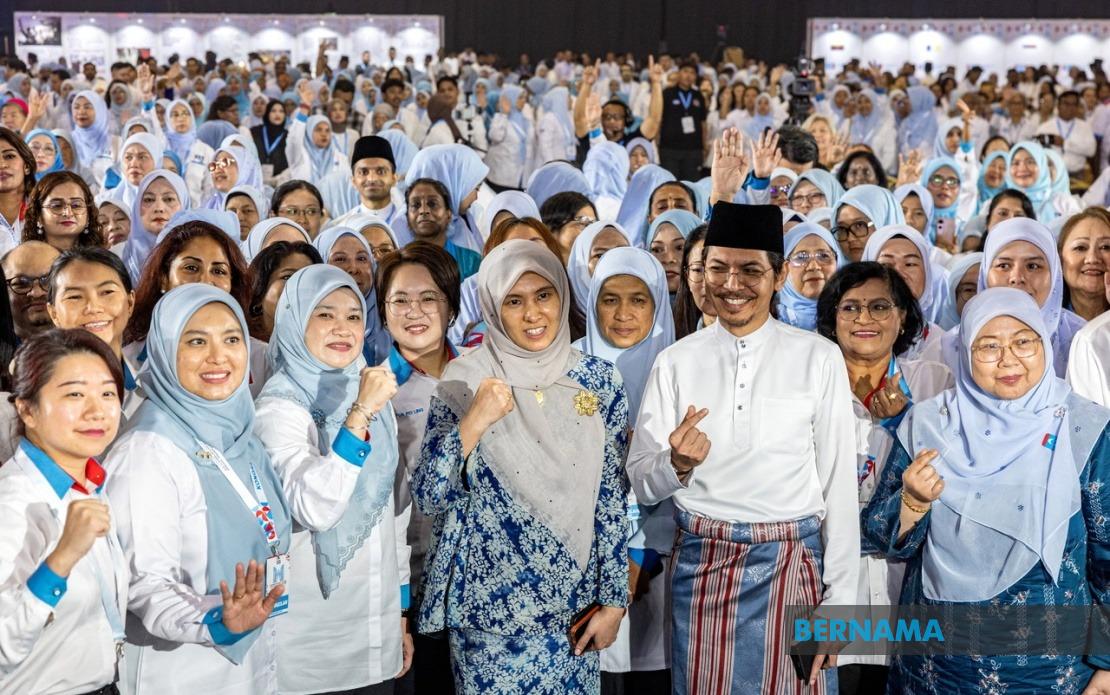
Political leaders must prioritize direct engagement with their communities and develop robust grassroots networks to sustain meaningful relationships with constituents, according to Angkatan Muda Keadilan (AMK) chief Muhammad Kamil Abdul Munim. Speaking at the conclusion of the debate on the AMK Chief's Policy Address during the 2026 AMK National Congress in Melaka, he underscored that maintaining proximity to voters remains a cornerstone of effective political strategy.
Muhammad Kamil emphasized that the presence of political machinery at the local level serves multiple strategic functions beyond mere representation. By establishing tangible connections within communities, parties can more effectively articulate their policy positions and ideological framework, thereby reducing the space for opposition groups to craft alternative narratives that might resonate with voters. The AMK chief characterized this as a defensive measure against misinformation and negative perceptions that competing political forces might cultivate during election cycles.
The chief highlighted that successful political communication requires integration across several interconnected elements. Party machinery, messaging strategies, communication infrastructure, and community networks all function as components of a cohesive system. Without strong grassroots foundations, even well-crafted national-level narratives risk failing to penetrate local consciousness or address the specific concerns that drive voter behaviour at the constituency level. This integrated approach recognizes that political efficacy depends on consistency of messaging from national headquarters down through district and community structures.
Muhammad Kamil warned against the tendency to concentrate electoral preparation solely on national-level messaging and campaign activities. Instead, he advocated for parallel development of localized political initiatives that respond to district-specific issues and community needs. This devolved approach acknowledges that voters ultimately make decisions based on how national policies and party platforms translate into tangible benefits or consequences for their immediate environments. Political parties operating only at the macro level risk appearing disconnected from the lived realities of ordinary Malaysians.
A particular concern for the AMK chief involves the development and retention of party membership, especially newer recruits who may lack deep familiarity with organizational ideology and historical context. He stressed that local leaders bear responsibility for implementing programmes and activities designed to educate members about party principles and the rationale underlying the party's political platform. This institutional memory function proves especially important in Malaysian politics, where parties often compete on ideological and philosophical grounds as much as on policy differences.
The gap between formal party membership and meaningful ideological commitment represents a vulnerability that Muhammad Kamil sought to address. Without sustained effort to ensure that members understand the reasons for the party's existence and its fundamental values, organizational cohesion may gradually erode. Members recruited primarily through patronage networks or personal relationships, rather than genuine commitment to party ideals, may prove unreliable during challenging periods or when competing incentives emerge.
Muhammad Kamil articulated concern that insufficient attention to ideological transmission could lead parties to lose sight of their foundational principles and historical mission. The phrase "slowly deviate from the path of this struggle" suggests anxiety that parties risk becoming mere vehicles for factional competition rather than repositories of coherent political vision. In the Malaysian context, where coalition governments and fluid party alignments characterize the political landscape, maintaining ideological clarity within organizational ranks becomes particularly important for parties seeking to preserve their distinct identity and appeal.
The emphasis on grassroots networking aligns with broader patterns in Southeast Asian politics, where personal relationships and community ties continue to exercise considerable influence over voter behaviour. Despite modernization and urbanization, many Malaysian voters remain responsive to direct outreach and community presence. Political parties that invest in sustained local engagement often outperform those relying exclusively on media campaigns or national leadership personalities. This reflects the continued importance of what political scientists term "relational politics" across the region.
For Malaysian political parties preparing for the next general election cycle, Muhammad Kamil's message suggests the need for strategic resource allocation that strengthens local structures alongside national campaign activities. This requires developing cadres of trained party operatives at the district and community levels, creating regular platforms for member engagement and education, and establishing mechanisms for translating community feedback into policy considerations. The organizational capacity to execute such a strategy may prove decisive in competitive electoral environments where vote margins remain narrow.
The AMK chief's remarks also implicitly address internal party management challenges that often become apparent during election periods. Parties with weak grassroots structures frequently experience problems coordinating campaign activities, managing candidate selection, and maintaining message discipline across different constituencies. By contrast, organizations with strong community networks typically demonstrate greater coherence and effectiveness in translating political strategy into electoral performance. Building such networks requires sustained investment during non-election periods, not merely mobilization tactics deployed shortly before voting.

