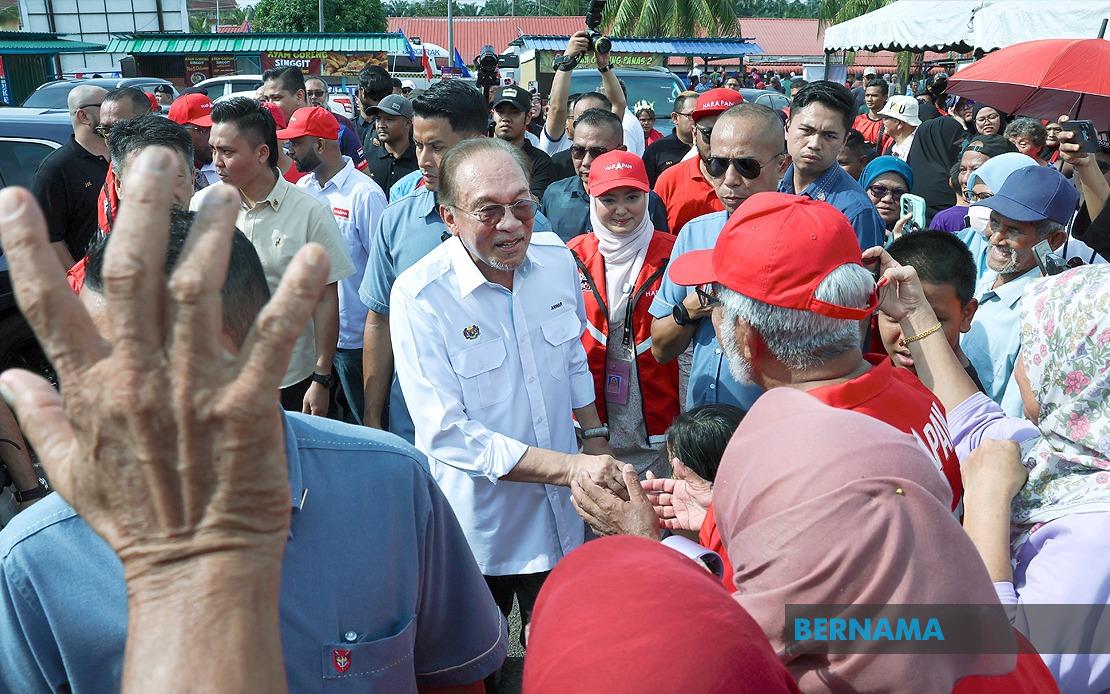
In a heartwarming display of family determination and spontaneous kindness from Malaysia's leadership, a nine-year-old boy from Kampung Pudu in Segamat realized his long-held dream of meeting Prime Minister Datuk Seri Anwar Ibrahim, thanks to his grandmother's resourcefulness and willingness to venture through challenging terrain. The encounter at a Felda Palong Timur event on Sunday became more than just a fleeting moment for Muhammad Afif Ikhwan—it transformed into a cherished memory that demonstrates how accessibility to leaders can create lasting impressions on young Malaysians and strengthen their connection to the nation's governance.
Rosimah Mohammad, 58, the determined grandmother, made the decision to travel by motorcycle from her village through the oil palm estate to reach the venue where the Prime Minister was scheduled to appear. The choice to take this unconventional route underscores both the geographical challenges faced by rural Malaysian communities and the lengths to which family members will go to fulfill children's aspirations. Her grandson's excitement was palpable—Muhammad Afif experienced such anticipation that sleep eluded him the night before, his mind consumed with the prospect of finally meeting his idol in person.
The actual meeting unfolded in a manner that exceeded what Rosimah had anticipated. When Prime Minister Anwar walked through the crowd toward the stage, acknowledging well-wishers along the path, Muhammad Afif seized the moment and extended his hand. What followed was not merely a handshake but an invitation onto the stage itself, where the boy stood alongside the Prime Minister during his speech. For Rosimah, watching her grandson's expression transform from hopeful anticipation to genuine elation was reward enough for the journey through the estate. The child's reaction—a blend of surprise and pure joy—crystallized in that moment what many political observers have noted about Anwar's approach to public engagement: an apparent willingness to create human connections that transcend the formal trappings of high office.
The story gained further significance when it reached the Prime Minister's attention. Rather than allowing the encounter to remain a one-time event, Anwar took the initiative to extend the gesture into something more substantial and meaningful. This decision reflects a broader political strategy of maintaining visible connection with constituents, particularly younger voters and families who represent Malaysia's demographic future. The follow-up action also demonstrates how political figures can leverage spontaneous moments into opportunities for sustained engagement with their communities.
Two days after the event, PKR deputy information chief Siti Aishah Shaik Ismail visited Muhammad Afif's home in Kampung Pudu on the Prime Minister's behalf. The visit carried symbolic weight—it represented the continuation of the connection forged at Felda Palong Timur and signaled that the Prime Minister had not merely greeted a child in passing but had genuinely absorbed and acted upon the story of the boy's dream. Siti Aishah explained that the visit itself was personally requested by Anwar, framing it as a special gesture of appreciation for the child's admiration.
The tangible expression of this appreciation came through carefully selected gifts that addressed practical needs while acknowledging the boy's achievement. A bicycle, school bag, and shoes were presented, items chosen to support Muhammad Afif's education and mobility—not luxury goods, but essentials that signal investment in the child's future. This selection reflects consideration about what would genuinely benefit a rural family rather than providing superficial tokens. For working-class families in areas like Kampung Pudu, such gifts carry real value and demonstrate that the gesture was thoughtfully calibrated.
What emerged from Rosimah's subsequent conversations with Siti Aishah provides perhaps the most touching detail of the entire narrative. Muhammad Afif continues to treasure the shirt he wore during his encounter with the Prime Minister, hugging it nightly as a source of comfort and connection to that transformative moment. This behavior illustrates the profound psychological impact that personal recognition from authority figures can have on children, particularly those growing up in villages where such encounters are rare. The shirt has become a tangible link to an intangible dream realized.
For Malaysian communities, particularly those in rural and semi-rural areas, this story carries layers of meaning beyond its surface charm. It speaks to questions of accessibility and representation—whether leaders remain connected to ordinary families and whether rural Malaysians feel that their aspirations matter at the highest levels of government. The Felda Palong Timur program itself represents a significant portion of Malaysia's agricultural and social infrastructure, and the presence of a sitting Prime Minister engaging with residents in such settings reinforces the relevance of these communities to national governance.
The episode also reflects broader regional patterns in Southeast Asian politics, where leaders increasingly recognize the value of visible, personal engagement with citizens. In an era of social media and rapid information dissemination, such moments are no longer purely local events—they ripple through digital networks, shaping public perception of leadership style and accessibility. Anwar's actions, from the initial stage invitation to the subsequent home visit and gift presentation, construct a narrative of responsive leadership that resonates beyond Johor.
From Muhammad Afif's perspective, the encounter with Prime Minister Anwar has likely shaped his understanding of civic engagement and democratic participation. Young Malaysians who experience direct interaction with their leaders often develop stronger sense of investment in national processes and institutions. The boy's journey from hopeful anticipation to actual encounter with his idol may influence how he engages with politics and public service as he matures, potentially contributing to long-term civic consciousness.
Rosimah's decision to undertake the motorcycle journey through the oil palm estate also merits reflection beyond the immediate heartwarming narrative. It demonstrates the creative problem-solving and determination that characterize many Malaysian families facing geographical or resource constraints. Rural grandmothers navigating estates on motorcycles represent an often-overlooked dimension of Malaysian society—the networks of care and sacrifice that sustain family life outside urban centers. Her actions embody values of familial dedication and intergenerational support that remain central to Malaysian culture.
The story's widespread circulation through media channels has transformed it into a microcosm of contemporary Malaysian political communication. It showcases how personal, relatable narratives can convey messages about leadership and governance more effectively than formal speeches or policy announcements. The interaction between Rosimah, Muhammad Afif, Prime Minister Anwar, and subsequently the governmental representatives who formalized the relationship demonstrates the potential for politics to touch lives in meaningful ways when accessibility and genuine interest converge.
Looking forward, this narrative may serve as a template for how political leaders can respond to citizens' aspirations in ways that cost relatively little but yield significant returns in terms of public goodwill and institutional legitimacy. For rural Malaysia particularly, visibility and responsiveness from national leadership can address the sense of distance that sometimes characterizes center-periphery relationships in the country. Muhammad Afif Ikhwan's fulfilled dream, facilitated by his grandmother's determination and amplified by Prime Minister Anwar's willingness to transform a chance encounter into sustained engagement, represents an optimistic vision of how Malaysian democracy can function when leaders remain accessible to ordinary families.

