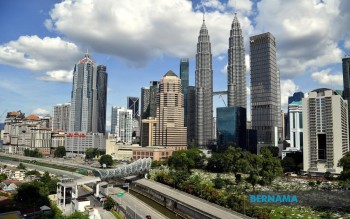
Prime Minister Datuk Seri Anwar Ibrahim has attributed Malaysia's resilient economic performance to swift government intervention designed to buffer citizens and enterprises from the fallout of the West Asia conflict and cascading global supply disruptions. The 6.0 per cent growth recorded in the second quarter of 2026 represents the strongest showing for that period outside the pandemic era since 2014, signalling the effectiveness of targeted policy responses in maintaining macroeconomic stability during turbulent international conditions.
The administration's multi-pronged approach has combined direct financing mechanisms for struggling small and medium enterprises with precision-targeted fuel subsidies, creating a protective framework that has kept household consumption and business investment on an upward trajectory. These interventions, operating within the broader MADANI Economy reform agenda, have proven instrumental in sustaining the domestic demand that underpins Malaysia's outperformance relative to global economic headwinds. The consistency of this approach across multiple quarters demonstrates a deliberate strategy rather than ad-hoc crisis management, offering lessons for policymakers across Southeast Asia grappling with similar external shocks.
Inflation, frequently the collateral damage of global supply chain disruptions, has remained remarkably contained at 1.9 per cent for the second quarter—a testament to the subsidy architecture and price stabilisation mechanisms deployed by authorities. While production bottlenecks and shipping disruptions have inflated input and food costs worldwide, Malaysia's controlled inflation environment reflects careful calibration of support programmes that prevent cost pressures from cascading into wage-price spirals that could undermine purchasing power. This restraint becomes increasingly significant when compared with inflation trajectories in other regional economies facing similar external shocks.
The government has also deployed targeted cash assistance programmes, namely Sumbangan Tunai Rahmah and Sumbangan Asas Rahmah, alongside the BUDI MADANI subsidy framework to insulate vulnerable populations from the squeeze on living standards. These transfer mechanisms recognise that headline economic figures often mask the uneven distribution of growth's benefits across different income segments and sectors. By explicitly protecting purchasing power among lower-income households and affected workers, policymakers have attempted to prevent the emergence of social frictions that could destabilise the political economy at a time when geopolitical uncertainty already clouds medium-term prospects.
However, the Prime Minister's own acknowledgement that many Malaysians continue to experience cost-of-living pressures despite robust GDP expansion reveals the complex relationship between headline growth and citizen welfare. Certain sectors and worker categories face genuinely difficult operating conditions, with employment pressures persisting even as the aggregate economy performs well. This divergence underscores the limitations of uniform policy responses and suggests that sectoral and occupational dimensions of the crisis warrant deeper disaggregated analysis to target support more precisely.
Malaysia's second-quarter performance exceeded both the Department of Statistics Malaysia's advance projection of 5.8 per cent and the median Bloomberg consensus forecast, reflecting an economy that has confounded pessimistic international expectations for three consecutive quarters. The first-half 2026 growth rate of 5.7 per cent positions the economy comfortably within the government's full-year target range of 4.0 to 5.0 per cent, suggesting that even accounting for potential Q3 and Q4 moderation, annual outcomes should meet or exceed policy expectations. This trajectory provides fiscal space for continued support measures without jeopardising debt sustainability, a critical consideration for prolonged crisis management.
The expansion has been underpinned by resilient domestic demand—itself a product of supported household incomes and business cash flows—alongside a robust external sector that has benefited from Malaysia's established position in semiconductor supply chains and petrochemical industries. Demand from technology firms ramping up production, despite broader global uncertainties, has provided an export foundation that partially offsets weaker commodity prices and reduced regional trade volumes. The diversification of Malaysia's external markets, particularly engagement with non-Western supply networks, has provided additional insulation against concentrated disruptions.
Geopolitical risk remains an acute concern for policymakers crafting medium-term economic strategy. Continued tensions in West Asia threaten further supply chain fragmentation, potentially pushing input costs higher and lengthening delivery times for components critical to Malaysian manufacturers and re-exporters. If conflict expands or persists, shipping costs through strategic chokepoints could spike anew, eroding margins for export-dependent firms and potentially triggering capital flight toward perceived safe havens. The government's current policy framework assumes a stabilisation of the external environment rather than escalation, a assumption that warrants contingency planning.
Employment pressures in certain sectors—tourism, aviation, and hospitality sectors particularly—remain a vulnerability even as headline joblessness figures remain manageable. The displacement of workers from contracting sectors into lower-productivity or informal employment represents a form of hidden underutilisation masked by aggregate statistics. Reskilling programmes and sectoral transition support will be essential to prevent cyclical unemployment from transforming into structural joblessness, particularly among older workers and those in regions dependent on vulnerable industries.
Looking forward, Malaysia's policymakers face the challenge of maintaining support sufficient to sustain consumption and investment while gradually unwinding emergency measures as the external environment stabilises. Premature withdrawal of subsidies and transfer programmes risks stalling growth momentum, while indefinite continuation raises fiscal sustainability concerns and moral hazard risks. The calibration of this transition will test the coherence of the MADANI framework and the government's capacity to balance immediate welfare protection against long-term macroeconomic prudence.
The government has signalled its intention to maintain existing support architectures while prioritising measures that enhance household purchasing power and create genuine employment opportunities rather than temporary relief. This prospective approach suggests a shift from pure crisis response toward structural improvements in income generation and labour market dynamism. Success would translate current growth momentum into durable improvements in Malaysian living standards, converting cyclical outperformance into genuine progress toward the development aspirations articulated in broader national economic strategies.

