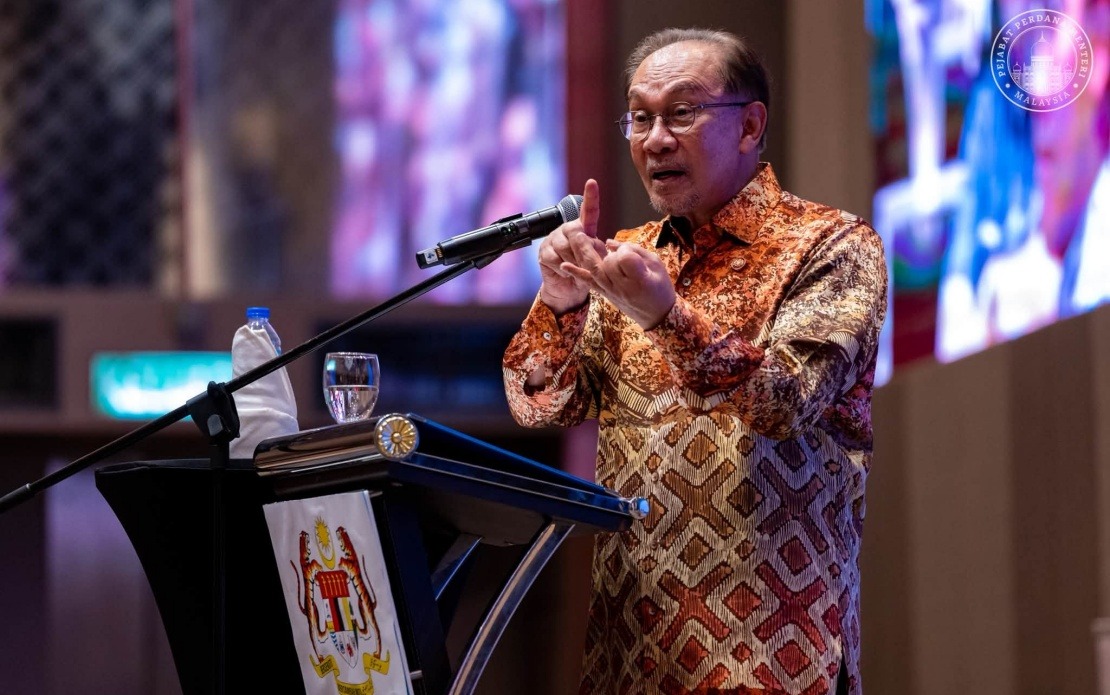
Prime Minister Datuk Seri Anwar Ibrahim has pledged that the federal government will dedicate its resources and capacity towards assisting young Malaysians who grapple with an increasingly intricate social landscape. Speaking through a social media statement on Tuesday evening, the Prime Minister emphasised the administration's resolve to address the multifaceted difficulties confronting the youth sector, a commitment stemming from direct engagement with young people at recent national forums held in Klang, Selangor.
The Prime Minister's statement came following two significant youth-focused events conducted on the same day: an interactive session known as "Temu Anwar" and the opening ceremony of the 2026 International Youth Assembly (HAMKA). These platforms enabled the government leadership to receive firsthand insights into the preoccupations, perspectives, and recommendations of Malaysia's younger demographic across diverse subject matters. The Prime Minister underscored that these dialogues would inform the government's policy direction and programmatic responses to youth-related concerns.
In his remarks, Anwar Ibrahim acknowledged the complex terrain that today's young people must traverse, where ideological diversity and the collision of opposing viewpoints have become routine facets of contemporary discourse. However, he stressed that while such differences are inevitable in an increasingly pluralistic society, they must be managed and articulated through reasoned debate, substantive argumentation, and civility rather than through emotional reactions, animosity, or narrow factional interests. This framing reflects growing concerns about polarisation and the erosion of constructive dialogue among younger Malaysians, particularly in digital spaces where rhetoric can quickly escalate.
The Prime Minister reiterated that the government would exert maximum effort within its budgetary and institutional constraints to assist young citizens navigating various predicaments. This measured language—acknowledging both commitment and realistic limitations—suggests an administration conscious of the fiscal pressures and capacity constraints that often impede the swift implementation of youth-oriented programmes. For Malaysian readers, this candour about resource availability is significant, as it signals the government's awareness that ambitious promises without corresponding funding or execution capability can further erode youth confidence in political institutions.
Anwar Ibrahim drew particular attention to the nomenclature of the International Youth Assembly, noting that HAMKA carries profound historical resonance within Malaysian and Southeast Asian intellectual circles. The acronym references Abdul Malik Karim Amrullah, a prominent twentieth-century Islamic scholar, theologian, and literary figure whose influence extended far beyond Malaysia into the broader Muslim world. The Prime Minister characterised Amrullah as a transformative intellectual whose prolific written and oratorical contributions shaped the ideological development of multiple generations.
According to the Prime Minister, Abdul Malik Karim Amrullah's legacy embodies several virtues that remain particularly pertinent for contemporary Malaysian youth. Amrullah is remembered as an incisive thinker whose analytical rigour elevated public discourse, an accomplished speaker whose rhetorical skills commanded attention and respect, and a polemicist whose pen wielded considerable influence in advancing intellectual movements. By invoking this historical figure, Anwar Ibrahim appears to be signalling that modern Malaysian youth should aspire to similar standards of intellectual engagement, persuasive expression, and principled activism.
The Prime Minister emphasised that Amrullah's intellectual output and philosophical framework imparted enduring lessons to the younger cohorts of his era—lessons centred on the paramount importance of knowledge acquisition, the moral imperative to articulate one's convictions courageously, and the necessity of maintaining intellectual flexibility and receptiveness when generating innovative ideas. These principles, Anwar Ibrahim suggested, retain relevance for twenty-first-century Malaysian youth navigating rapid technological change, economic uncertainty, and evolving social expectations.
For Malaysian policymakers and observers, the Prime Minister's invocation of Amrullah's example carries broader implications about the government's desired positioning relative to youth engagement. By emphasising knowledge, fearless expression, and openness to diverse perspectives, the administration appears to be cultivating an intellectual framework that encourages young people to pursue informed criticism and constructive participation rather than cynical disengagement or destructive protest. This approach contrasts with more repressive governmental stances in some regional jurisdictions and suggests a vision of youth empowerment grounded in intellectual development rather than top-down patronage.
The timing of these youth engagement initiatives reflects Malaysia's recognition that generational dynamics significantly influence national stability and democratic health. With Malaysia's median age around thirty-seven years and substantial youth populations concentrated in urban centres, the political attitudes and civic participation levels of younger Malaysians carry considerable weight. The government's public investment in platforms like HAMKA and interactive sessions such as "Temu Anwar" indicates an understanding that direct consultation with youth constituencies, however symbolic such exercises might sometimes be, serves important functions in legitimising governance and identifying emerging policy priorities.
Moreover, the emphasis on constructive dialogue and knowledge-based argumentation speaks to international best practices in youth engagement, particularly relevant as Malaysia competes regionally to position itself as a knowledge economy and increasingly sophisticated democracy. Southeast Asian governments face mounting challenges as digital technology empowers younger citizens to organise independently, access information beyond state-controlled channels, and mobilise around causes their parents' generation might have ignored. Malaysia's approach through these forums represents an attempt to channel youthful energy into structured dialogues rather than leaving youth frustrations to crystallise outside formal political mechanisms.
The Prime Minister's measured commitment—promising that the government will endeavour to assist youth within its capacity—reflects pragmatism about governance constraints while signalling political priority. Malaysian observers may interpret this positioning as recognition that youth issues transcend simple solutions, requiring sustained governmental attention, private sector collaboration, and societal-level shifts in how Malaysia cultivates intellectual talent and creates economic opportunity for younger generations. The challenge for policymakers will be translating these rhetorical commitments into concrete initiatives that address youth unemployment, mental health concerns, educational quality, and meaningful civic participation opportunities.

