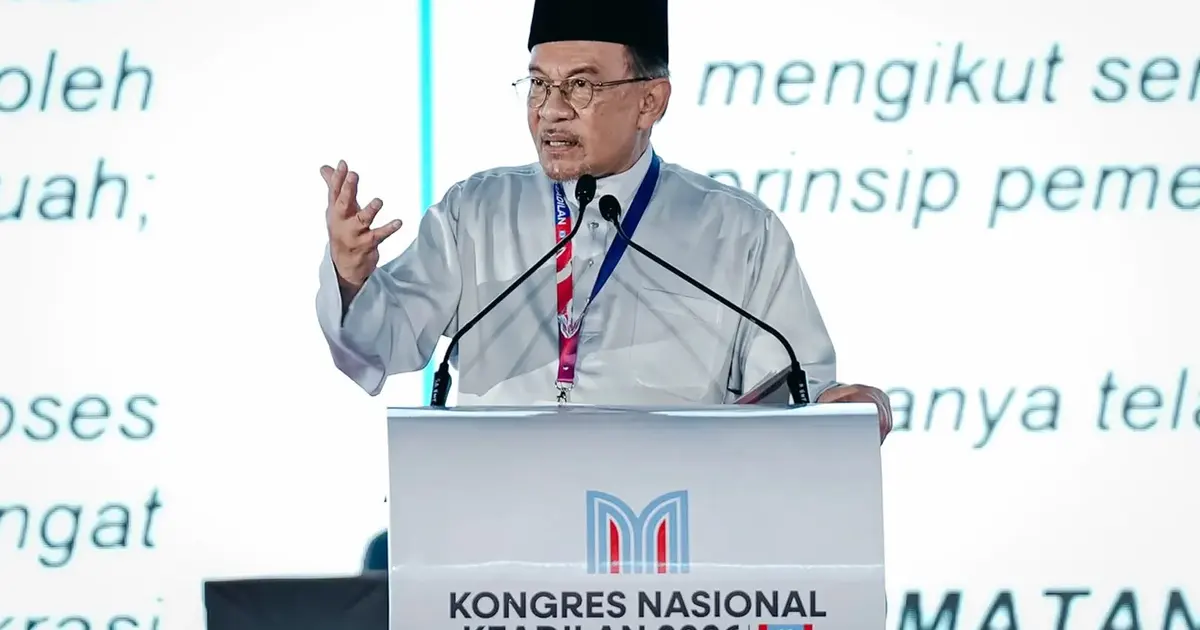
Prime Minister Anwar Ibrahim has signalled the government's intention to extend its investigative reach beyond Tabung Haji to examine longstanding difficulties within Felda, the Federal Land Development Authority, as part of a broader accountability push across Malaysia's statutory sector. The commitment reflects mounting pressure to address governance gaps and operational inefficiencies that have accumulated within these institutions over years of limited oversight, with the Yang di-Pertuan Agong reportedly insisting that institutional audits should not terminate with the pilgrims' fund alone.
The scrutiny of Tabung Haji has exposed significant governance lapses and financial irregularities that prompted the government to launch a comprehensive review of the organisation's operations and management structure. This investigation illuminated systemic weaknesses that extend beyond a single entity, prompting senior officials to recognise the necessity for wider institutional examination across the statutory bodies that play crucial roles in Malaysia's social and economic framework. The willingness to pursue such investigations demonstrates a shift toward greater transparency and accountability in managing public institutions, particularly those handling substantial assets and serving vulnerable populations.
Felda, which administers some of Malaysia's most significant agricultural development schemes and manages considerable land holdings affecting hundreds of thousands of smallholder farmers, has long faced criticism regarding operational efficiency, financial sustainability, and governance standards. The organisation's troubled recent history, marked by shifting fortunes and management challenges, positions it naturally as a candidate for the kind of comprehensive review that has begun with Tabung Haji. These agricultural development schemes represent substantial public investment, making their effective management essential not merely for individual farmers but for broader rural development objectives across the country.
The royal guidance emphasised that systemic problems within government-linked institutions require systematic investigation rather than selective scrutiny applied only when crises emerge. This perspective reflects growing concern that isolated reviews of single agencies, while necessary, cannot address underlying structural and cultural issues that may pervade multiple organisations. The Yang di-Pertuan Agong's apparent insistence on comprehensive rather than piecemeal examinations signals expectations for deeper institutional reform extending across the statutory sector.
For Malaysian readers and particularly for Felda's constituents—the smallholder farmers and rural communities depending on these schemes—such investigations carry significant implications. Improved governance and operational efficiency at Felda could translate into better support services, fairer benefit distribution, and enhanced sustainability of agricultural programmes that remain vital for rural livelihoods. The organisation's effectiveness directly impacts household income stability and economic security for farming families across multiple states, making institutional performance a matter of genuine personal concern rather than abstract bureaucratic reform.
The government's approach also reflects lessons from the Tabung Haji situation, where accumulated problems remained unaddressed until they reached critical levels requiring major intervention. Proactive examination of other major statutory bodies aims to identify and rectify governance weaknesses before they escalate into comparable crises. This forward-looking strategy potentially prevents future reputational damage and financial losses while protecting public interests vested in these institutions' proper functioning.
Statutory bodies across Malaysia's governance architecture manage diverse portfolios—from pilgrimage financing to agricultural development to pension administration—touching millions of Malaysians' lives directly. The calibre of their management, the integrity of their operations, and the soundness of their strategic direction therefore warrant sustained public attention and governmental oversight. Investigations into Felda following the Tabung Haji review suggest recognition that accountability cannot remain sporadic but must become embedded as routine practice across the sector.
The announcement carries particular weight given Malaysia's broader agenda around institutional reform and governance improvement. Regional observers note that Southeast Asian nations frequently struggle with statutory body oversight, with Malaysia's willingness to conduct open investigations and pursue structural remedies positioning the country as relatively forward-thinking in addressing such challenges. However, translating investigative findings into meaningful reform requires sustained political will and resources that must extend beyond initial fact-finding phases.
Implementation timelines remain uncertain, and the scope of investigations into Felda has not been fully detailed. Past experience suggests that comprehensive institutional reviews can require months to complete, with recommendations requiring additional time for implementation and assessment of effectiveness. Stakeholders, including farmer associations and rural development advocates, will likely demand transparency regarding investigation processes and early disclosure of preliminary findings that might inform interim remedial measures.
The government faces the broader challenge of institutionalising accountability mechanisms that prevent governance decay without creating excessive bureaucratic burden that hampers operational effectiveness. Balancing rigorous oversight with allowing organisations sufficient autonomy to pursue their missions represents an enduring tension in public sector management. How successfully officials navigate this balance in addressing Felda's issues will signal the genuine depth of commitment to systematic statutory body reform beyond immediate crisis response.
Moving forward, the comprehensive audit approach signals potential application to other significant statutory bodies, potentially reshaping expectations around institutional accountability across Malaysia's public sector. For citizens and stakeholders relying on these organisations' services, sustained commitment to investigation-driven reform offers genuine prospect for better-governed, more responsive institutions serving public rather than merely bureaucratic interests. The trajectory from Tabung Haji review toward wider institutional examination thus carries implications extending well beyond agricultural development policy alone.

